CastileBurgos
Burgos: cathedral, morcilla and the pilgrim road
A cathedral of stone lace on the Camino de Santiago, the city of El Cid on the river Arlanzón, and a black pudding studded with rice that turns up on every table.
The dish: Morcilla de Burgos, fried
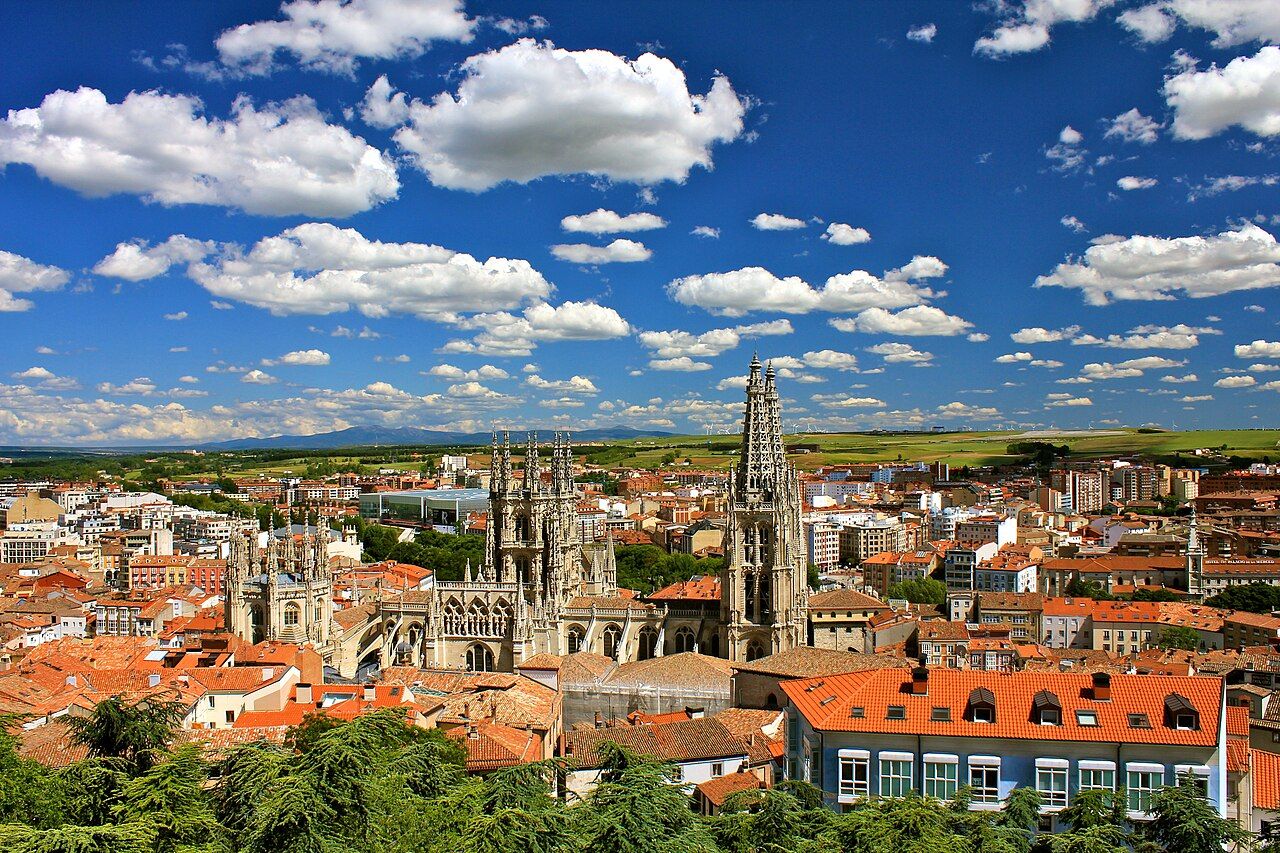
Burgos stands on the high plateau of northern Castile, on the river Arlanzón, and it has the climate to match: long cold winters, short sharp summers, and a wind off the plain that people talk about. It was the capital of the old kingdom of Castile, the home of El Cid, and a major stop on the Camino de Santiago, the pilgrim road to Galicia. Its cathedral is one of the great buildings of medieval Europe. Its food is plain, filling and very good.
The cathedral
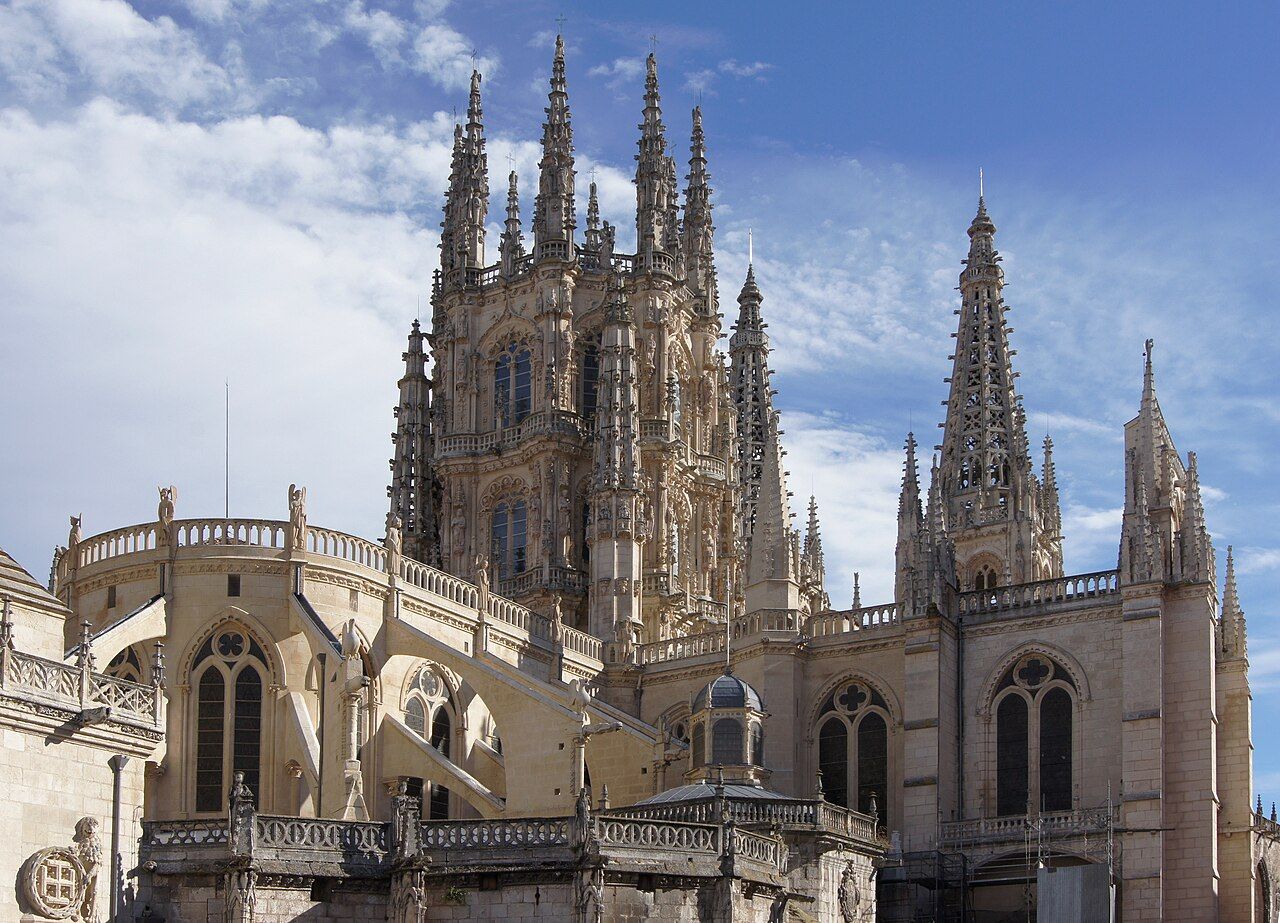
The cathedral of Santa María was begun in 1221 and built and extended over about three centuries, so you see several stages of Gothic in one building. From the outside, the western towers with their openwork spires are the most famous view. Walk around to the side and you see the cimborrio, the great octagonal lantern tower over the crossing, rebuilt in the sixteenth century after an earlier one collapsed. From inside, looking up into the lantern, its star-shaped vault seems to float.
Inside, take your time. There are side chapels as large as churches, the gilded Golden Staircase in the north transept, carved choir stalls, and the tomb of El Cid and his wife Jimena under the crossing. The Constable's Chapel at the east end, with its own star vault, is a highlight. The cathedral is a World Heritage Site, and entry is charged for the main visit; prices and hours change, so check before you go.
Its food is plain, filling and very good.
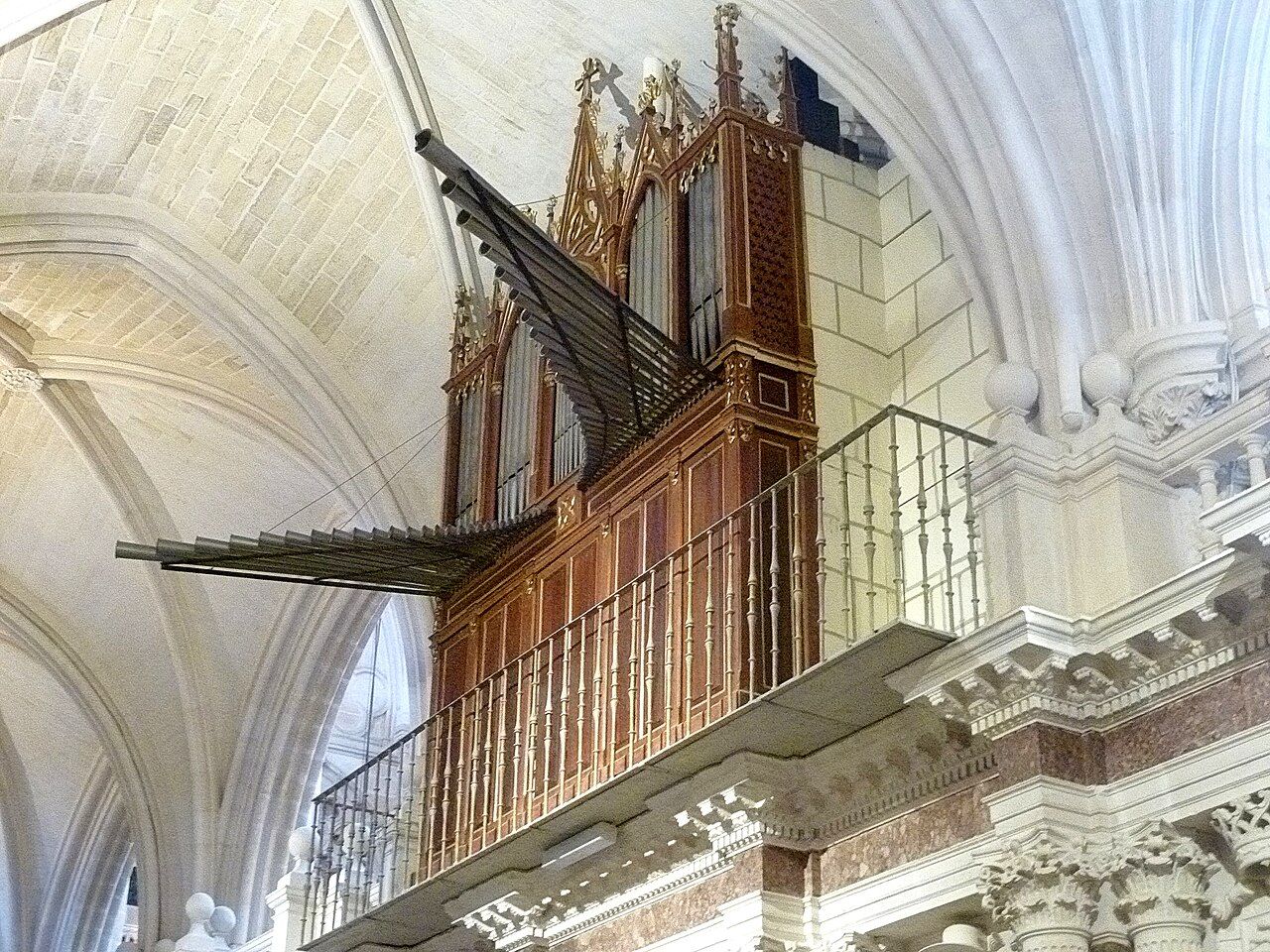
Look for the organs above the choir. Spanish organs often have rows of trumpet pipes projecting horizontally from the case, a design meant to throw a bright, loud sound straight into the nave. Even silent, they are an odd and striking sight.
The city along the river
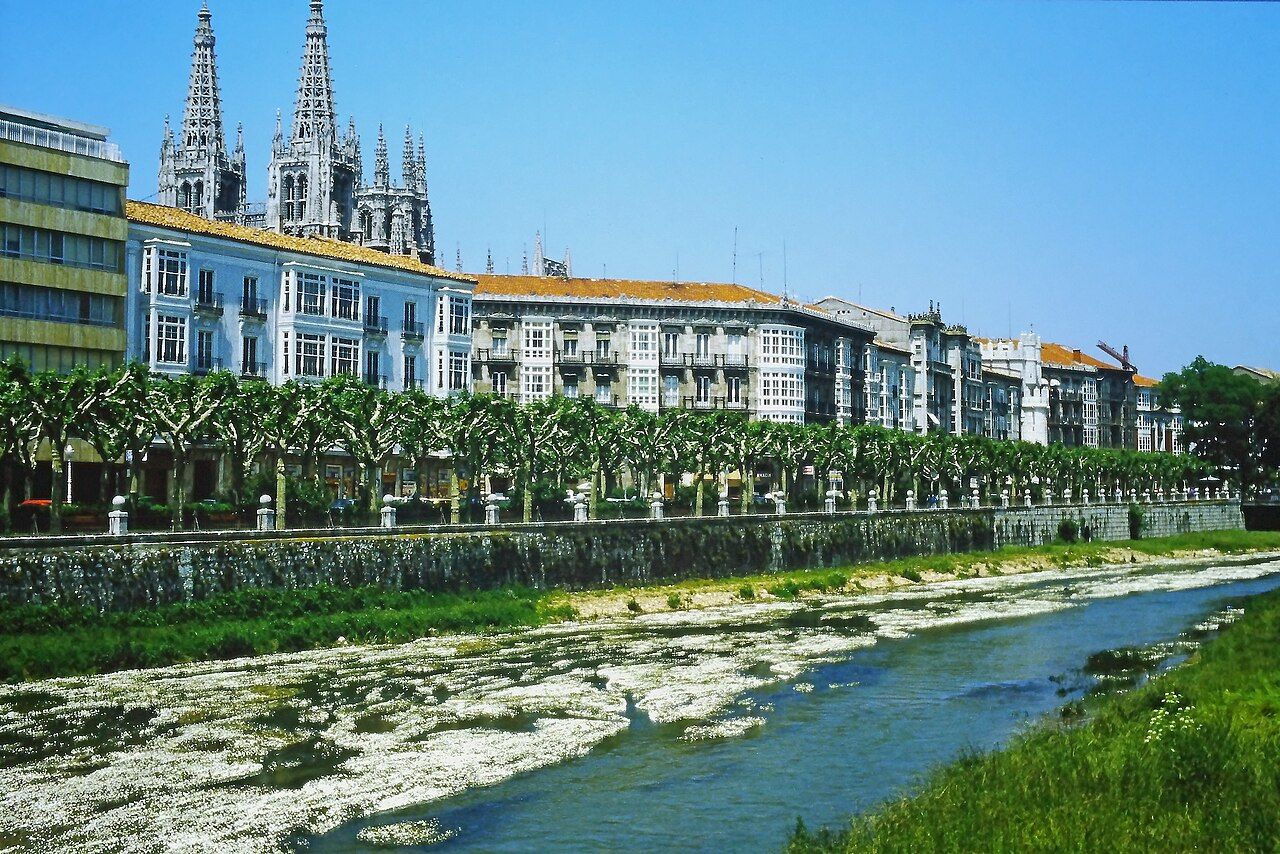
Burgos is compact. The old centre lies on the north bank of the Arlanzón, with the cathedral at its heart and the castle hill behind it. You enter the old town through the Arco de Santa María, a former city gate decorated with statues of Castilian figures including El Cid. Beside the river runs the Paseo del Espolón, a promenade lined with clipped plane trees, which is where the city walks in the early evening.
Climb to the castle hill for the view down over the cathedral and the roofs of the town to the plain beyond. The castle itself is largely ruined, but the park around it is a good place to stand and see how the city sits in its landscape.
Two monasteries on the edge of the city repay the walk or short bus ride. The Monasterio de las Huelgas, a royal convent of Cistercian nuns founded in the twelfth century, holds a remarkable collection of medieval textiles. The Cartuja de Miraflores, a Carthusian monastery in a park to the east, has an extraordinary carved alabaster royal tomb.
A detour: CastileLeón: stained glass and free tapasThe pilgrim road
The Camino Francés, the main route of the Camino de Santiago, passes straight through Burgos. You will see the scallop-shell markers set into the pavement and pilgrims with backpacks arriving at the cathedral square in the afternoon. For centuries the city was a major stop, with hospitals and hostels for the pilgrims, and the road still shapes its rhythm. To the west, the Camino crosses the open wheatlands of the Meseta towards León and its stained glass, a long, exposed stretch many walkers remember for its sky.
East of the city, the hills of the Sierra de Atapuerca hold one of the most important prehistoric sites in Europe, where excavations have found some of the oldest human remains on the continent. The Museum of Human Evolution in Burgos explains the finds.
Morcilla, cheese and lamb
The food of Burgos starts with morcilla de Burgos, a black pudding made with pig's blood, onion, lard, spices and rice. The rice gives it a firmer, grainier texture than the blood sausages of other regions. It is usually sliced into thick rounds and fried or grilled until the outside crisps, then eaten as a tapa or a starter, sometimes with a roasted red pepper. Good morcilla is moist and well seasoned, never greasy.
Queso de Burgos is a fresh white cheese, soft and mild, traditionally made from sheep's milk, though cow's milk versions are now common. It is eaten young, often as a dessert with honey or walnuts. Its mildness suits it to that.
The province is also lamb country. Aranda de Duero, in the south of the province, is known across Spain for lechazo, milk-fed lamb roasted in a wood-fired oven with nothing more than salt and water. It is the same tradition as the roasts of Segovia's wood ovens, and the local red wine is Ribera del Duero, from the vineyards along the river around Aranda.
The stew of the cold months
Winter brings olla podrida, a slow stew of red beans with pork and morcilla, from the area around Ibeas de Juarros and Belorado. It is a cousin of the other one-pot stews of the interior covered in the inland stew pot, and on a January day in Burgos it is the right thing to eat.
Hours and habits
Burgos eats late, like the rest of Spain. Lunch tends to start from about 2 pm, and the evening tapas walk begins after eight. The streets around the cathedral, and especially around the Calle San Lorenzo, fill in the evening with people moving from bar to bar for a small plate and a glass. Many places close one day a week, so check before you head out on a Monday.
Getting there
Burgos is on the main road and rail routes between Madrid and the north. Trains and buses run from Madrid, and the city is a natural stop on the way to the Basque country or to Santiago. By car, the motorway crosses the high plateau; in winter, watch for snow and ice, especially around the Somosierra pass on the route from Madrid. In the city, park across the river or in one of the underground car parks near the centre and walk.
If you are driving south afterwards, the road down the Duero valley takes you through Aranda and the vineyards of the Ribera del Duero, where many wineries open their underground cellars to visitors by appointment. The old town of Aranda is built over a network of medieval cellars dug into the soil, once used to store and age wine at a steady cool temperature. It makes a good lunch stop on the way to Madrid, especially for roast lamb.
The best time to come is late spring or early autumn, when the plateau is mild and the light is clear. Summers are warm by day but cool at night, and winters are properly cold. Bring layers whenever you come.