
Inland PortugalPinhão
The Douro valley terraces
In the upper Douro, a river winds between hills cut into thousands of stone-walled terraces, where port has been made for centuries in the oldest demarcated wine region in the world.
The dish: Roast kid with potatoes
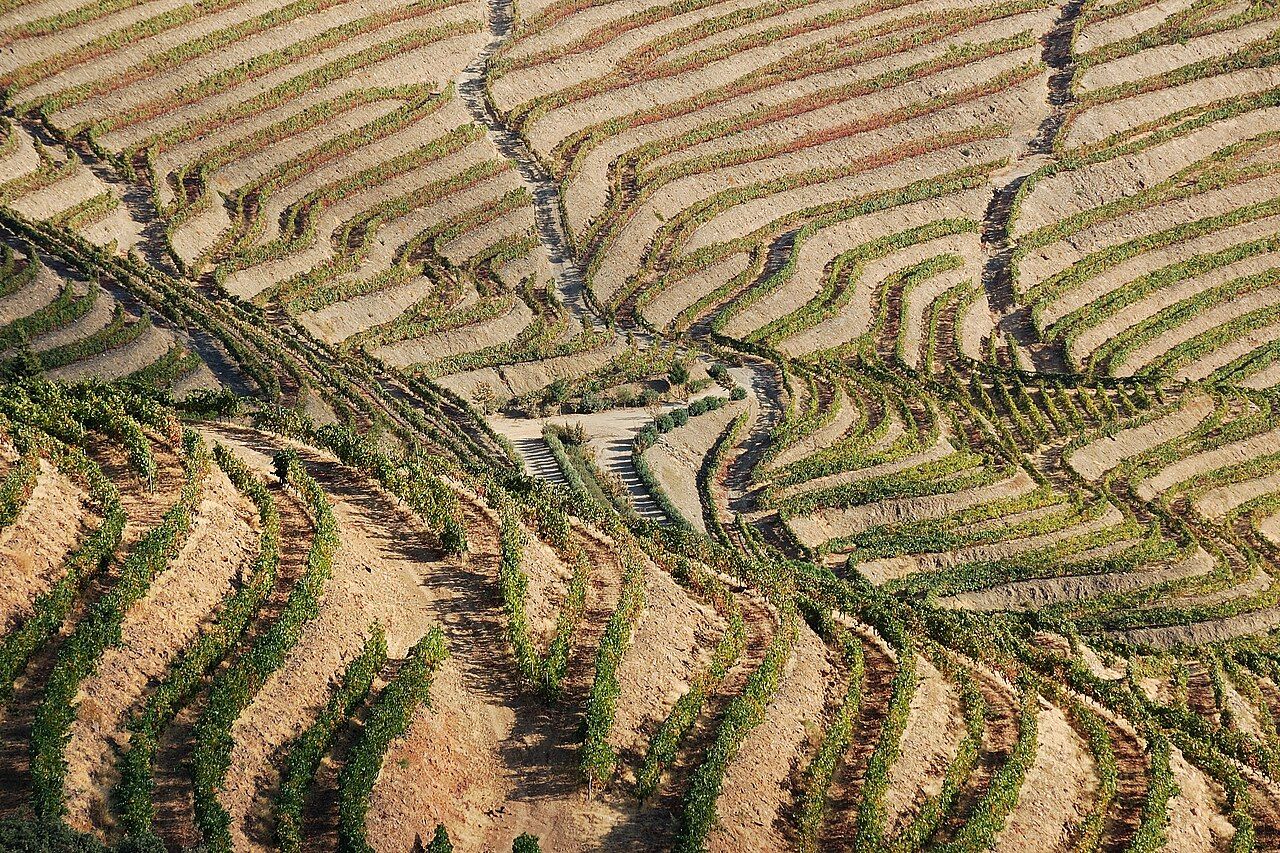
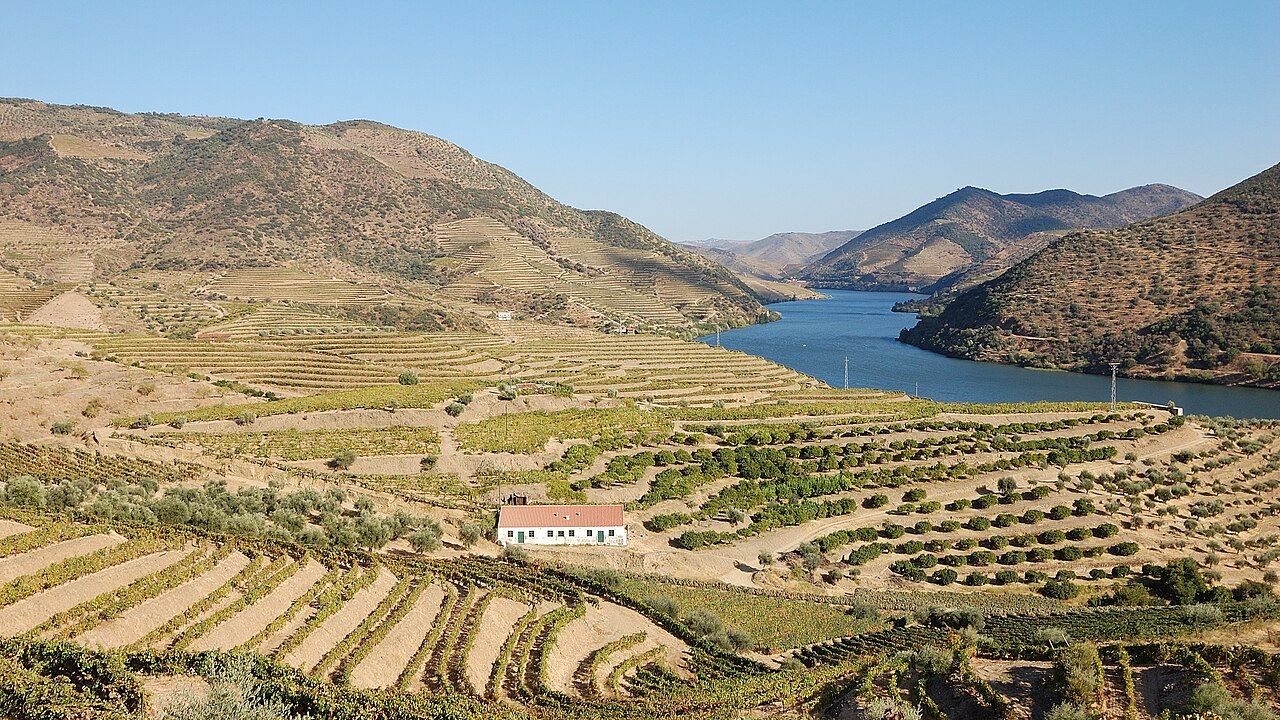
East of Porto, the river Douro climbs into the interior of Portugal, and somewhere past the town of Mesão Frio the landscape changes. The hills close in, the soil becomes grey and flaky schist, and the slopes are covered from river to ridge in terraces of vines held up by drystone walls, one above another, following every fold of the land. This is the Alto Douro, the home of port, and few places on earth show so clearly how much work people have put into one stretch of land. It was demarcated in 1756, making it the oldest demarcated wine region in the world, and it is a World Heritage site. It is also a place to eat well, slowly, in villages above a green river.
How the terraces were made
The Douro's vines grow in some of the harshest conditions in European wine. The schist rock barely counts as soil, summers are scorching, and the slopes are often steeper than a staircase. To plant at all, generations of workers broke the rock by hand, built walls to hold it and made narrow terraces, called socalcos, each with a few rows of vines. Many of the oldest walls still stand, dark and lichen-covered, following the contours of the hills.
From the 1970s on, many vineyards were rebuilt with wider sloping terraces cut by machine, called patamares, without walls, and on some gentler slopes vines are now planted in vertical rows up and down the hill. On any drive you see all three systems side by side. Between the vines grow olive and almond trees, and in spring the almonds flower white across the upper valley.
The vines push their roots deep into cracks in the schist to find water, which is part of what makes the wine so concentrated. The main grapes are local varieties, among them Touriga Nacional, Touriga Franca and Tinta Roriz, the last being the same grape Spain calls Tempranillo.
Port and the demarcation of 1756
Port is made by stopping fermentation partway with grape spirit. The yeast dies, leaving natural sugar in the wine and raising its strength. The trade grew in the seventeenth and eighteenth centuries when English merchants, at war with France and short of claret, turned to Portugal. By the 1750s fraud and falling prices had damaged the trade, and the Marquis of Pombal, the king's chief minister, created a company to regulate it and had the best vineyard land marked out with granite posts. Some of those posts still stand among the vines.
For most of its history, the wine was made in the valley and then carried downriver to age in the lodges of Vila Nova de Gaia, opposite Porto, where the cooler, damper air suits slow ageing. The barrels travelled on flat-bottomed sailing boats, the rabelos, steered through rapids with a long oar. Railways, roads and finally dams in the twentieth century ended that trade, but a few rabelos remain on the river for show. Today, the Douro also makes excellent dry red and white wines under the Douro appellation, alongside port.
Peso da Régua and Pinhão
Peso da Régua is the main town of the wine country, a working place on the north bank with a long riverfront where tour boats tie up. The Douro Museum, in an old wine warehouse by the river, is the best introduction to the region, telling the history of the landscape, the trade and the people who built the terraces. From Régua, the road and the railway follow the river east.
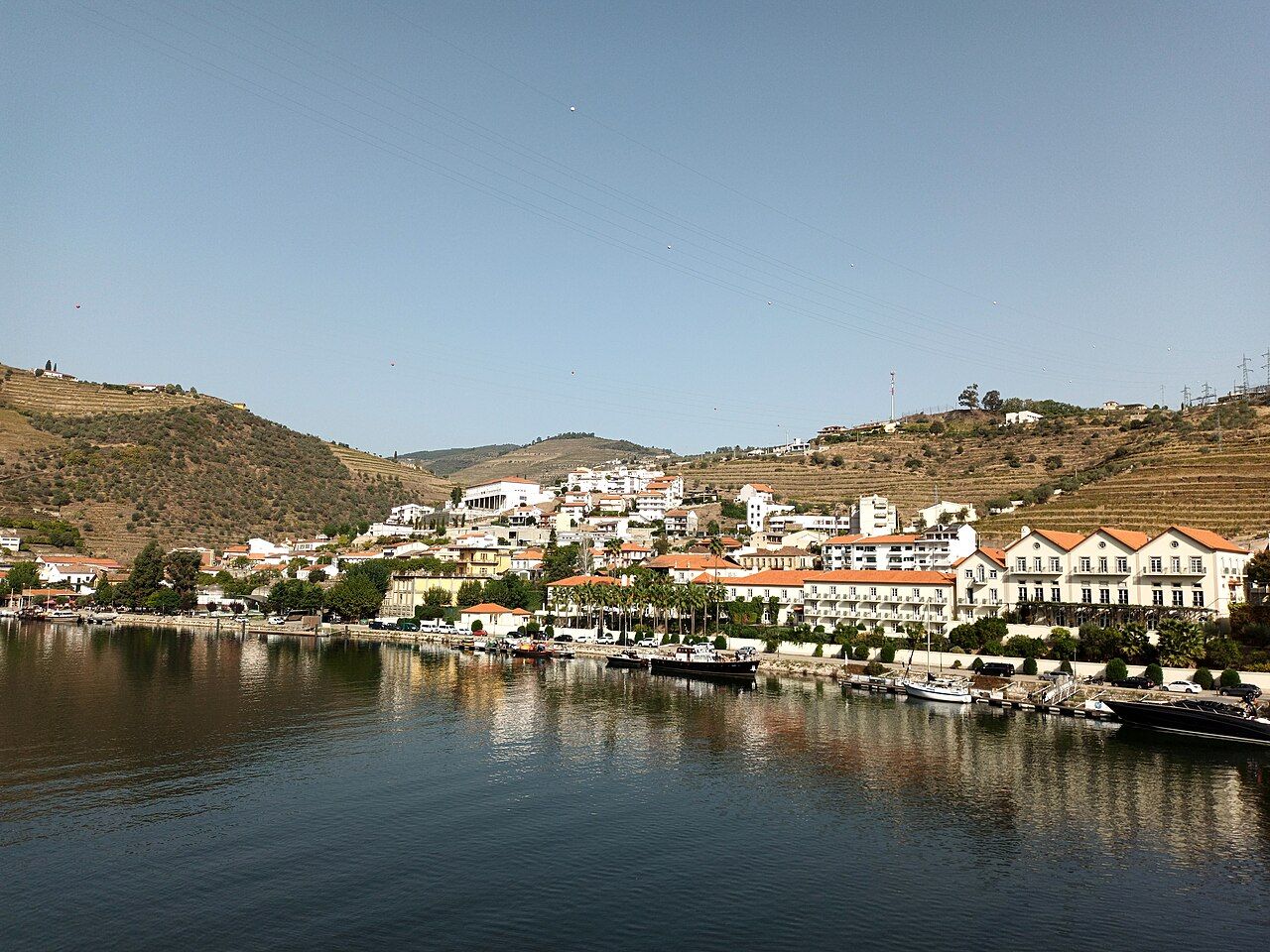
Pinhão, about 25 kilometres upstream, is smaller and lies right among the vineyards, where a little river joins the Douro. Its railway station is decorated with blue and white tile panels showing scenes from the wine year: the harvest, the treading, the boats. Around the village, the slopes rise steeply on all sides, and the quintas, the wine estates, sit among their vines with their names painted large on the walls. Many offer tastings and visits, but they need to be arranged ahead; check before you go.
The riverside railway from Porto, running up the valley through Régua and Pinhão to Pocinho, is one of the great train journeys of Europe, especially on the left side going up. River cruises of various lengths also run from Porto and from the valley towns. Timetables and seasons change, so check before you go.
Harvest in the Douro
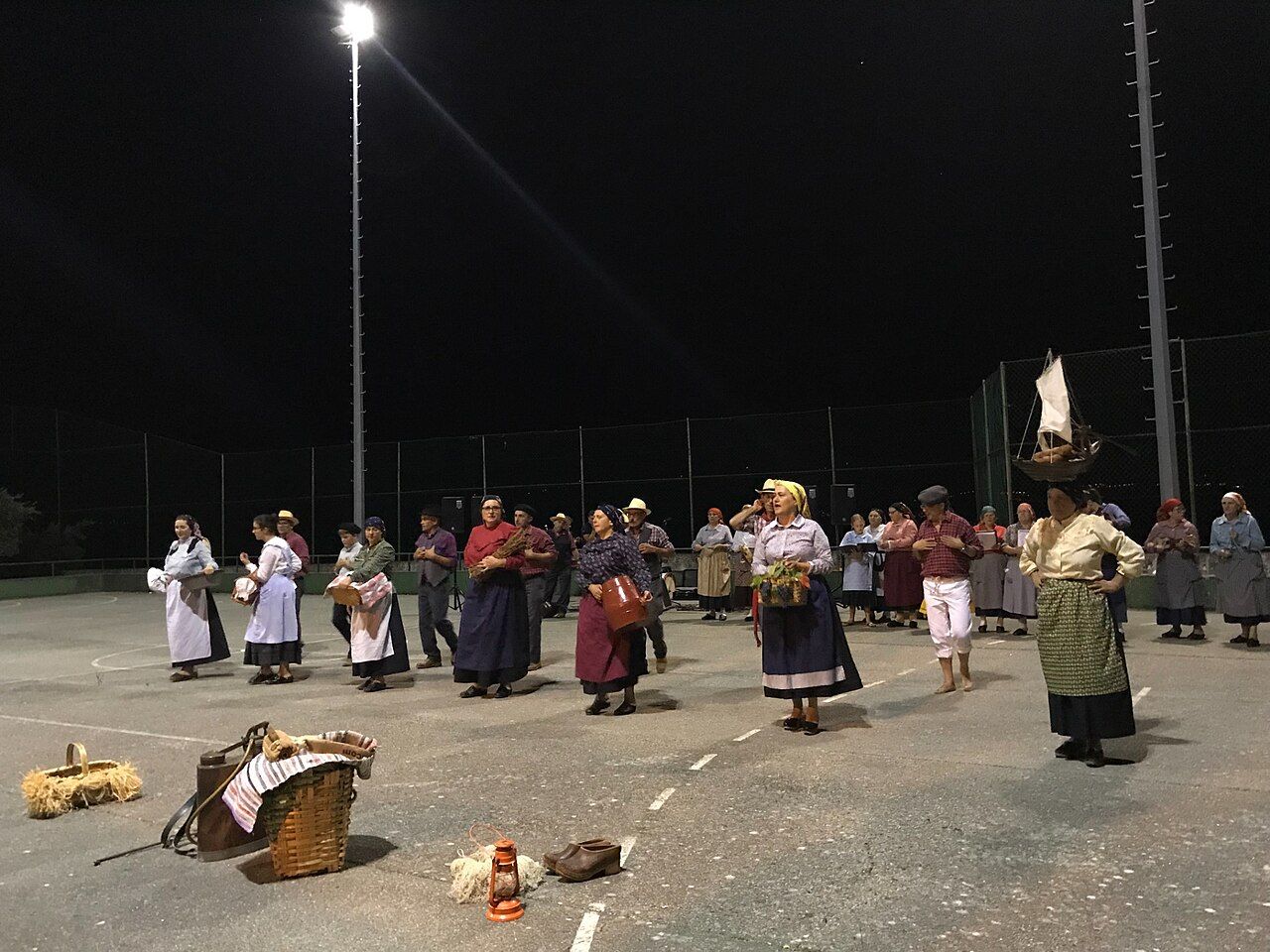
The harvest, the vindima, runs roughly through September and into early October. It is the time when the valley is most alive: picking crews work the terraces with baskets and buckets, tractors crawl along the roads, and the smell of crushed grapes hangs over the villages. Some estates still tread grapes by foot in shallow stone tanks called lagares, a slow, rhythmic job done in the evenings, because human feet crush the fruit without breaking the bitter seeds. Villages hold harvest festivals with folk dances in traditional dress.
It is also the busiest and hottest time of year for visitors, and accommodation in the valley fills early. Late spring, when the vines are in new leaf, and late October, when the leaves turn red and gold across whole hillsides, are quieter alternatives.
Late spring, when the vines are in new leaf, and late October, when the leaves turn red and gold across whole hillsides, are quieter alternatives.
What to eat in the valley
The food of the Douro is the food of northern inland Portugal, generous and meaty. The dish to look for is cabrito assado, kid roasted in a wood oven with potatoes, garlic, olive oil and white wine until the meat falls from the bone. Lamb is cooked the same way. Lamego, a cathedral town on the south bank above Régua, is known for its cured hams and for bola de Lamego, a bread baked with layers of ham, sausage and chicken inside, good for a picnic on a terrace wall.
Salt cod appears everywhere, often roasted with potatoes and plenty of olive oil, and the trout of the side valleys turns up on lunch tables. With the meal come Douro reds, and with dessert, or before the meal as an aperitif, port: a chilled white port with tonic is the local summer drink. Portuguese lunch starts earlier than in Spain, often from about 12.30 or 1 pm.
Roads into the valley
The road between Régua and Pinhão along the river is famous for its curves and views, and it is slow. All the roads in the valley are, with endless bends between steep slopes, so allow plenty of time, avoid driving after a tasting, and consider the train. North of the valley, the land rises towards Bragança and Trás-os-Montes, colder and wilder. South and west lie Coimbra and the Bairrada. The Douro rises in Spain, in the hills of Soria, and runs past Spanish wine country before it crosses into Portugal; for another great river valley of vines, compare the wine villages of La Rioja on the Ebro.