
CastileSalamanca
Salamanca and the ham country to the south
A university city built in golden sandstone, with a square that is the living room of the town, and an hour to the south, the oak pastures where Spain's great hams are cured.
The dish: Jamón de Guijuelo, hand-sliced
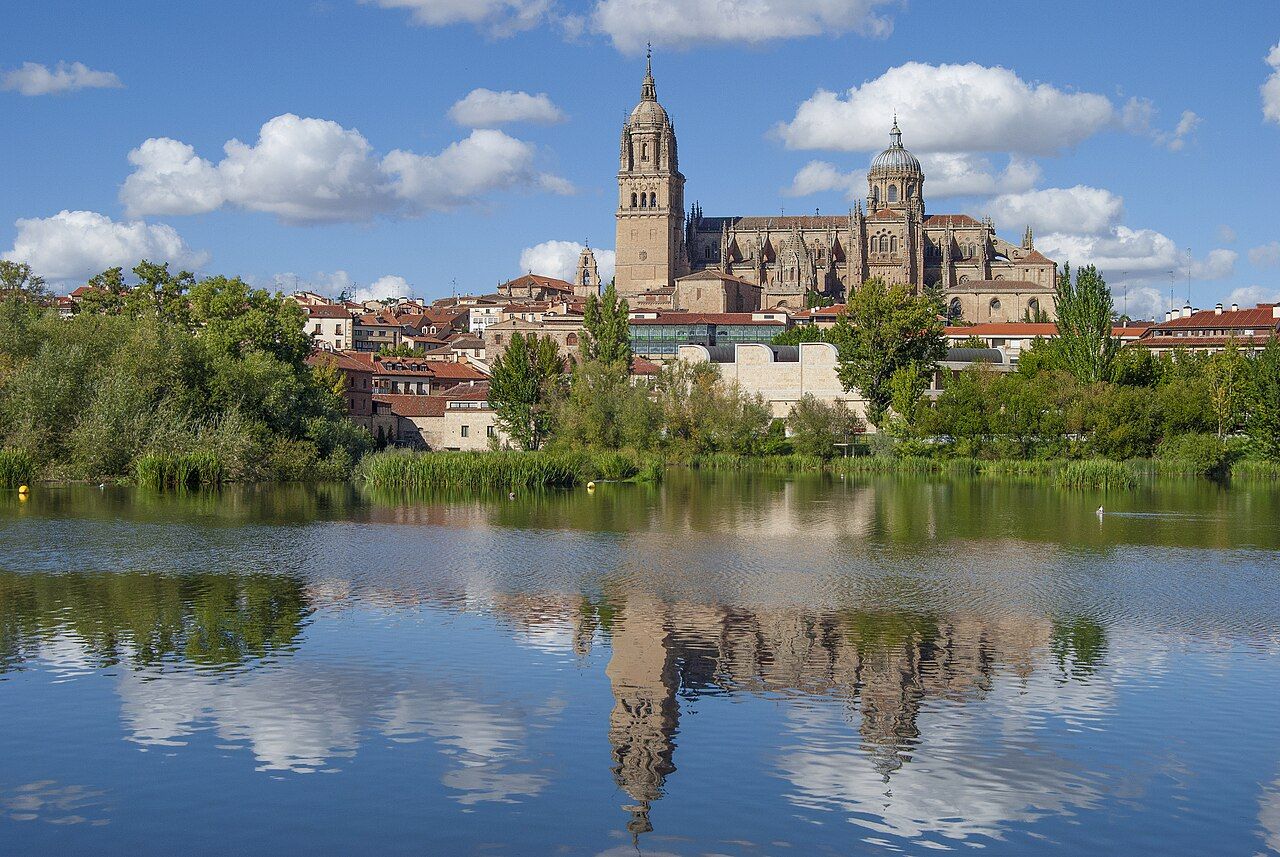
Salamanca is built from a single stone. The sandstone quarried at Villamayor, just outside the city, is soft enough to carve when it is fresh and hardens as it weathers, and it takes on a warm golden colour in the late afternoon sun. Almost every important building in the old town is made of it, so the whole city glows at sunset. It is a university town, lively and young, and its food reaches south into the oak pastures where some of Spain's best ham is made.
The Plaza Mayor
The Plaza Mayor was built in the eighteenth century, begun in 1729, and is one of the finest squares in Spain. Four ranges of arcaded buildings enclose it, three storeys high, with the town hall on the north side under a bell gable. Medallions carved between the arches show kings and other figures from Spanish history. It is the place where the town meets, at every hour, and especially in the evening when it fills with students, families and people walking.
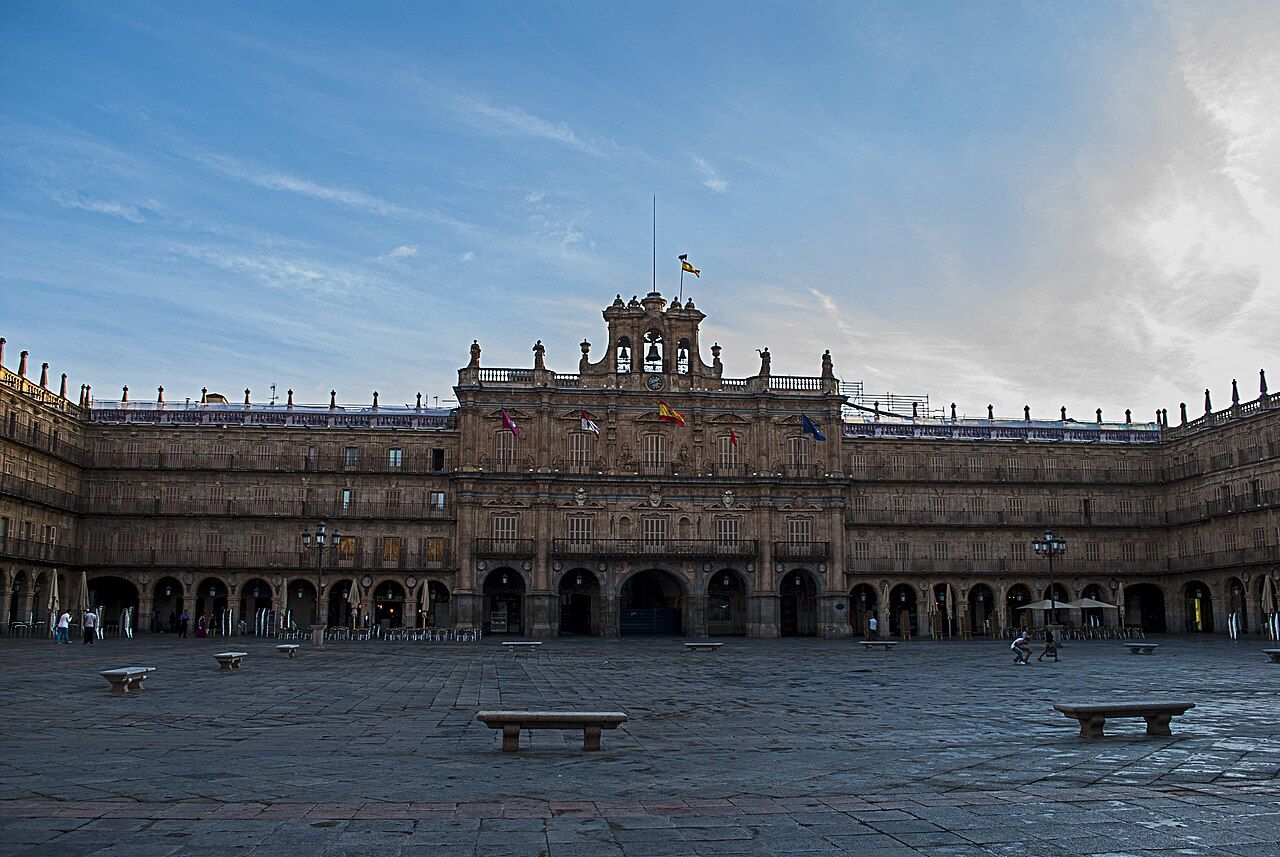
Sit at one of the terraces under the arcades for a coffee or a glass of wine and you have the best seat in the city. Come back after dark, when the square is lit and the stone looks almost white.
The cathedrals and the university
Salamanca has two cathedrals, built side by side. The Old Cathedral is Romanesque, from the twelfth century, with a ribbed dome called the Torre del Gallo. The New Cathedral was built next to it from the sixteenth century onwards, in late Gothic with later additions, and it was large enough to need its own tower and dome. You enter the old one through the new, and the contrast between the two styles, one heavy and low, the other tall and light, is the best part of the visit.
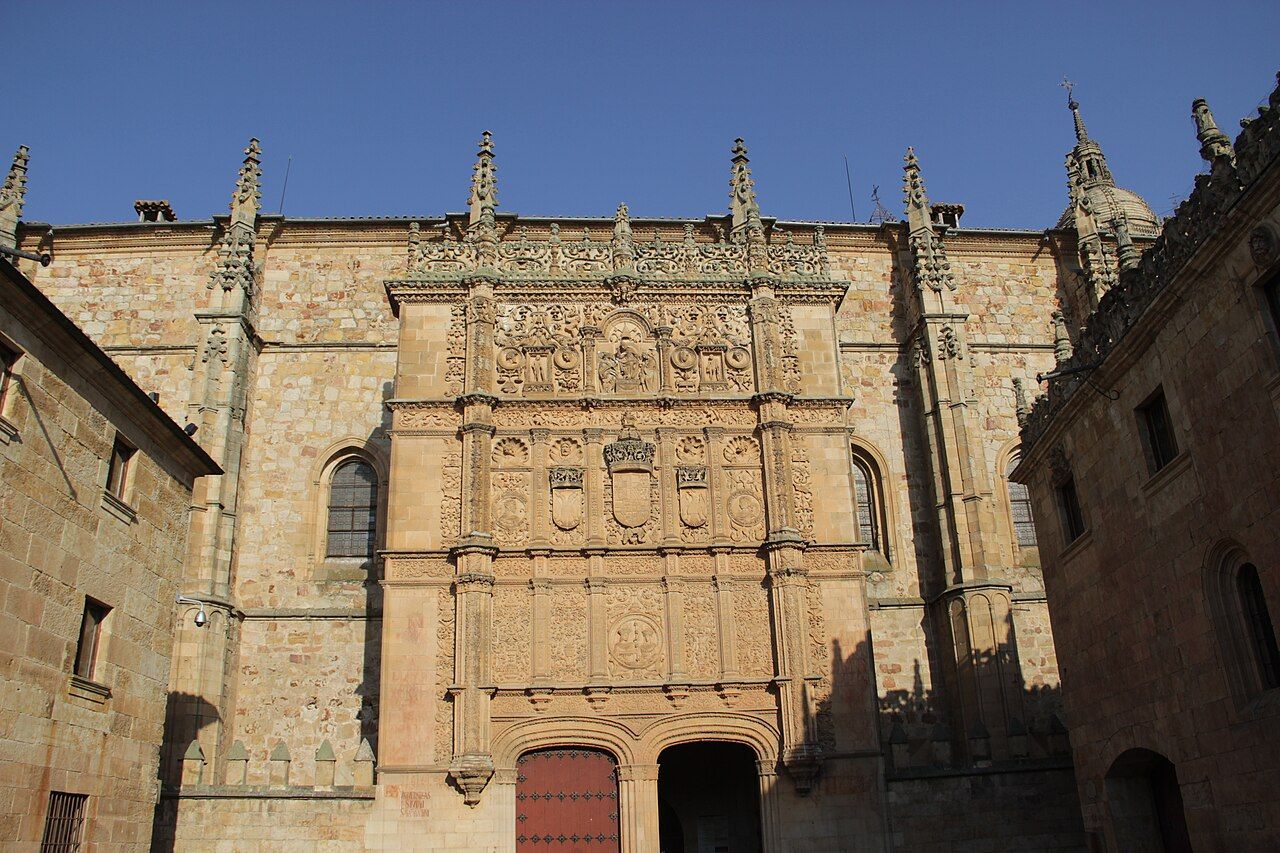
The University of Salamanca, founded in 1218, is among the oldest in Europe. Its main building, the Escuelas Mayores, has a carved façade in a style called Plateresque, so fine that it seems to have been worked by a silversmith. Coats of arms, portraits, mythological figures and plant scrolls cover it. Somewhere among them is a small frog sitting on a skull, and students have long said that finding it brings luck in exams. Opposite the entrance stands a statue of Fray Luis de León, the poet and scholar who taught here in the sixteenth century.
Walk on from the university to the Casa de las Conchas, a fifteenth-century house whose façade is covered with several hundred carved scallop shells, the emblem of the pilgrims of Santiago and of the Order of Santiago. Across the street rise the towers of the Clerecía, a great Baroque Jesuit college. Between them, on any weekday in term, the street is full of students on their way to class, which is the best reminder that this is still a working university town.
The university rooms that can be visited include an old lecture hall with plain wooden benches and the library. The hours and the price of entry move about; confirm both on the day.
Eating in Salamanca
Salamanca eats in the evening, in the streets around the Plaza Mayor and the Calle Van Dyck in the newer part of town. The habit is the tapa: a small plate with a glass of wine or beer, then on to the next bar. Students keep the prices honest and the hours late.
A detour: ExtremaduraCáceres: the walled town and the cheese of CasarThe local dish to look for is the hornazo, a pie of bread dough filled with pork loin, chorizo and ham, sometimes with hard-boiled egg. It is traditionally eaten in spring for the Lunes de Aguas, a local holiday after Easter, when families take it on picnics by the river. Bakeries sell it year round, and it makes a good lunch for a day of walking.
From the west of the province, near the Portuguese border, comes farinato, a soft sausage made with breadcrumbs, pork fat, onion and paprika, often fried and served with eggs. It is the food of a poorer country, made to stretch the pig as far as it would go, and it is very good with a fried egg in the morning.
It is the food of a poorer country, made to stretch the pig as far as it would go, and it is very good with a fried egg in the morning.
South to Guijuelo
Drive south from Salamanca and the land changes. Within half an hour you are in the dehesa, an open pasture scattered with holm and cork oaks, grazed by cattle, sheep and Iberian pigs. This is the landscape that produces Spain's great cured hams, and Guijuelo, about fifty kilometres south of the city, is the town that cures them.
Guijuelo sits high, and its cold dry winters suit the slow curing of ham. Jamón de Guijuelo is a protected designation, made from Iberian pigs. The best are from animals that spent the last months of their lives roaming the dehesa during the montanera, roughly from autumn into winter, eating acorns. That diet gives the fat a soft, nutty character that melts at room temperature. The hams are salted, then hung to dry and cure for two years or more.
A good ham is sliced by hand into thin, small pieces, each with a little fat, and eaten at room temperature, on its own or with bread. Do not eat it cold from a fridge, and do not eat it in thick slices. A plate of hand-sliced ham with a glass of red wine is one of the simplest and best things you can eat in Spain.
The story of acorn-fed pigs continues further south, in Extremadura, which is covered in Trujillo and the dehesa. Guijuelo is the northern end of that same country.
Wine with the ham
The Arribes del Duero, along the gorge of the Duero on the Portuguese border to the west, produce red wines from local grapes, and the Sierra de Salamanca to the south has its own small appellation. Ribera del Duero and Toro, further east, are also within reach.
Getting there and around
Salamanca is about two and a half hours from Madrid by car or train, and buses run regularly. It is also on the road to Portugal, so it pairs well with a trip to Coimbra and its old university across the border. The old town is compact and mostly pedestrian; park on its edge and walk.
The best months are spring and early autumn. Summers are hot by day, and winters cold, with clear sharp light. The town is at its busiest in term time, quieter in August.
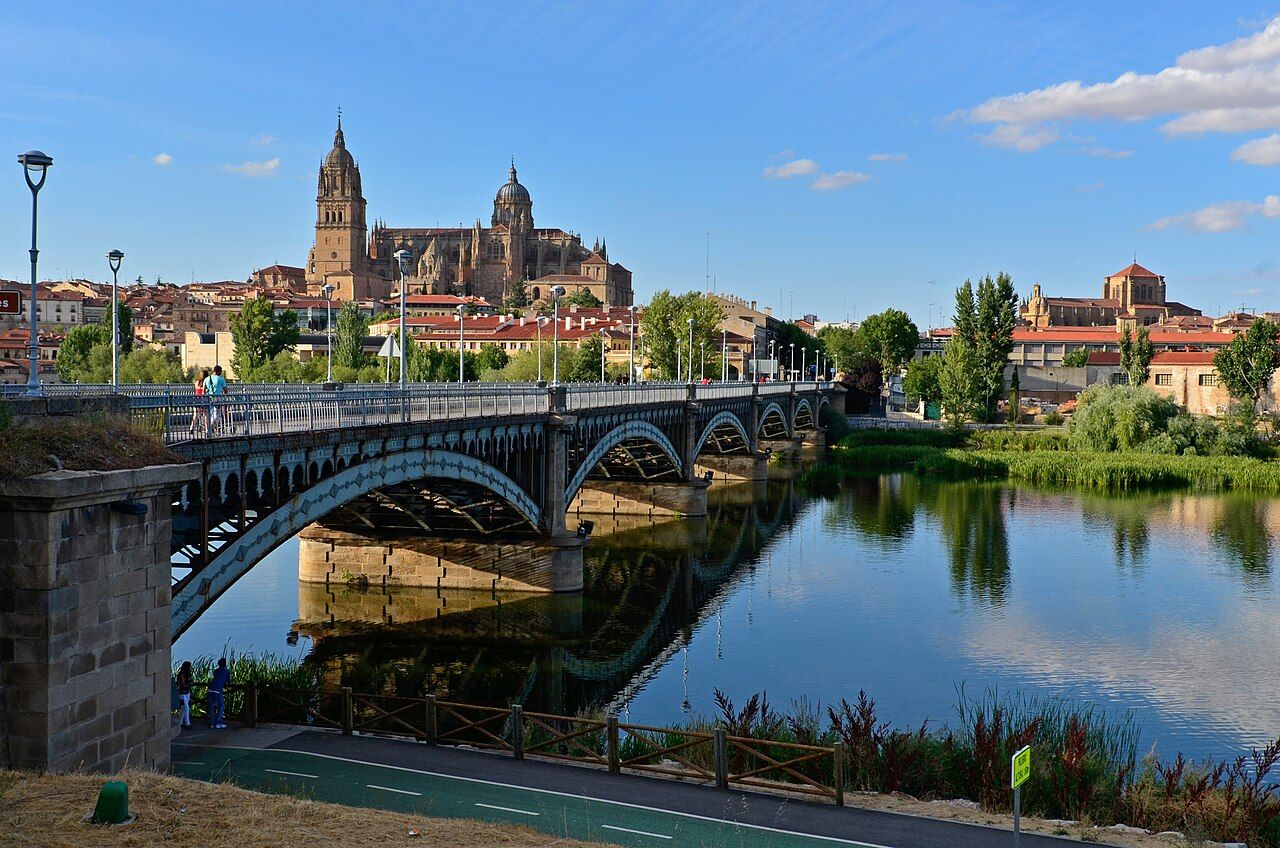
Before you leave, cross the Roman bridge over the Tormes and look back. The cathedral towers, the university and the old town rise together above the river, all in the same golden stone, as they have for centuries. From Segovia and its aqueduct or from Ávila, the drive across the plain is open and quiet.