
Aragón and La RiojaZaragoza
Zaragoza: the Pilar, the Aljafería and the tapas lanes
Aragón's capital sits on the Ebro under a hard wind called the cierzo: a baroque basilica of tiled domes, an eleventh-century Islamic palace, and lanes of small bars around the old centre.
The dish: Roast ternasco with potatoes
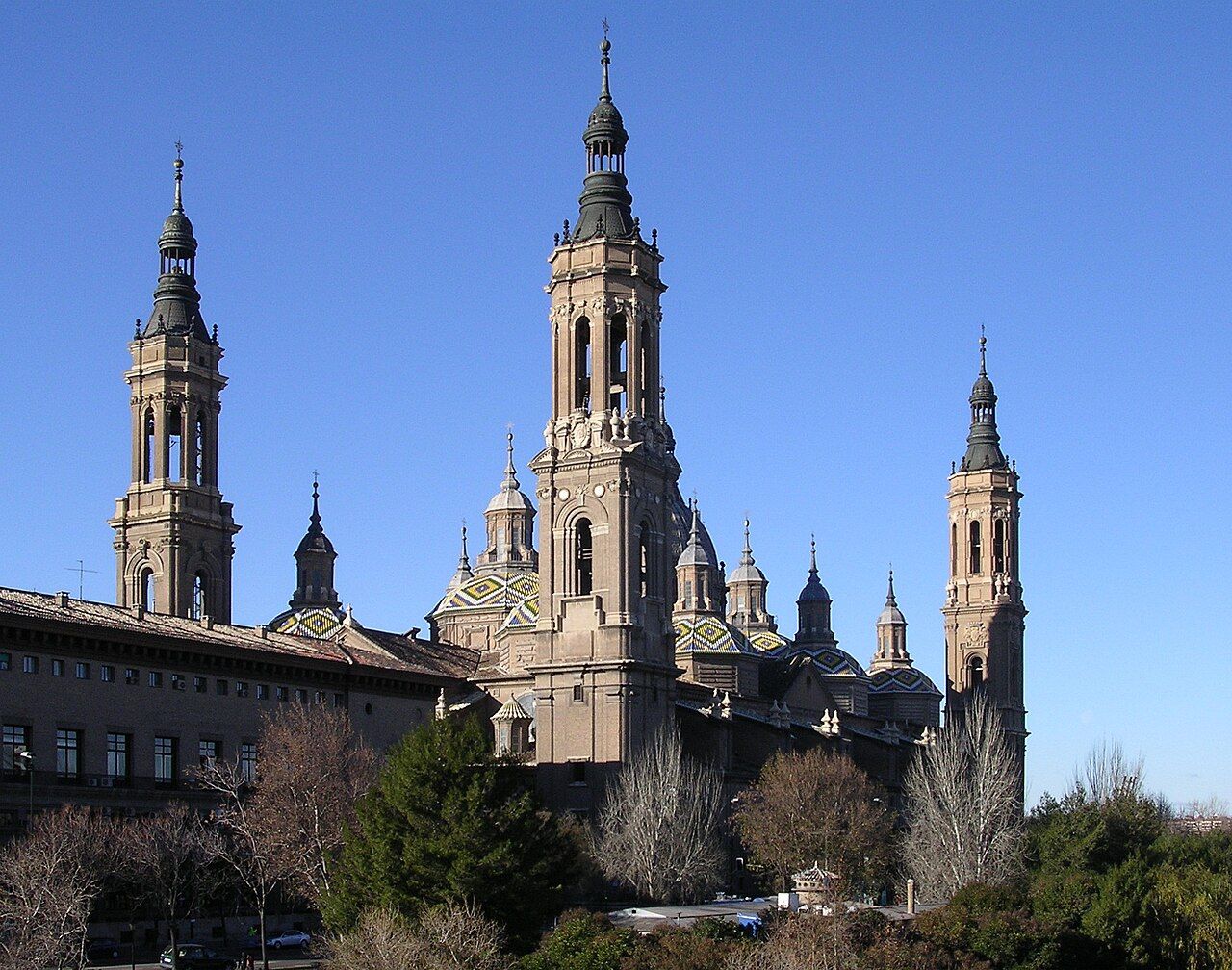
Zaragoza is a big city that most travellers pass through at speed, on the fast train between Madrid and Barcelona or on the motorway along the Ebro. Stop, and you find one of the most layered old centres in Spain. The Romans founded it as Caesaraugusta, and the name wore down over the centuries into Zaragoza. Islamic rulers made it the capital of a kingdom, the kings of Aragón took it in 1118, and every period left something standing. The city is also a serious place to eat, with a tapas habit concentrated in a few old lanes and a regional kitchen built on lamb, vegetables from the Ebro valley and fruit from the orchards around it.
The Basilica of the Pilar
The great church on the riverbank is the first thing you see, its four tall towers and crowd of domes tiled in green, yellow, blue and white rising above the Ebro. It is built over the spot where, by tradition, the Virgin Mary appeared to Saint James in the first century, standing on a pillar of jasper, while he was preaching in Spain. The pillar itself is kept in a side chapel, and a small patch of it is left bare for the faithful to touch. A steady stream of people do, from early in the morning.
The present building was begun in the late seventeenth century, and work on it went on into the twentieth, when the last towers were finished. Inside it is vast and rather dim. Look up for the frescoes in the domes: Francisco de Goya, born in the village of Fuendetodos south of the city, painted one of them as a young man. Two bombs that fell on the church during the Civil War without exploding are kept on display inside. The city's biggest fiesta, the Pilar, falls in October, around the 12th, when a mountain of flowers offered to the Virgin builds up in the square outside. Dates and events change, so check before you go.
At the other end of the long square stands La Seo, the cathedral, which many visitors miss. One of its outer walls is covered in brick and glazed tile laid in geometric patterns, the work of Mudéjar craftsmen, Muslims living under Christian rule, whose building style runs all through Aragón.
The Aljafería
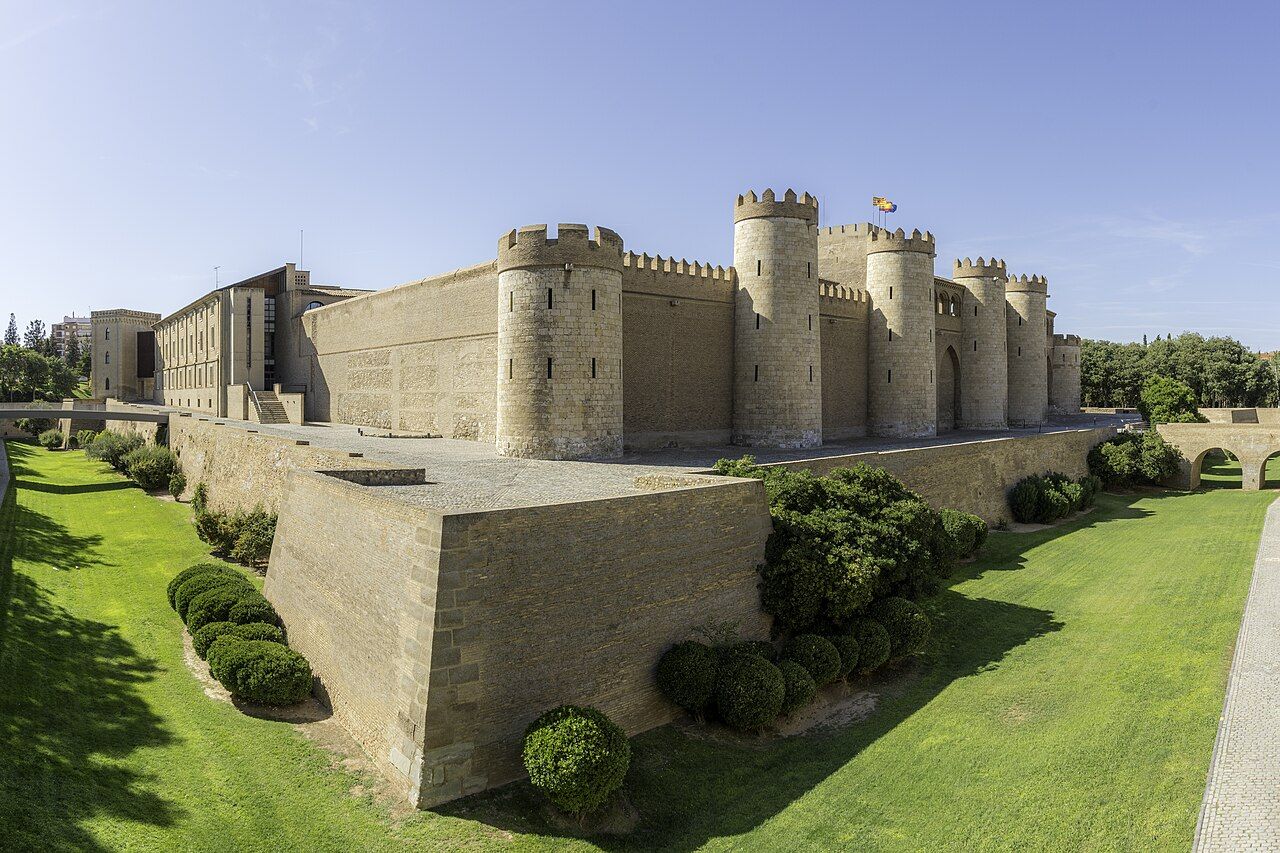
West of the old centre, inside a dry moat and walls of round towers, stands the Aljafería, a palace built in the eleventh century for the Islamic rulers of the kingdom of Saraqusta. The core of it is a courtyard of slender, interlaced arches in carved plaster, with pools and orange trees, and a tiny octagonal oratory whose decoration is among the finest to survive from that period anywhere in Spain.
After the Christian conquest the kings of Aragón lived here, and the Catholic Monarchs added a floor of rooms with gilded coffered ceilings in the late fifteenth century. Later the Inquisition used it, then the army. Today it houses the regional parliament of Aragón, which means parts of it close on some days; check before you go. One of its towers, the Torre del Trovador, gave its name to a nineteenth-century Spanish play that Verdi turned into the opera Il trovatore.
A detour: La Mancha and CuencaCuenca's hanging houses and the gorge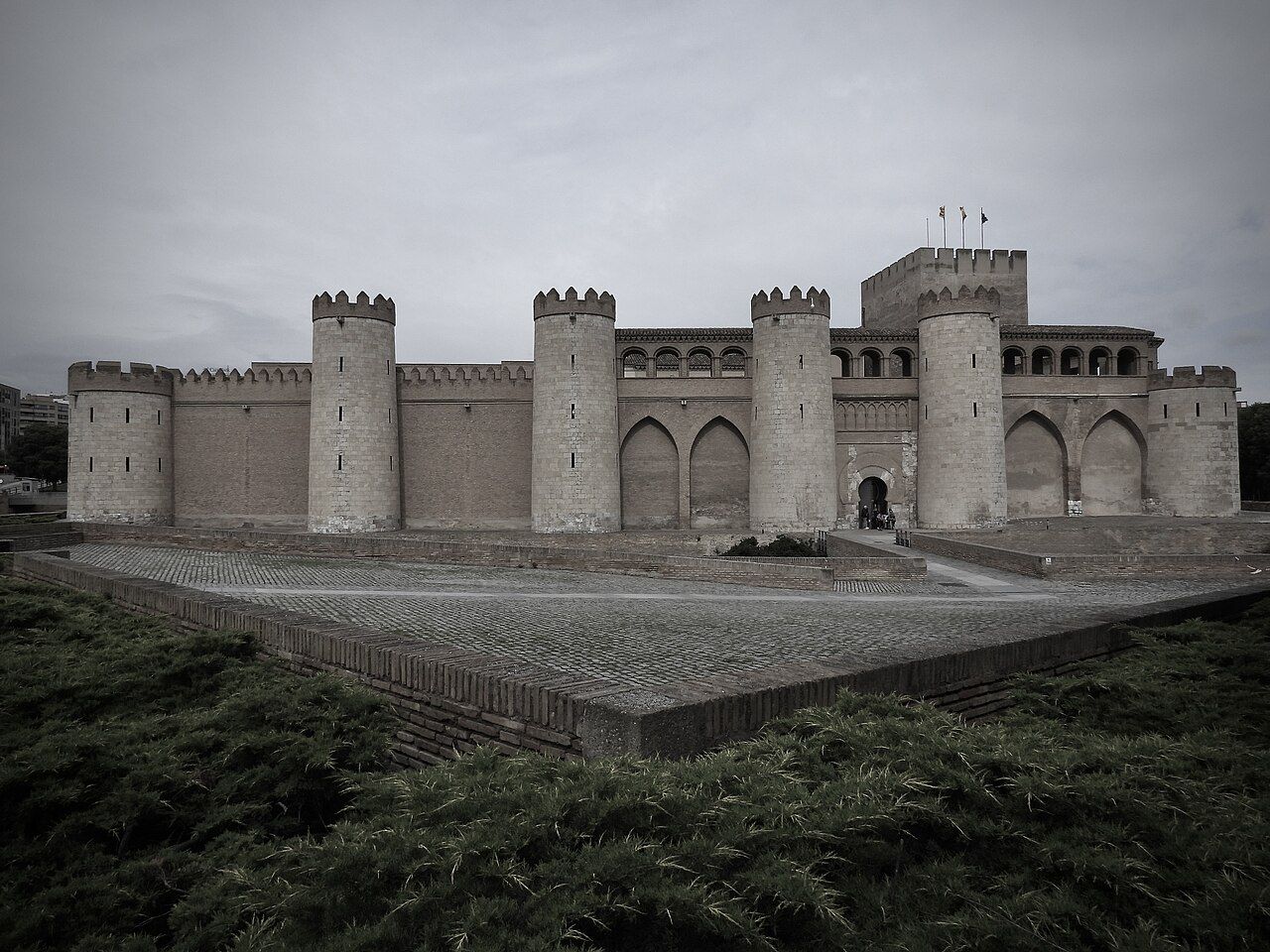
For a city on the plain, the Aljafería makes a useful comparison with the mixed building traditions of Toledo, where churches, synagogues and a mosque also share one hill.
The tapas lanes
Close to the Plaza de España, a tangle of narrow streets known as El Tubo holds dozens of small bars, often standing room only, each with a counter of plates and a few dishes it is known for. The pattern is the same as in much of northern Spain: you order a drink and a small portion, eat it standing, then move on. Unlike León, where a tapa often comes free with each drink, here you usually choose and pay, but the portions are generous.
What you find on the counters: croquettes, fried peppers, wild mushrooms in season, anchovies, lamb sweetbreads and madejas, lamb intestines plaited and grilled crisp. Look also for borraja, borage, a vegetable Aragón claims as its own, whose stalks are boiled with potatoes and dressed with olive oil, and for chilindrón, a stew of chicken or lamb with red peppers, tomato and onion. The bars fill from about 1 pm and again from about 8 pm; in between, many close.
Ternasco and the Ebro kitchen
The dish to try in Zaragoza is ternasco, lamb from Aragón's sheep slaughtered young, still pale and tender, protected by a regional mark of origin. The classic way is a shoulder or leg roasted with sliced potatoes, garlic, a little white wine and lard, until the skin crisps and the potatoes soak up the juices. Chops are grilled over embers. It is simple food and depends on good meat.
The fertile land along the Ebro supplies the rest: asparagus, artichokes and peppers from the valley, and late in summer the big yellow peaches of Calanda, which are grown in paper bags on the tree to keep the skin perfect. For something sweet, the city's old confectioners make candied fruit dipped in chocolate. The wines of Aragón come from Cariñena, Campo de Borja and Calatayud, mostly reds from Garnacha, with the cooler Somontano near the Pyrenees. Upstream, the same river leads to the wine villages of La Rioja.
The river and the wind
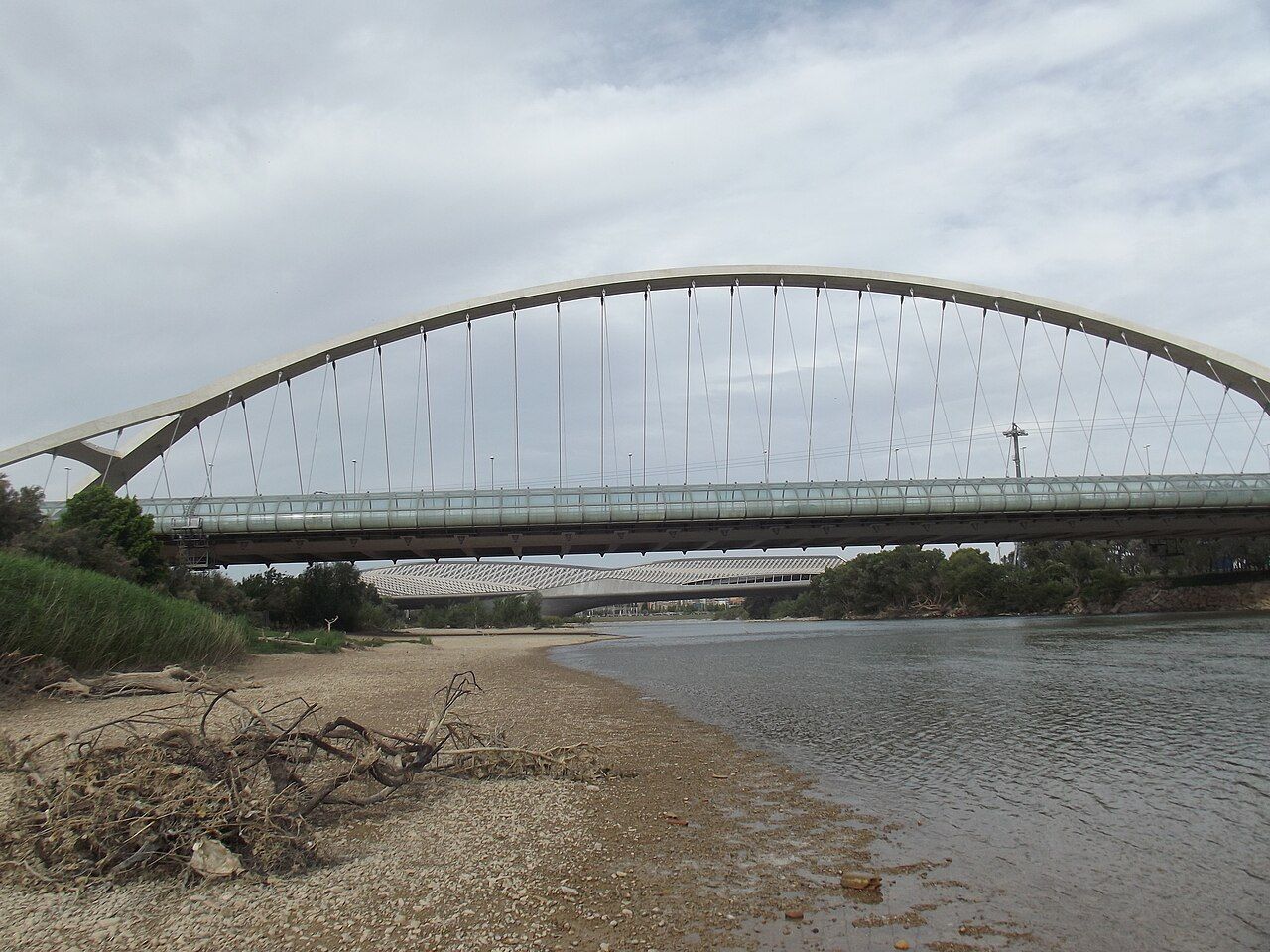
For years Zaragoza turned its back on the Ebro. That changed with the international exhibition of 2008, whose theme was water: new bridges, riverside paths and parks now run along both banks, and you can walk or cycle for kilometres beside the water. The old stone bridge, the Puente de Piedra, still leads straight from the Pilar across to the north bank, and the view back from it at dusk, with the domes lit, is the best in the city.
Then there is the cierzo, a cold, dry wind from the northwest that funnels down the Ebro valley and can blow for days, especially in winter and spring. It clears the air and makes the city feel colder than the thermometer says. Pack a layer you can close at the neck, even when the sun is out.