
La Mancha and CuencaAlmagro
Almagro: the theatre courtyard and the aubergines
A small town in La Mancha with a theatre that has survived since the seventeenth century, a long square framed in green galleries, and a pickled aubergine known across Spain.
The dish: Pickled Almagro aubergines
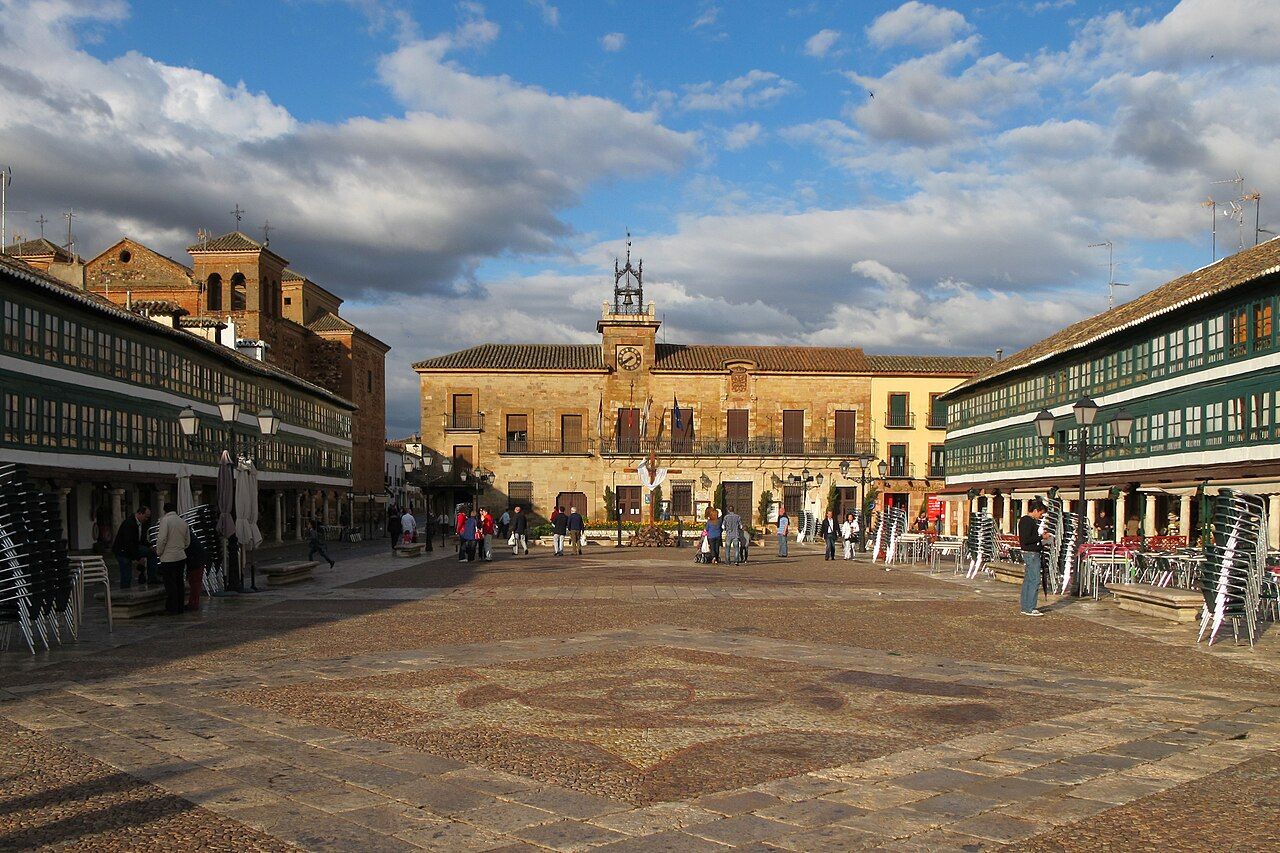
Almagro is a small town on the plain of La Mancha, south of the big windmill country and east of Ciudad Real. It was once more important than it looks today. In the Middle Ages it was the seat of the Order of Calatrava, a military religious order of knights, and in the sixteenth century German bankers, the Fugger family, ran their business from here. That wealth left the town with palaces, convents and one of the best squares in Spain, and a theatre that has survived since the seventeenth century.
The Plaza Mayor
Almagro's Plaza Mayor is long and narrow, with arcades of stone columns along both sides. Above the arcades run two storeys of wooden galleries enclosed in small panes of glass and painted dark green. The effect is unusual in Spain and gives the square a distinct character, light and airy rather than heavy. The design is often linked to the town's northern European connections, though its origins are debated.
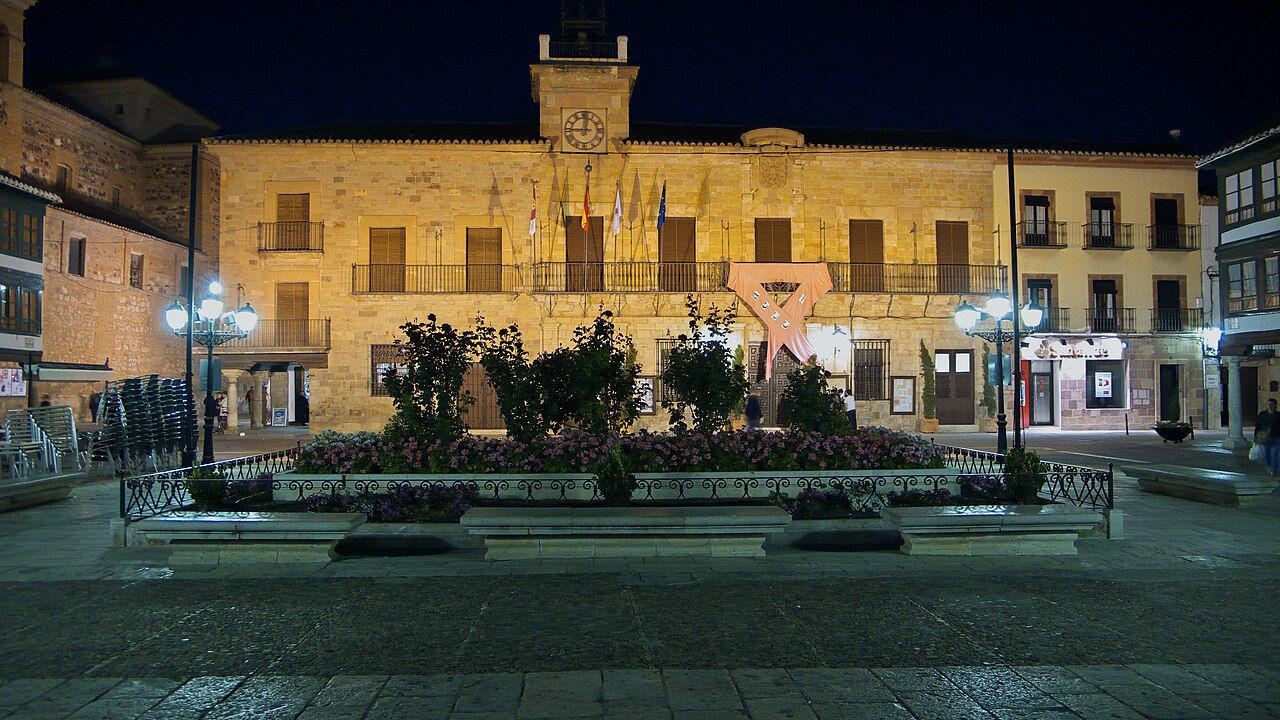
At the end of the square stands the town hall with its clock tower. In the evening the square fills with families and people sitting at the terraces under the arcades.
The Corral de Comedias
Off the Plaza Mayor, through a narrow doorway, is the Corral de Comedias, the town's theatre. It was built in the seventeenth century and is the only one of its kind to have survived from that period in such complete form, still used for performances.
A corral de comedias was a courtyard theatre. The stage stood at one end of an open yard, with wooden galleries on the three other sides for the better-off audience, and the poorer spectators stood in the yard below. Women sat apart. The plays were the comedies and dramas of the Golden Age, by Lope de Vega, Calderón de la Barca and Tirso de Molina. In Almagro, the galleries are painted red, the floor is of beaten earth, and there is a well in the yard. Visits are possible during the day, and in the evening there are performances. Hours and prices change; check before you go.
Every summer, roughly in July, Almagro holds an international festival of classical theatre, with plays performed in the Corral and in other theatres and courtyards around the town. It is the town's busiest time; book well ahead if you plan to stay. The National Theatre Museum, also in the town, covers the history of Spanish theatre.
Convents and palaces
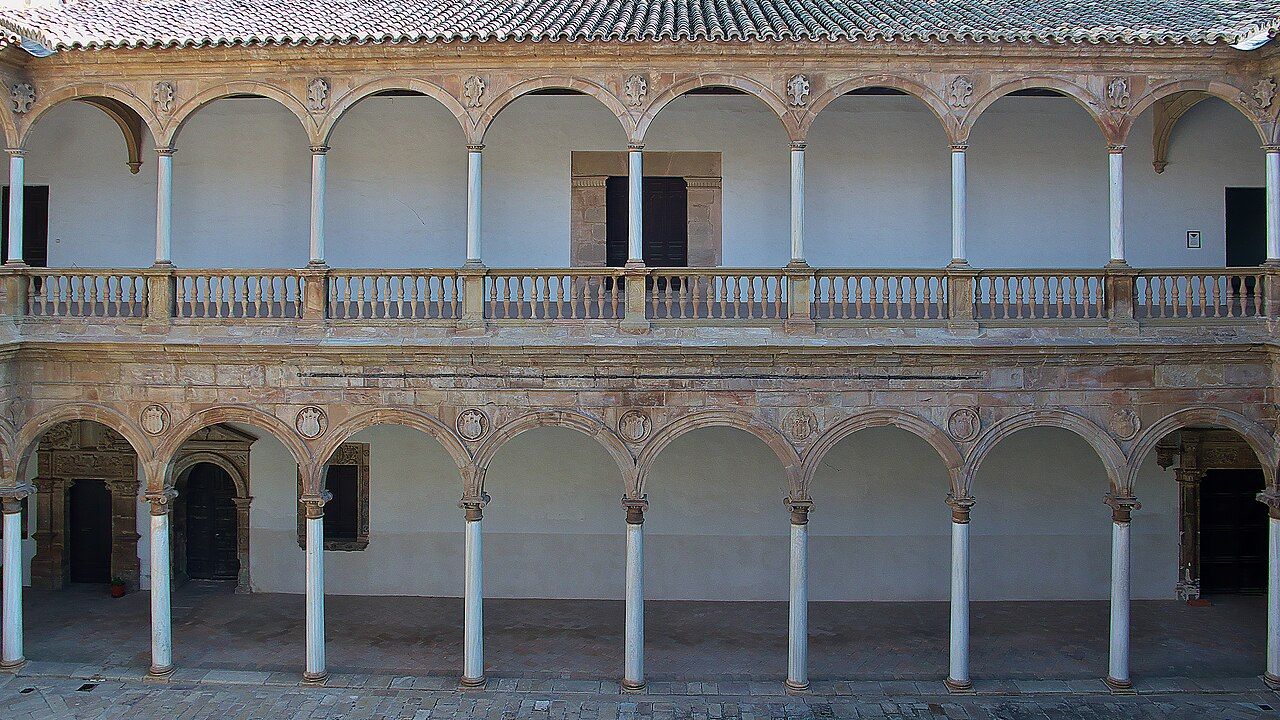
Walk the streets around the square and you find the doorways of noble houses with coats of arms carved above them, and the walls of convents. The most impressive is the former Convent of the Assumption of Calatrava, with a Renaissance cloister of two storeys, slender marble columns and carved medallions.
The town's other tradition is bobbin lace, encaje de bolillos, and on quiet streets you may still see women at their doors working the bobbins. It is a craft passed down through families, and it is slow.
A detour: La Mancha and CuencaLa Mancha: windmills, Manchego and Don Quixote's innsThe aubergines of Almagro
Almagro is known across Spain for its pickled aubergines, berenjenas de Almagro, which have a protected designation. They are small, round, purple aubergines, grown in the area around the town and picked before they reach full size. They are blanched, then put into a dressing of vinegar, oil, garlic, cumin, paprika and salt, with fennel and red pepper, and left to cure for several days.
The classic preparation is the aliñada: each aubergine is held closed with a stick of fennel, with a strip of red pepper inside. They taste sharp, sour and spicy, and are soft and slightly crunchy. They are eaten as a tapa with a drink, cut into pieces and served with bread. You will find them in bars around the square, and in jars at shops and stalls across the town and the roads of the region.
The aubergines grow from summer into autumn, and fresh ones arrive from roughly August onwards. They are available in jars year round. They travel well and make a good present to take home.
The rest of the table
The cooking of Almagro is that of La Mancha as a whole: pisto, migas, game stews, roast lamb, Manchego cheese and the wines of the region. Lunch begins from about 2 pm, and many places close one day a week. During the festival, the town eats late and the terraces of the square stay full long after the performances end. For the wider picture of the cheese, the windmills and the region, see the windmills and Manchego of La Mancha.
Getting there
Almagro is about twenty-five kilometres from Ciudad Real, which has a high-speed train station on the line from Madrid to Andalusia. Local trains and buses connect to Almagro, and by car the drive across the plain is quick. The old town is small and walkable; park on its edge.
Spring and autumn are the best times. July brings the festival and the heat, both at their peak. The town also makes a good stop between Madrid and Andalusia, and an easy day from Toledo and its river loop.