
Inland PortugalÉvora
Évora and the Alentejo plain
A whitewashed university town inside its walls, with a Roman temple at its highest point, and around it the wide Alentejo: cork oaks, wheat, sheep and a kitchen that never wastes bread.
The dish: Açorda alentejana
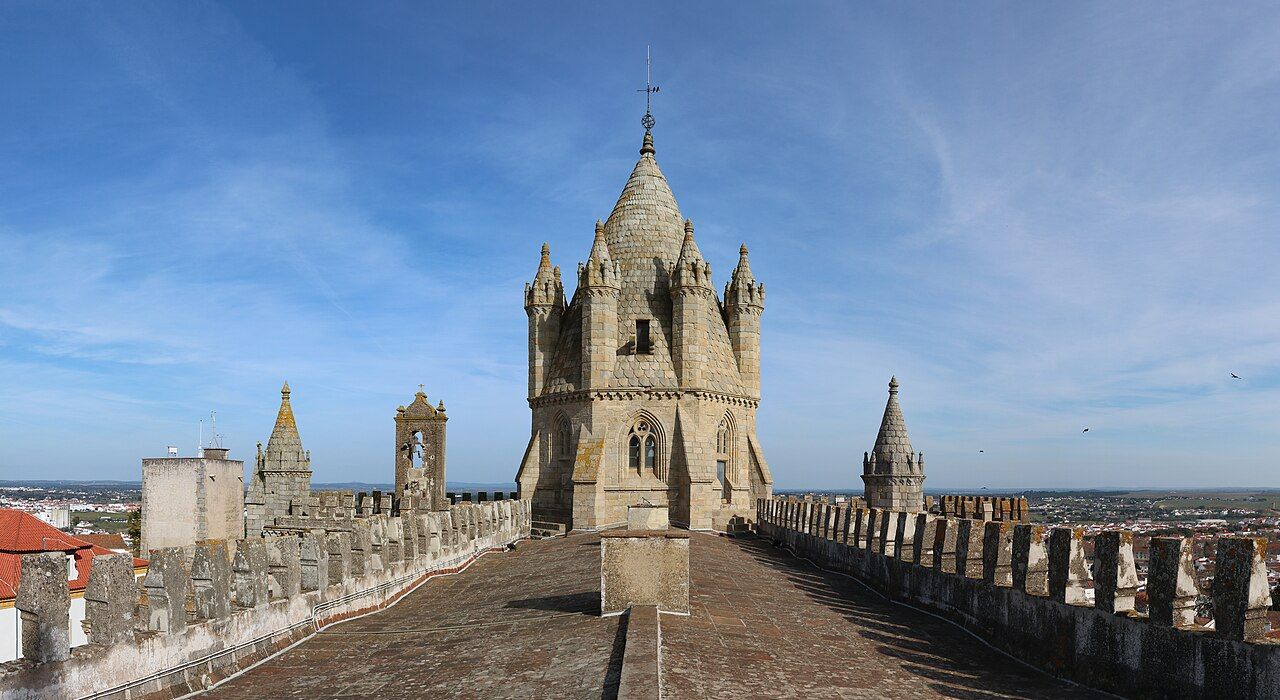
Évora sits on a low rise in the middle of the Alentejo, the great southern plain of Portugal, and you see it from far off: a white town inside walls, with the towers of its cathedral above the roofs. Inside, it is one of the best-preserved old towns in the country, a place of whitewashed houses edged in yellow ochre, arcaded streets, convents, palaces and a university, all inside a circuit of medieval walls. It has been a city since Roman times, was a royal residence for long periods of the Middle Ages, and is a World Heritage site. But Évora is also the capital of a farming region, and the plain around it, with its cork oaks and wheat and sheep, shapes what you eat here as much as the monuments shape what you see.
The Roman temple and the cathedral
At the highest point of the town stand the columns of a Roman temple, built in the first century AD. It is often called the Temple of Diana, though there is no evidence it had anything to do with the goddess; it was more likely dedicated to the cult of the emperor. Its granite columns with marble capitals survived because the building was walled in and used for other things over the centuries, including, for a time, a slaughterhouse. In the nineteenth century the later walls were removed, leaving the columns standing on their high base against the sky. It is a small monument, but its setting, beside the cathedral and old palaces, makes it the heart of the town.
The cathedral, the Sé, a few steps away, is a fortress-like Gothic church of granite built mainly in the thirteenth century. Its best moment is on the roof, which you can usually walk on: a terrace of stone around a conical tower over the crossing, with turrets and a view over the town and the plain beyond. The cloister below is plain and quiet. Times and admission shift through the year, so confirm them locally first.
The Chapel of Bones and the town inside the walls
The Capela dos Ossos, beside the church of São Francisco, is lined from floor to ceiling with human bones and skulls, set into the walls in patterns. It was made by Franciscan friars in the sixteenth century, when the town's crowded graveyards were cleared, as a meditation on death. Over the entrance, an inscription tells you that the bones within are waiting for yours. It is strange rather than gruesome, and quieter than you expect.
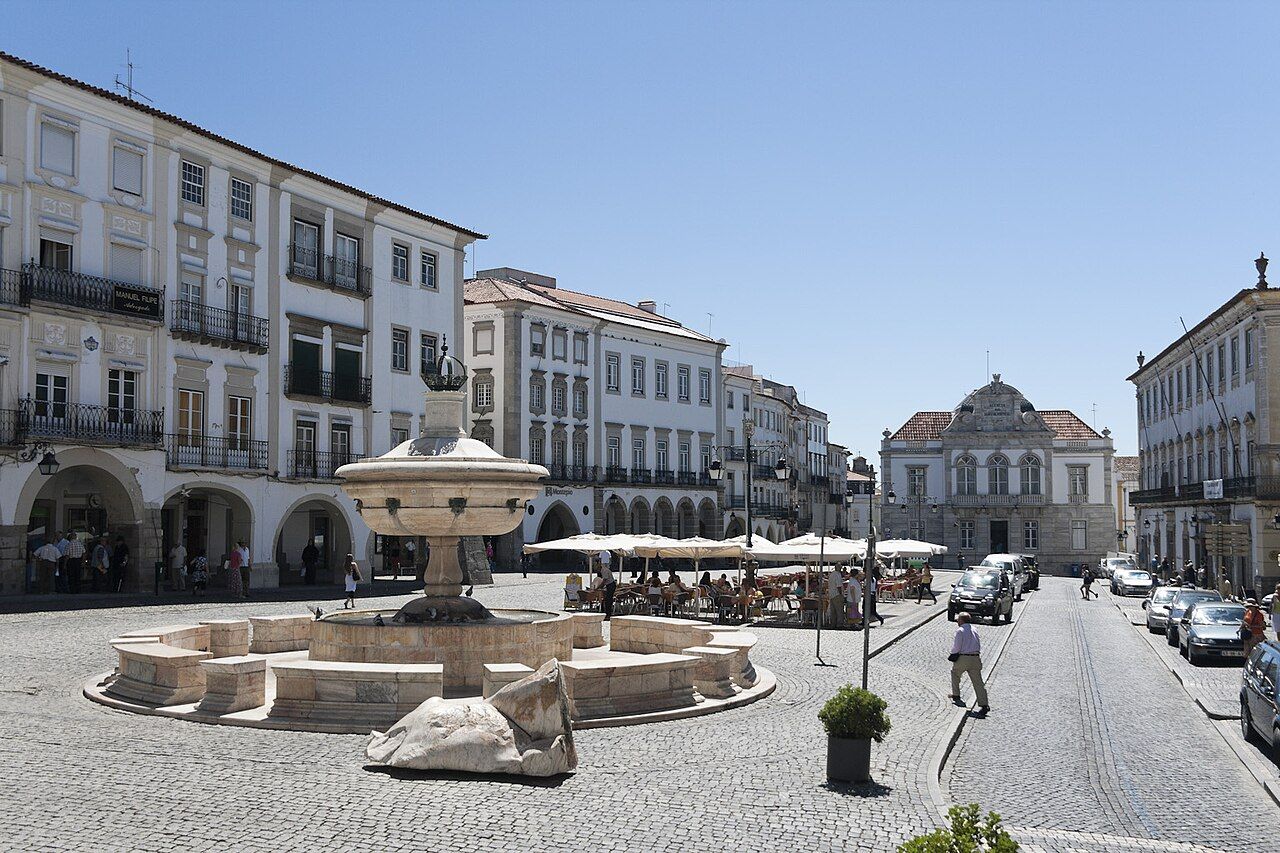
The main square, the Praça do Giraldo, is named after Geraldo Sem Pavor, Gerald the Fearless, the knight who took Évora from its Islamic rulers in 1165. Arcades on its sides shade cafés, and a marble fountain stands at the top. From here, lanes run off in every direction, and the pleasure of Évora is in walking them without much of a plan: past a sixteenth-century aqueduct whose arches have houses built into them, past the old Jesuit university, past churches with tiled interiors.
Just outside town, on a slope among cork oaks, the Almendres Cromlech is a field of nearly a hundred standing stones set up in the late Stone Age, older than anything in the town. Few sights in Portugal feel so remote while being so close to a city.
The plain: cork, wheat and sheep
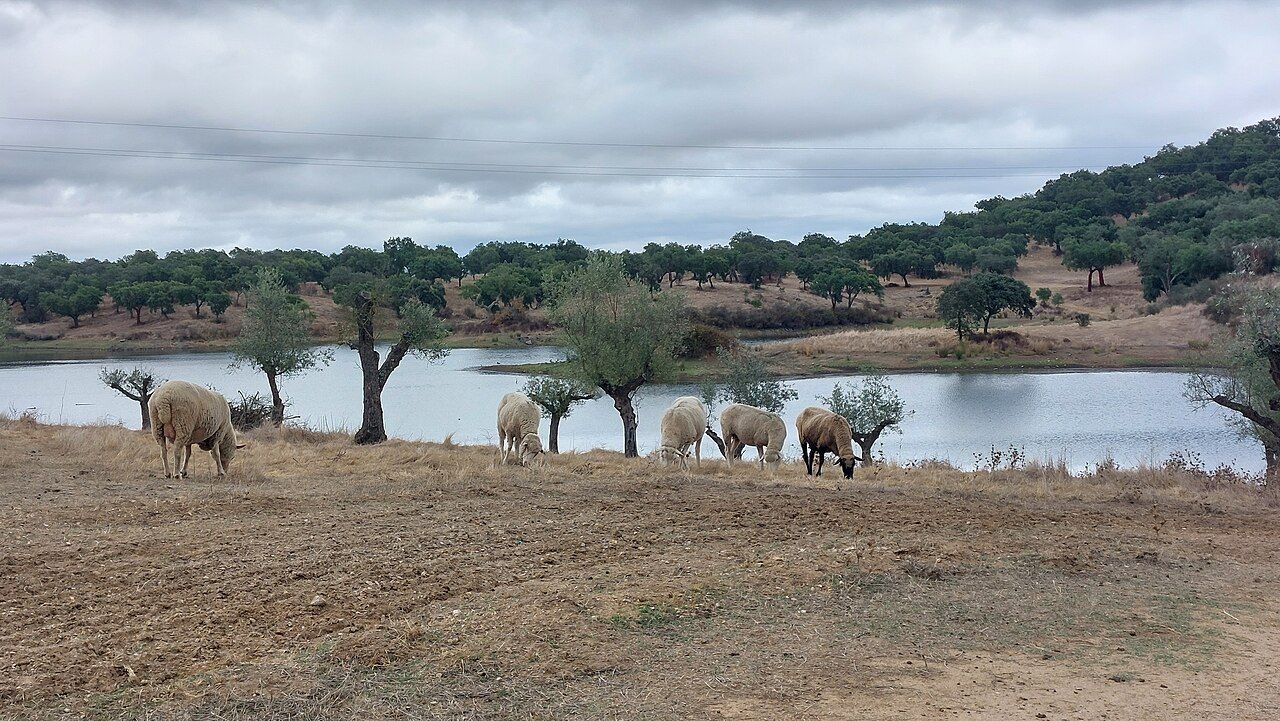
The Alentejo covers about a third of Portugal and holds only a small share of its people. The landscape around Évora is the montado, an open pasture of scattered cork and holm oaks under which sheep, cattle and black pigs graze, much like the dehesa across the border in Spain. Every nine years or so, the cork oaks are stripped of their bark by hand, leaving the trunks bright red-brown, and Portugal produces more cork than any other country in the world. You see numbers painted on the trunks, which record the year of the last harvest.
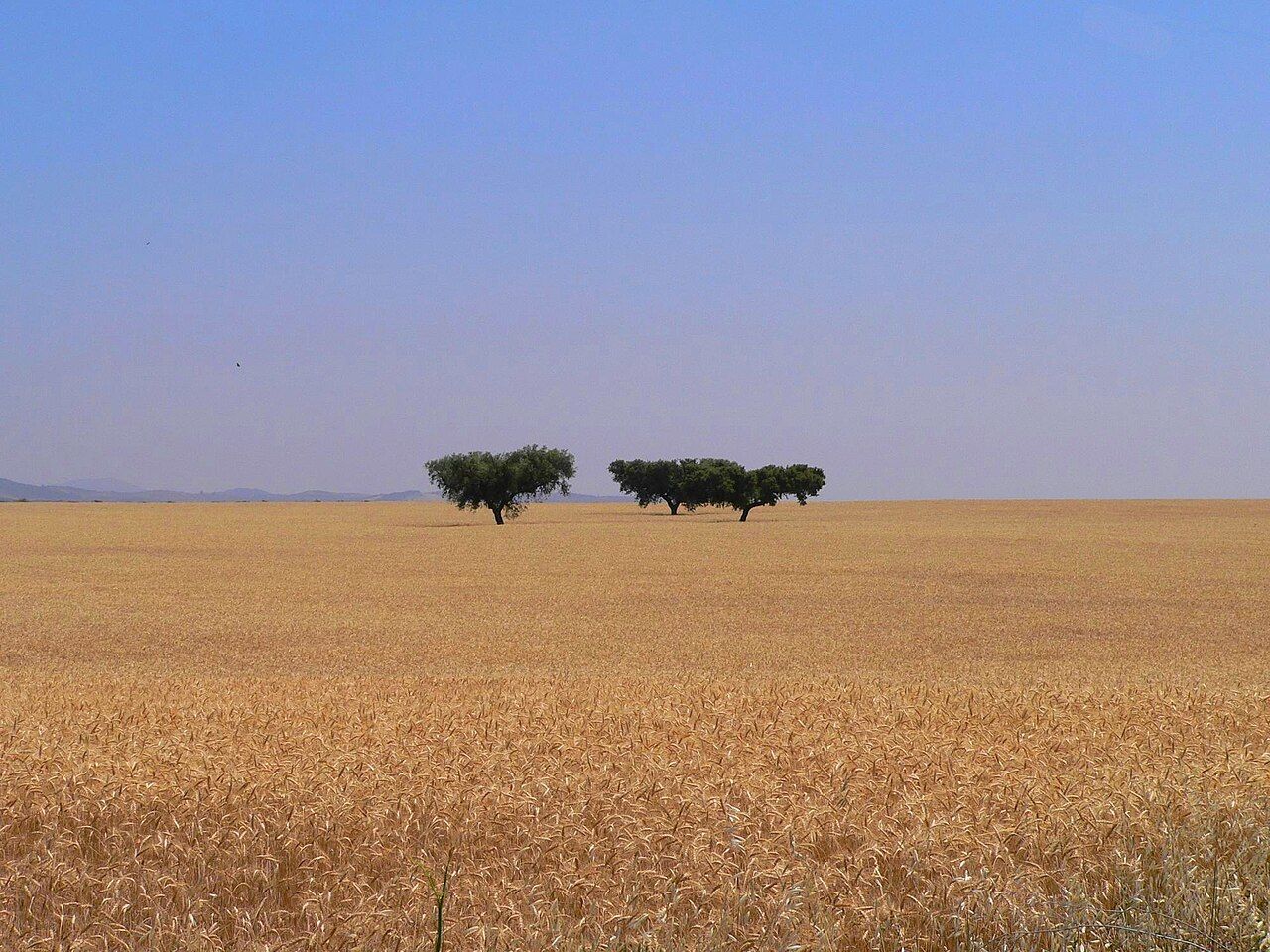
A detour: ExtremaduraCáceres: the walled town and the cheese of CasarBetween the oaks lie fields of wheat that turn gold by early summer, and white farmsteads, the montes, sit alone on the low rises. The heat in July and August is severe, often well over 40 degrees, and life slows down accordingly. Spring, with the fields green and full of flowers, and autumn are the best times to travel.
Bread, pork and the Alentejo table
The Alentejo kitchen was born in poverty and is built around bread, olive oil, garlic, coriander and pork. Its most famous dish shows that clearly: açorda alentejana is a soup made by pouring boiling water over a paste of garlic, coriander, salt and olive oil, then adding slices of day-old bread and a poached egg. It tastes much better than the description, fresh and strongly herbal. Bread also goes into migas, fried with pork fat and garlic until it forms a crisp-edged mass to eat with fried pork.
The dish that visitors know best is carne de porco à alentejana, cubes of pork marinated in wine, garlic and red pepper paste, fried, then cooked with clams in their shells and served with fried potato cubes and coriander. The black pig of the montado gives some of the region's best meat, and lamb stewed on bread, ensopado de borrego, is a feast dish. For a cheese, look for the small, hard sheep's cheeses of Évora and the soft, runny cheese of Serpa further south. For dessert, sericaia, a baked egg custard with a cracked top, is served with sugared plums from Elvas.
The Alentejo is now one of Portugal's main wine regions, mostly ripe, generous reds. Around Vidigueira and Reguengos, some producers still ferment wine in large clay jars called talhas, a technique that goes back to Roman times. Portuguese lunch starts earlier than in Spain, often from about 12.30 or 1 pm, and many places close one day a week.
It tastes much better than the description, fresh and strongly herbal.
Roads across the plain
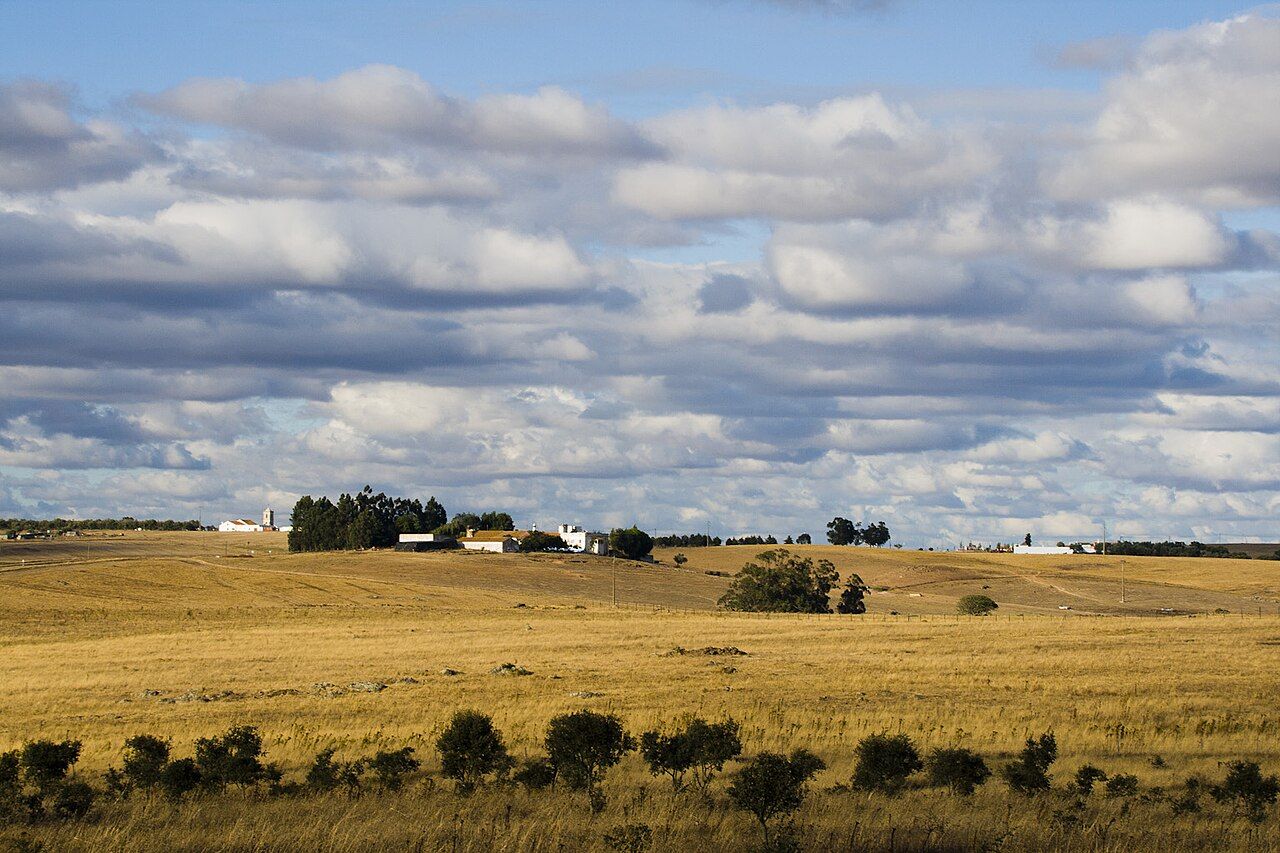
Évora is under two hours by motorway from Lisbon, and trains run between the two. The roads from Évora across the plain are straight, empty and lined with oaks. East, they lead to the walled villages of Monsaraz and Marvão on the edge of the plain, and on into Spain. Across the border lies Extremadura, with Badajoz and then Roman Mérida only a couple of hours away: the same Roman province, the same oak pasture, the same pigs, under a different flag. The Spanish side has its own version of the oak pasture story in the dehesa around Trujillo.
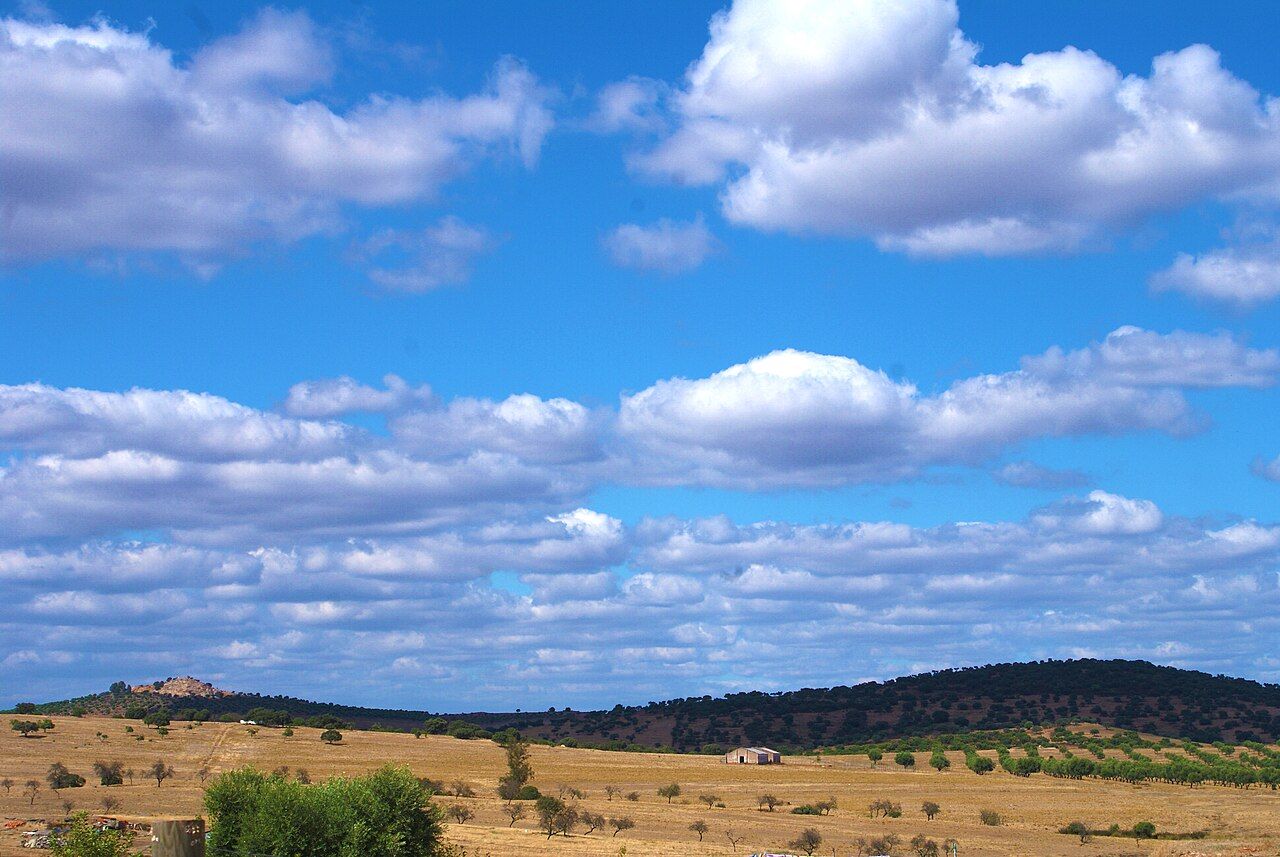
Drive in the early morning or evening in summer, carry water, and do not expect to find many places to eat between towns; plan lunch in a town and take your time over it, as the Alentejo does. For the soups and stews of the wider interior, see the inland stew pot.