
La Mancha and CuencaCuenca
Cuenca's hanging houses and the gorge
A town built on a rocky ridge between two gorges, with houses whose balconies hang over the drop, an abstract art museum inside them, and a hot game pâté for cold days.
The dish: Morteruelo
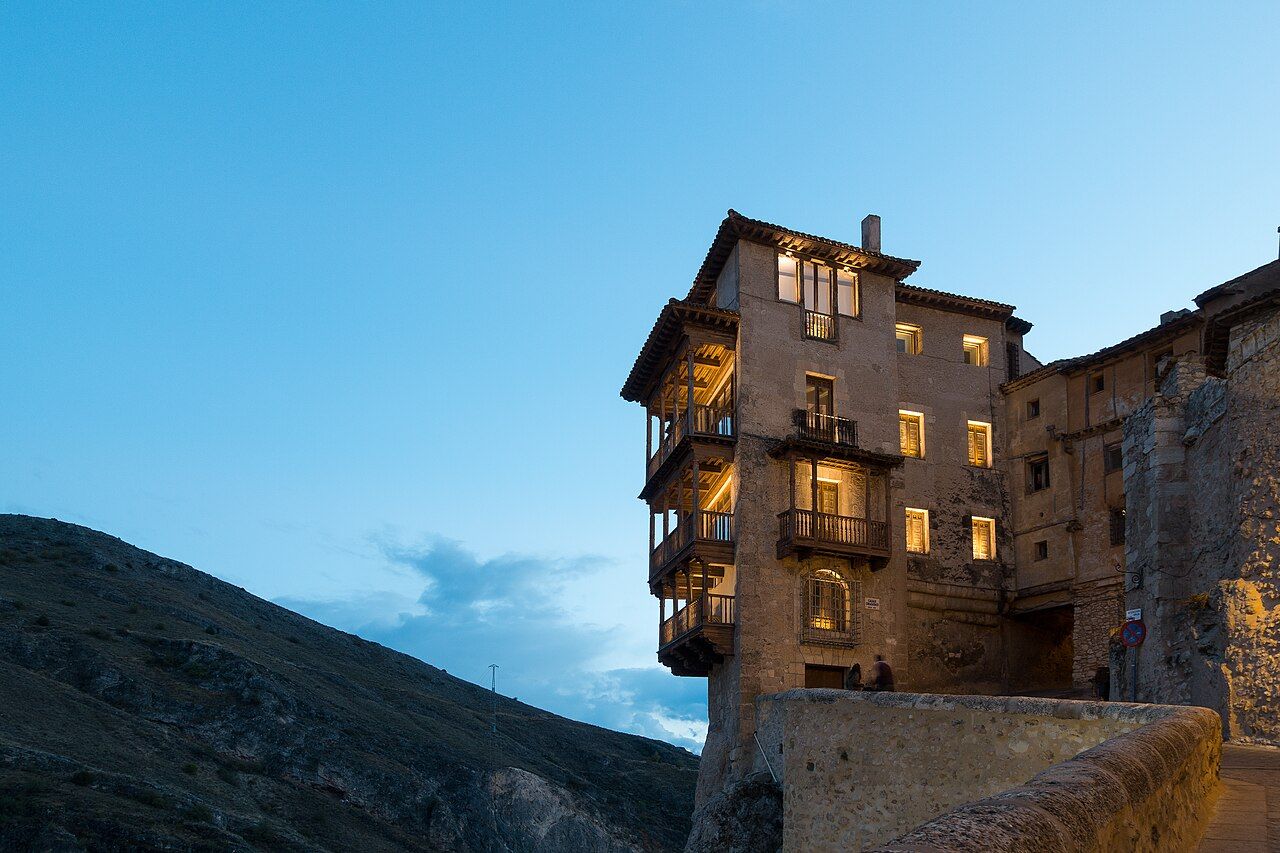
Cuenca is built on a narrow ridge of rock between two river gorges, the Júcar on one side and the Huécar on the other. The old town climbs along the top of the ridge, and its houses cling to the edges of the cliffs, some of them hanging out over the drop. It is a strange and spectacular place, quieter than the big cities of Castile, and its food is the hearty cooking of a cold upland country.
The hanging houses
The casas colgadas, the hanging houses, are the town's emblem. They stand on the edge of the Huécar gorge, with wooden balconies built out from the walls over the cliff. Their origins go back to the fifteenth century, and there were once many more of them; only a few survive today. Their walls rise straight from the rock, and their balconies hang over a drop of many metres to the river below.
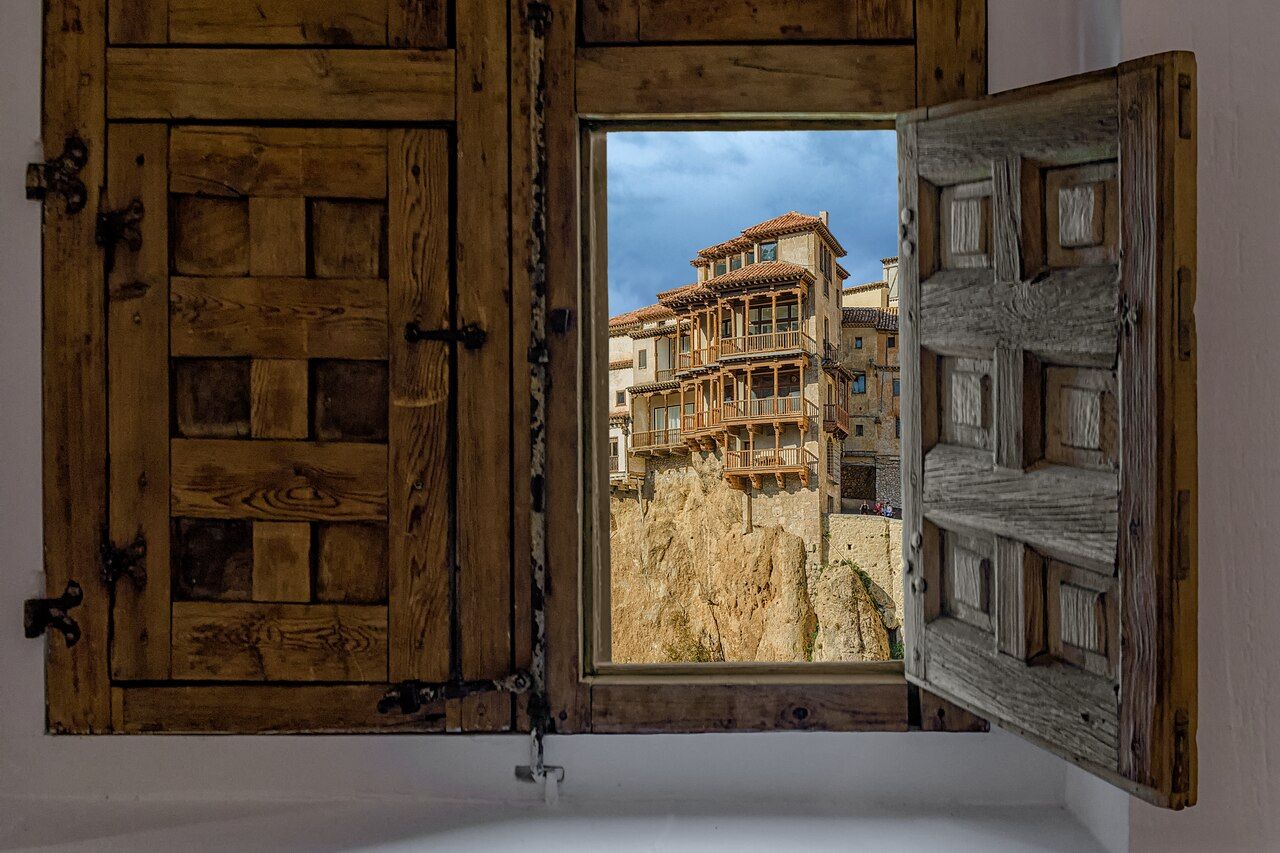
The best view of them is from the other side of the gorge, reached by the Puente de San Pablo, an iron footbridge built in the early twentieth century on the line of an older stone bridge. It crosses high over the Huécar, and walking it is not for anyone uneasy with heights: the deck is made of wooden planks and you can see the river far below. From the middle, the hanging houses and the old town spread out in front of you.
At night, the houses are lit, and the view from the bridge or the far side of the gorge is quite different: warm windows above dark rock.
Art inside the cliff
Inside the hanging houses is the Museum of Spanish Abstract Art, founded in the 1960s by the painter Fernando Zóbel. It holds works by the Spanish abstract painters of the mid-twentieth century, hung in rooms with old wooden ceilings and windows that look straight down into the gorge. The contrast between the modern art and the old house is part of the experience. Check opening times and charges before you go.
The museum gave Cuenca a reputation as a town of artists, and there are other galleries and foundations in the old town.
A detour: La Mancha and CuencaToledo: the river loop, marzipan and three faithsThe old town on the ridge
From the hanging houses, the old town climbs along the ridge. The Plaza Mayor, with its arched town hall, is beside the cathedral, which was begun in the late twelfth century and shows the influence of French and Anglo-Norman Gothic, unusual in Spain. Its façade was rebuilt in the twentieth century after part of the old one collapsed. Inside, look for the chapels and the modern stained glass.
Keep climbing and you reach the top of the ridge, near the ruins of the castle, with views down into both gorges. The streets here are steep and narrow, and the houses in some places rise many storeys from the street on the gorge side while having only a few on the other. Walking the old town means a lot of steps, up and down.
About thirty kilometres away is the Ciudad Encantada, the "enchanted city", a forest of strange rock formations shaped by water and wind over a very long time. It is a good half day in the Serranía de Cuenca, the wooded mountains around the town.
Morteruelo and the food of the Serranía
The food of Cuenca is the food of the uplands, hunting country and sheep country. Its signature dish is morteruelo, a thick, hot pâté of game and pork. Hare, rabbit or partridge are cooked with pork liver and belly, then pounded and mixed with breadcrumbs and spices, among them cloves, cinnamon, cumin and paprika. It is served hot in an earthenware dish and spread on bread. It is rich, spiced and deeply savoury, and on a winter day it is very good.
Ajoarriero in Cuenca is a paste of salt cod, potato, garlic and olive oil, pounded together, served cold or warm and spread on bread. It is different from the salt cod dishes of the same name in other regions. Zarajos are lamb intestines rolled around a vine twig and grilled or fried until crisp, a traditional tapa.
For something sweet, look for alajú, a flat cake of honey, almonds and breadcrumbs pressed between thin wafers, with a history going back to the Moorish period. Resolí is a liqueur of coffee, spirit, orange peel and cinnamon, served at the end of a meal.
As elsewhere in Spain, lunch starts late, often from about 2 pm. Many kitchens close one day a week.
Getting there
Cuenca is about two hours east of Madrid by car. The high-speed train is faster, but its station is several kilometres from the town, and a bus connects to the centre. The old town is on the ridge above the newer town, and buses run up to the Plaza Mayor. If you drive, park in the lower town or near the top of the ridge and walk.
The best times are late spring and early autumn. Winters are cold, and summer days are warm but nights cool. From Cuenca, the road west leads across La Mancha to Toledo above the Tagus, and south to the windmills of La Mancha.