
At the tableSpain and Portugal
Cocido, caldo verde and the inland stew pot
Across the cold interior of Spain and Portugal, one pot of meat, chickpeas and vegetables fed whole households, and the way it is served in courses says a lot about each region.
The dish: Cocido in three courses
In the interior of Spain and Portugal, where winters are cold and work was once heavy, the main meal of the day often came from one pot. Into it went whatever the household had: chickpeas or beans, a piece of beef or mutton, an old hen, some salted pork, sausages from the winter pig killing, cabbage, potatoes and carrots. It cooked slowly for hours, sometimes all morning, at the side of the fire. The result fed a family for one or more meals, and the broth, the meat and the vegetables were often served separately, as courses. Every region has its own version, and the differences are a good map of the Iberian interior.
Cocido madrileño in three courses
The best-known Spanish stew is the cocido madrileño of Madrid. Chickpeas soaked overnight are cooked with beef shin, a chicken or hen, salted pork belly, a ham bone, chorizo and morcilla, blood sausage, with potatoes, carrots and cabbage, the cabbage often cooked separately so it does not cloud the broth. The pot cooks for several hours until the chickpeas are soft and the meat falls apart.
It is served in three stages, called vuelcos, tippings, as each part is tipped out of the pot. First comes the broth, with fine noodles cooked in it. Then the chickpeas and vegetables, dressed with a little olive oil or a tomato sauce. Finally, the meats and sausages, cut on a platter. Some people eat the second and third courses together. In Madrid, many places serve cocido only on certain days of the week, often at lunch and often in winter; it is a meal that needs time and is followed by a long rest.
Cocido maragato, eaten backwards
In the Maragatería, the dry country around Astorga in the province of León, the cocido is served the other way round: meat first, then chickpeas and vegetables, and the soup last. The meats are many, often including pig's ear, trotters, chorizo, beef, chicken and salted pork. The local explanation is that the Maragatos were famous muleteers, carrying goods across Spain for centuries, and that a man on the road ate the most important part first in case he had to leave in a hurry; another version links it to soldiers. Whatever the truth, a Maragato cocido is a huge meal.
Astorga lies on the Camino de Santiago and on the old Roman road from the south, the Vía de la Plata, so pilgrims and travellers have eaten cocido there for a very long time. The Camino and its roads are told in our guide to the old inns of the Iberian roads.
A detour: CastileBurgos: cathedral, morcilla and the pilgrim roadOther Spanish pots
Almost every region of inland Spain has its own stew. In Castile there is the olla, the pot itself, which Cervantes mentions in the first lines of Don Quixote as part of the hidalgo's diet. In La Rioja, potatoes are stewed with chorizo; in Extremadura, chickpeas with pork and greens. There is fabada to the north, with large white beans and smoked sausages, and lentils with chorizo across the meseta, the everyday stew of many households. Chickpeas from Fuentesaúco in Zamora and the small Pedrosillano chickpeas of Castile are prized for cocido.
These stews are eaten mostly at lunch, from about 2 pm in Spain. In winter, a cocido lunch on a Sunday is still a family occasion in many towns.
Portuguese cozido
Portugal's version is the cozido à portuguesa, a big platter of boiled meats and vegetables. It usually includes beef, pork belly, pig's ear and trotter, chicken, and a range of smoked sausages: chouriço, blood sausage called morcela, and farinheira, a sausage of flour and pork fat. The vegetables are cabbage, potatoes, carrots and turnips, sometimes with rice cooked in the broth. The broth may be served first as a soup. It is a lunch dish, often on set days.
In the northeast, around Bragança, the cozido is heavier with smoked meats, and beans are cooked with pig's ear and sausages in feijoada transmontana. In the Alentejo, the cooking turns to bread soups, and in Coimbra goat is slowly cooked in red wine in clay pots.
Caldo verde
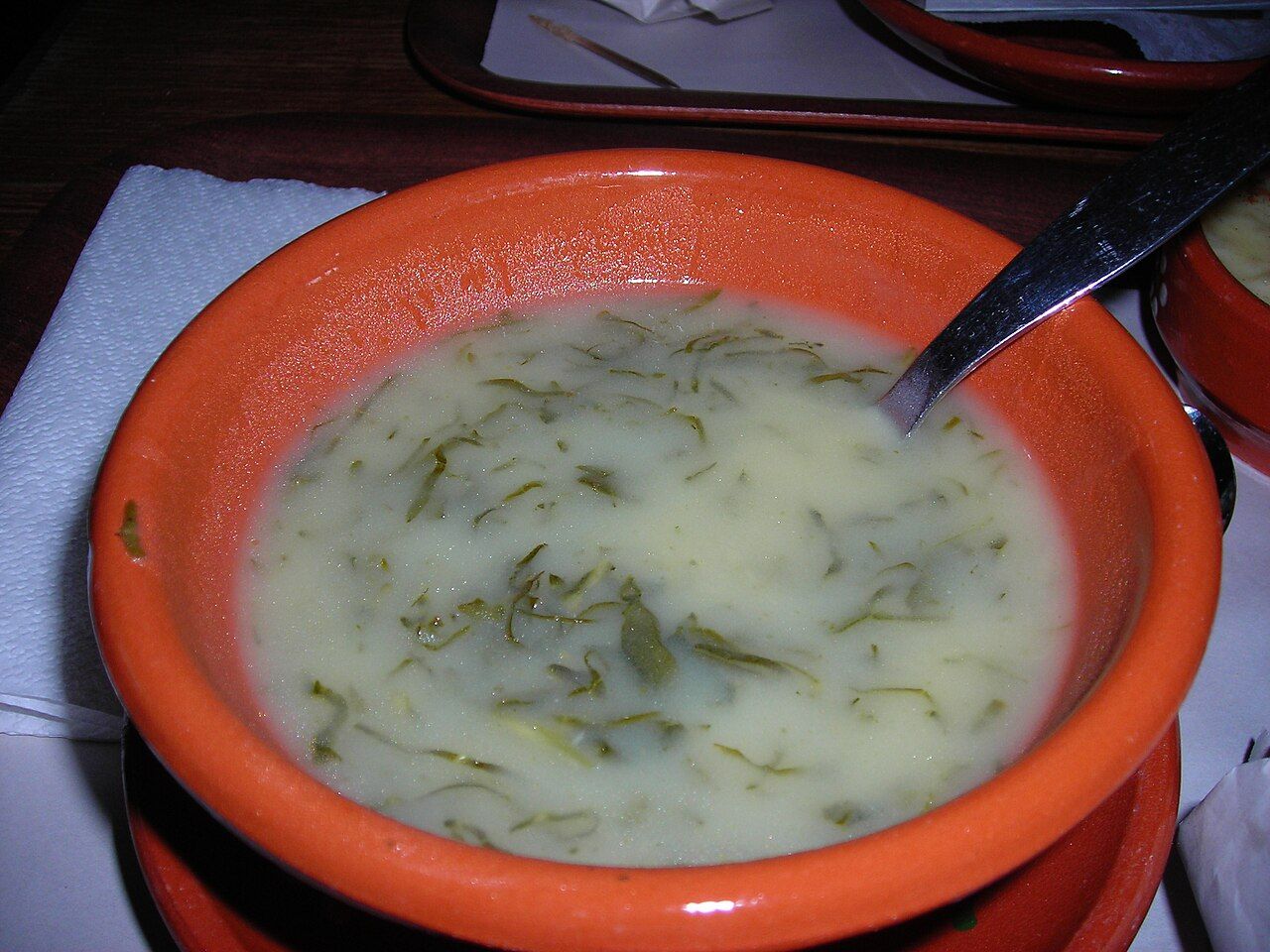
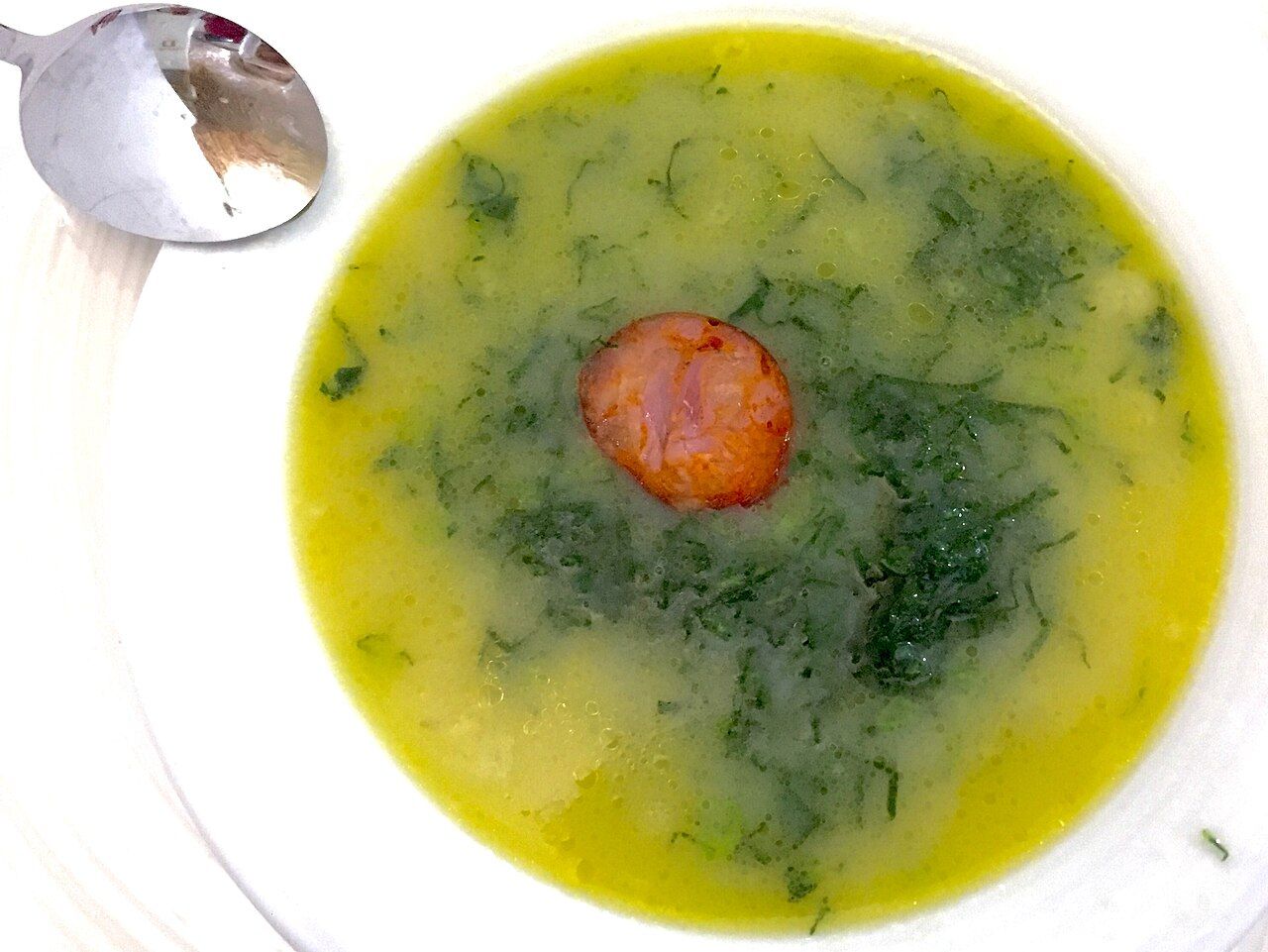
The lightest of the inland pots is caldo verde, green broth, from the north of Portugal. Potatoes and onion are boiled and mashed into a smooth broth, then very finely shredded Galician cabbage, a dark leafy kale-like green, is added and cooked briefly so it stays bright. It is finished with olive oil and served with a slice of chouriço and a piece of maize bread. It is eaten as a starter, as a late-night meal at festivals such as São João in June, and as comfort food in winter. It is cheap and quick, and it is on almost every menu in the north.
Making caldo verde well depends on the cabbage: the leaves are rolled tightly and sliced very finely, almost like thread. In northern markets the cabbage is often sold already shredded, by the bag, ready for the pot.
How to eat a stew
Cocido and cozido are not dishes to rush. Order them at lunch, ideally with others, and expect a long meal. Bread is always on the table, and the drink is usually a plain red wine. In Spain, a cocido lunch is often followed by a walk or a nap; in Portugal, by a strong coffee. Many places serve stews only on set days, and many close one day a week, so check before you go. For a taste of how the stews connect to the land, see La Mancha's windmills and Manchego.