
La Mancha and CuencaConsuegra
La Mancha: windmills, Manchego and Don Quixote's inns
The white windmills on the ridges above the plain, the sheep's cheese that carries the region's name, and the roadside ventas where Cervantes sent his knight in search of adventure.
The dish: Manchego cheese, aged
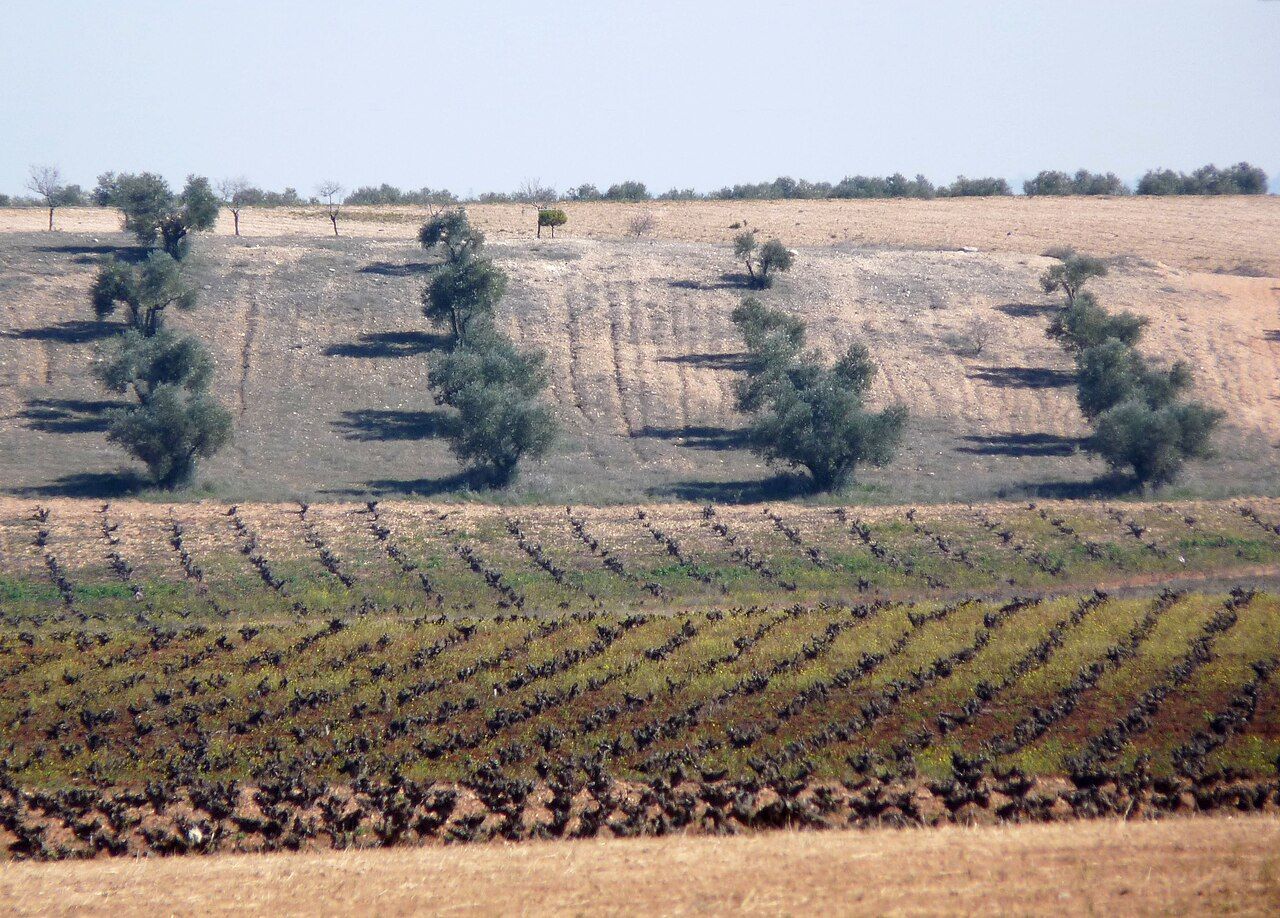
La Mancha is the great plain south of Madrid, a high, dry country of wheat, vines, olive trees and sky. Its name may come from an Arabic word for dry land, and it fits. The roads run straight for miles between fields that are green in spring, gold in summer and red-brown in winter. On the low ridges that rise from the plain stand the white windmills that Cervantes made famous, and in the towns below them people make one of Spain's best-known cheeses.
The windmills of Consuegra
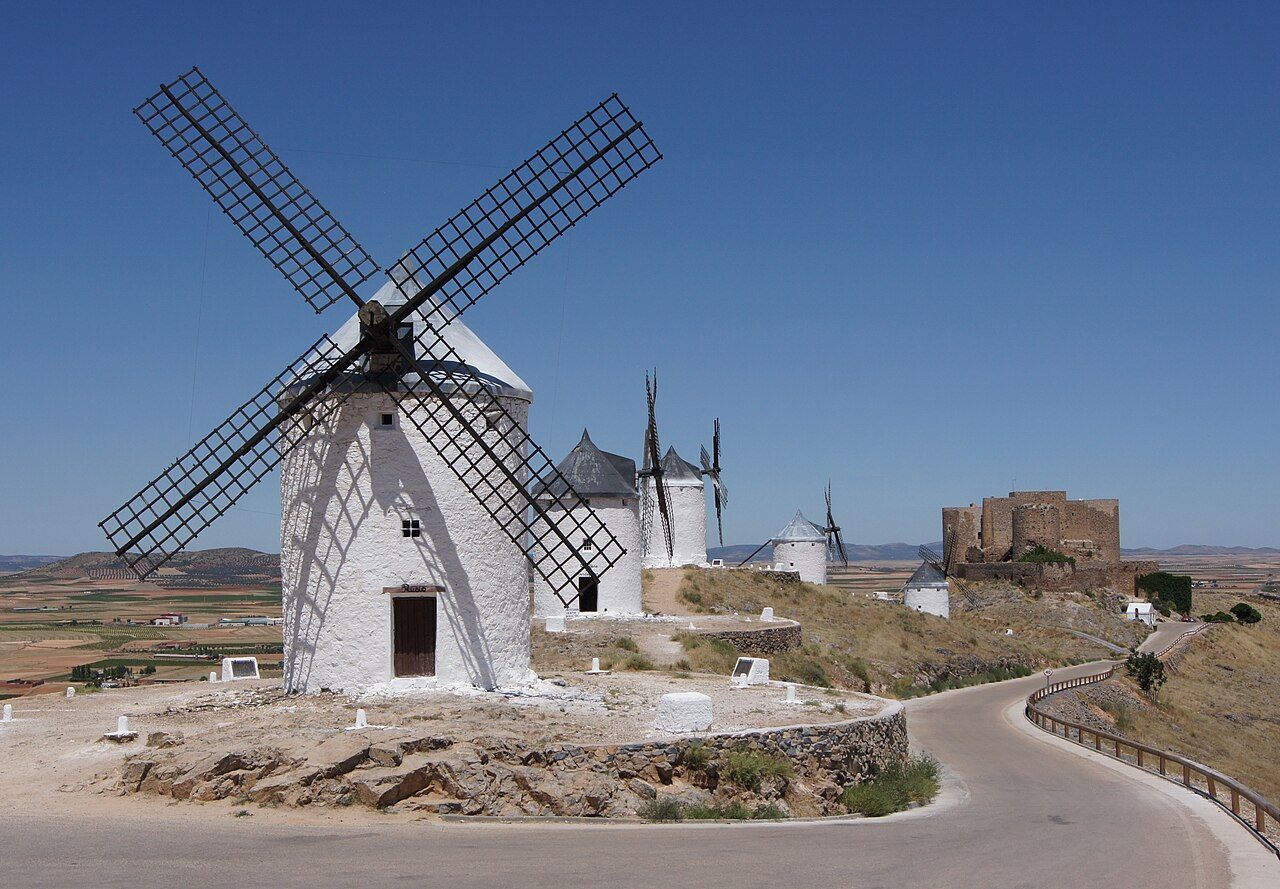
Consuegra is a town at the foot of a long ridge called the Cerro Calderico, south of Toledo. Along the ridge stands a row of about a dozen windmills, white towers with conical roofs and four sails of wooden lattice, and at one end a medieval castle that once belonged to the Order of Saint John. It is the most famous view in La Mancha, and from the top of the ridge you can see across the plain for miles.
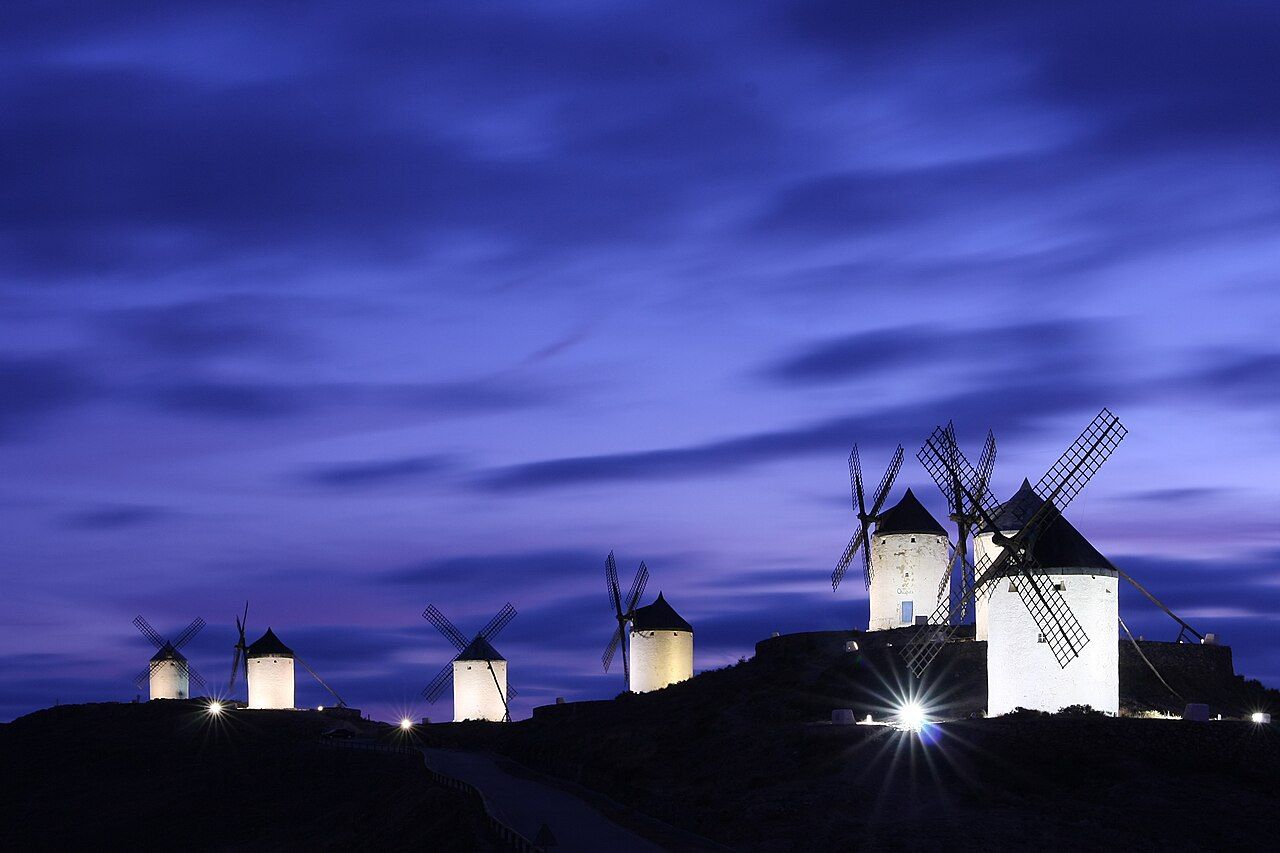
The windmills were used to grind grain. Each had a cap that could be turned to face the wind, using a long pole that you can still see running down to the ground. Several have been restored, and some can be visited inside to see the gears and millstones. Opening times vary and some mills are closed in winter, so check before you go.
Come in the early morning or towards sunset, when the light is low and the white towers stand out against the sky. At midday in summer, the ridge has no shade and the heat is serious. The road climbs up to the mills from the town, with parking near the top.
In late October, Consuegra holds a festival around the saffron harvest. La Mancha produces saffron under its own protected designation, and the purple crocus flowers are picked at dawn over a few weeks in autumn, their red stigmas removed by hand and toasted. It is slow, precise work, and the reason the spice is so prized.
Campo de Criptana and Don Quixote
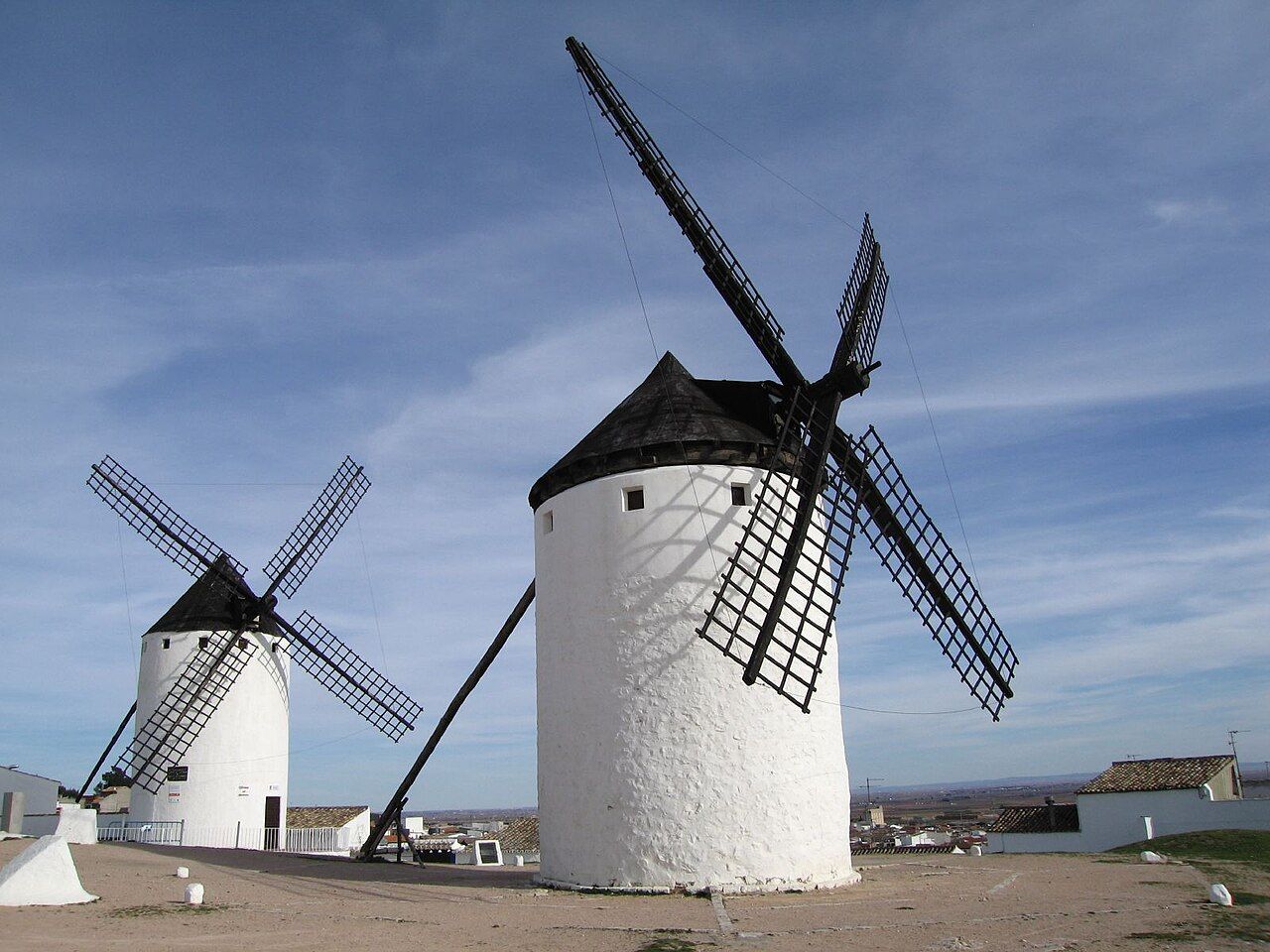
Campo de Criptana, further east, has its own ridge of windmills, the Sierra de los Molinos, above the white houses of the town. Some of the mills here are among the oldest in La Mancha, dating back to the sixteenth century, and a few keep their original machinery inside. The mills are close to the houses, and walking up through the narrow streets to the ridge is part of the visit.
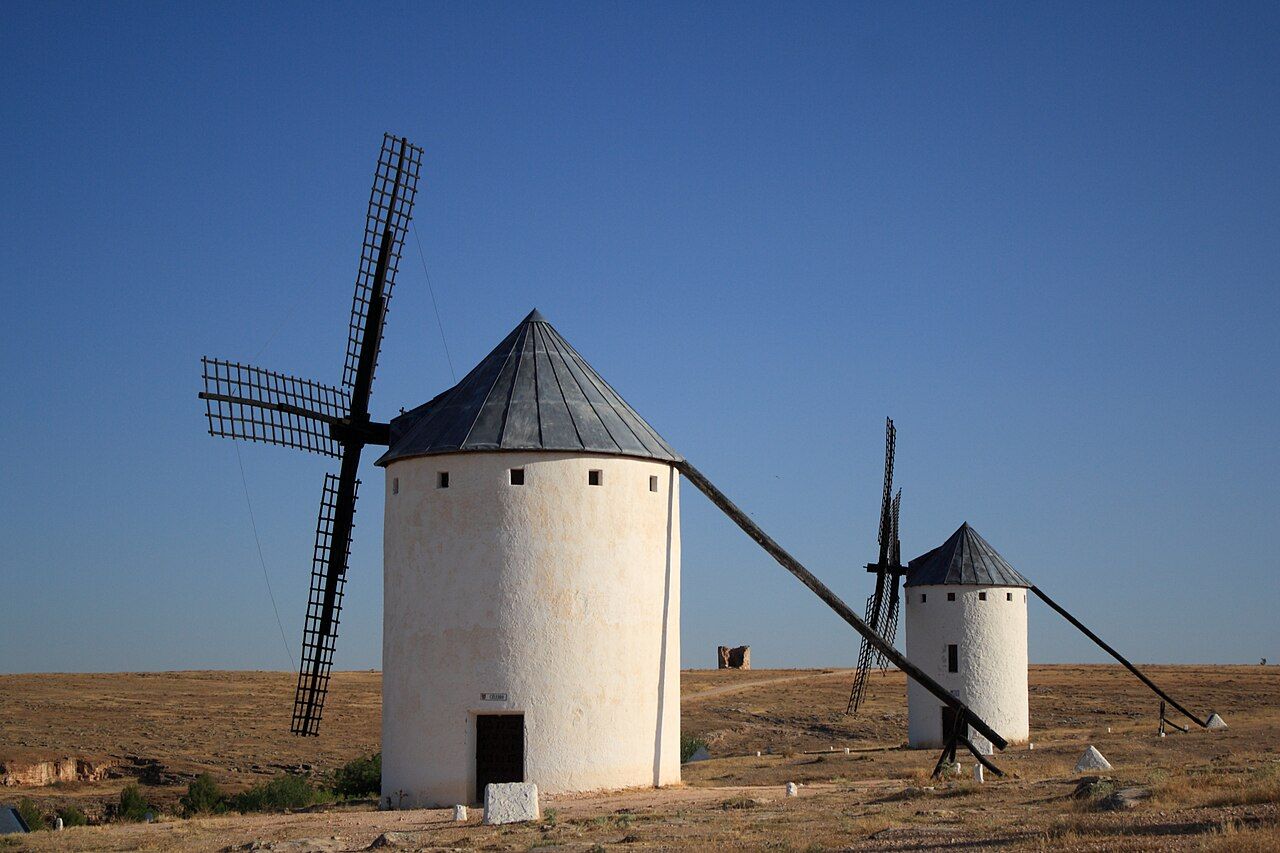
This is the country of Don Quixote, Cervantes' novel, first published in 1605. Its hero, an old gentleman from a village of La Mancha whose name the narrator does not want to remember, reads so many books of chivalry that he sets out as a knight errant. In the most famous episode, he sees thirty or forty windmills on the plain and takes them for giants. He charges, a sail catches his lance and throws him and his horse across the field. Several towns of La Mancha claim to be the setting; Campo de Criptana is among the most often named.
The novel is also full of food. In the first chapter, Cervantes describes Don Quixote's weekly diet: a stew with more beef than mutton, salad most nights, lentils on Fridays, a pigeon on Sundays, and on Saturdays a dish called duelos y quebrantos, usually explained as scrambled eggs with bacon or other pork. You can still eat it in La Mancha today.
A detour: La Mancha and CuencaAlmagro: the theatre courtyard and the auberginesThe ventas of the road
Don Quixote spends much of his time at ventas, the roadside inns of the plain. A venta stood alone on the road, between towns, and offered travellers and carters a roof, a stable, a meal and a fire. Don Quixote mistakes the first one he reaches for a castle and its innkeeper for a lord. The ventas were often poor, rough places, and Cervantes describes their food, beds and guests with a sharp and comic eye.
The main road south from Madrid to Andalusia crossed La Mancha, and the town of Puerto Lápice, on that route, is traditionally linked with the venta where Don Quixote was dubbed a knight. The wider history of these inns, and the posadas of the towns, is in the old inns of the Iberian roads.
Manchego and the sheep
Manchego cheese is made only from the milk of the Manchega sheep, a hardy breed that grazes the stubble fields and dry pastures of the plain. It is a protected designation: the milk, the breed and the place are all fixed. The curd is pressed in moulds that leave a zigzag pattern on the rind, imitating the plaited esparto grass bands once used to hold it. The cheese is then aged, from a few weeks for a soft young cheese to a year or more for a hard, dry, crumbly one.
A young Manchego is mild and milky. An aged one, called curado or viejo, is firmer, nuttier and sharper, with tiny crystals that crunch. Eat it in thin wedges at room temperature, with bread and a glass of wine, or with quince paste. Many cheesemakers in the region sell from their farms; ask in the towns.
An aged one, called curado or viejo, is firmer, nuttier and sharper, with tiny crystals that crunch.
Pisto, migas and the wine of the plain
The cooking of La Mancha is the cooking of shepherds and farm workers: simple, filling and made with what was at hand. Pisto manchego is a stew of tomatoes, peppers, onions and courgettes, cooked slowly in olive oil until soft and sweet, often served with a fried egg on top. Migas are breadcrumbs from stale bread, fried with garlic, pork and peppers, a shepherd's breakfast. Gachas are a thick porridge of grass pea flour with garlic, paprika and pork, eaten hot in winter.
Game is common: partridge, rabbit and hare, often stewed with wine, garlic and herbs. In Toledo, partridge is a classic dish, and Toledo and its marzipan is an easy drive from Consuegra.
La Mancha has one of the largest areas of vineyard in the world, and its own wine appellation. The traditional white grape is Airén, widely planted for its tolerance of heat and drought; Tempranillo, called Cencibel here, makes the reds. The wines were once mostly sold in bulk, but quality has risen, and a glass of local red with Manchego is the natural pairing.
Lunch starts from about 2 pm, and in summer the afternoon is for rest. Small towns are quiet then, and on Sunday afternoons many places close. Plan your driving around the heat: early morning and evening are the times to be on the road.