
La Mancha and CuencaToledo
Toledo: the river loop, marzipan and three faiths
A city on a rock in a loop of the Tagus, where a cathedral, synagogues and a small mosque stand within a few streets, and nuns still make the marzipan.
The dish: Marzipan from the convents
Toledo stands on a granite rock surrounded on three sides by a loop of the river Tagus, deep in its gorge. It was the capital of the Visigothic kingdom, an important Moorish city, and after its conquest by Castile in 1085 it was for a long time one of the great cities of Spain. In its narrow streets Christians, Jews and Muslims lived side by side for centuries, and the buildings they left are still there, often within a few minutes' walk of each other.
The city on its rock
The best first view of Toledo is from outside. The road around the far bank of the Tagus, the Carretera de Circunvalación, runs along the hillside opposite the old city and gives a view across the gorge of the whole city on its rock: the cathedral spire, the square block of the Alcázar and the roofs and towers between them. Come at sunset if you can.
Inside the walls, the old city is a maze of narrow, steep, winding streets, many of them too tight for cars. Getting lost is part of the visit. The main gate from the north is the Puerta de Bisagra, and the medieval bridges of Alcántara and San Martín cross the gorge on the east and west.
Three faiths
The cathedral, built from the thirteenth to the fifteenth century, is one of the largest Gothic churches in Spain, the seat of the archbishop who is the primate of Spain. Inside are a carved choir, a great gilded altarpiece, and the Transparente, a Baroque work in which light falls through an opening in the vault onto a sculpted altar. The sacristy holds paintings by El Greco, who lived and worked in Toledo from the 1570s until his death.
The Jewish quarter is in the west of the old city. Two synagogues survive. Santa María la Blanca, from around the late twelfth or thirteenth century, has rows of white horseshoe arches on octagonal pillars, built by Muslim craftsmen for a Jewish congregation and later turned into a church. El Tránsito, from the fourteenth century, has carved plaster walls with Hebrew inscriptions and a coffered wooden ceiling, and houses a museum of Sephardic Jewish history.
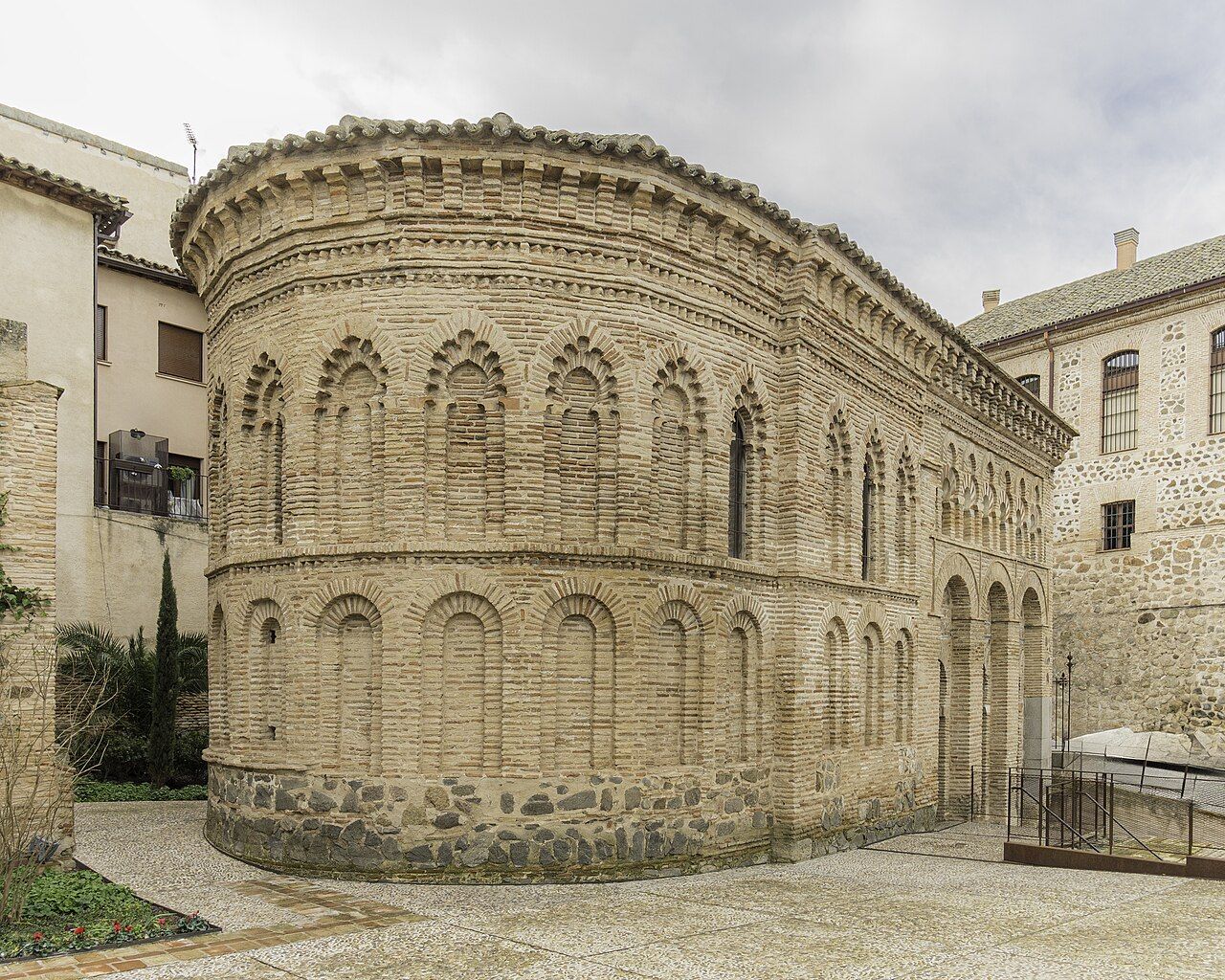
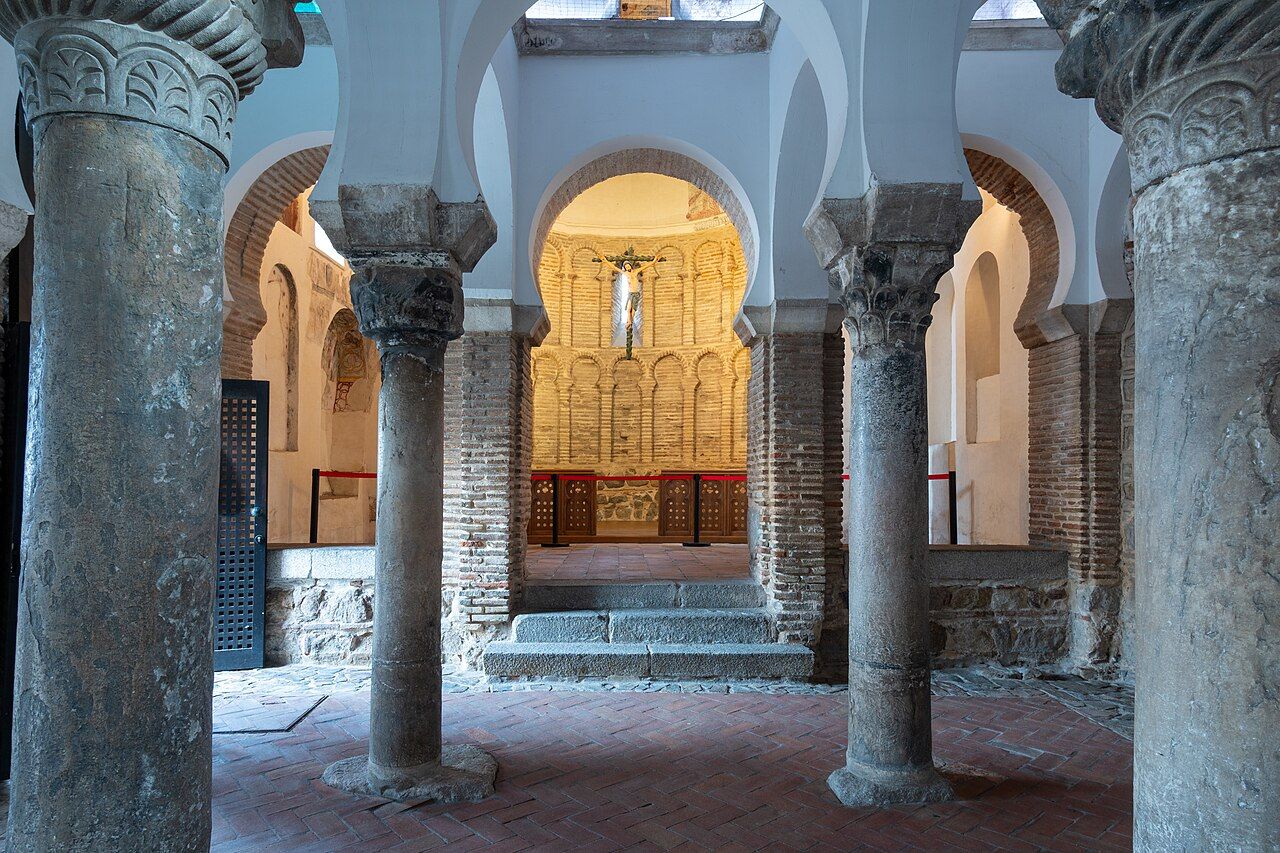
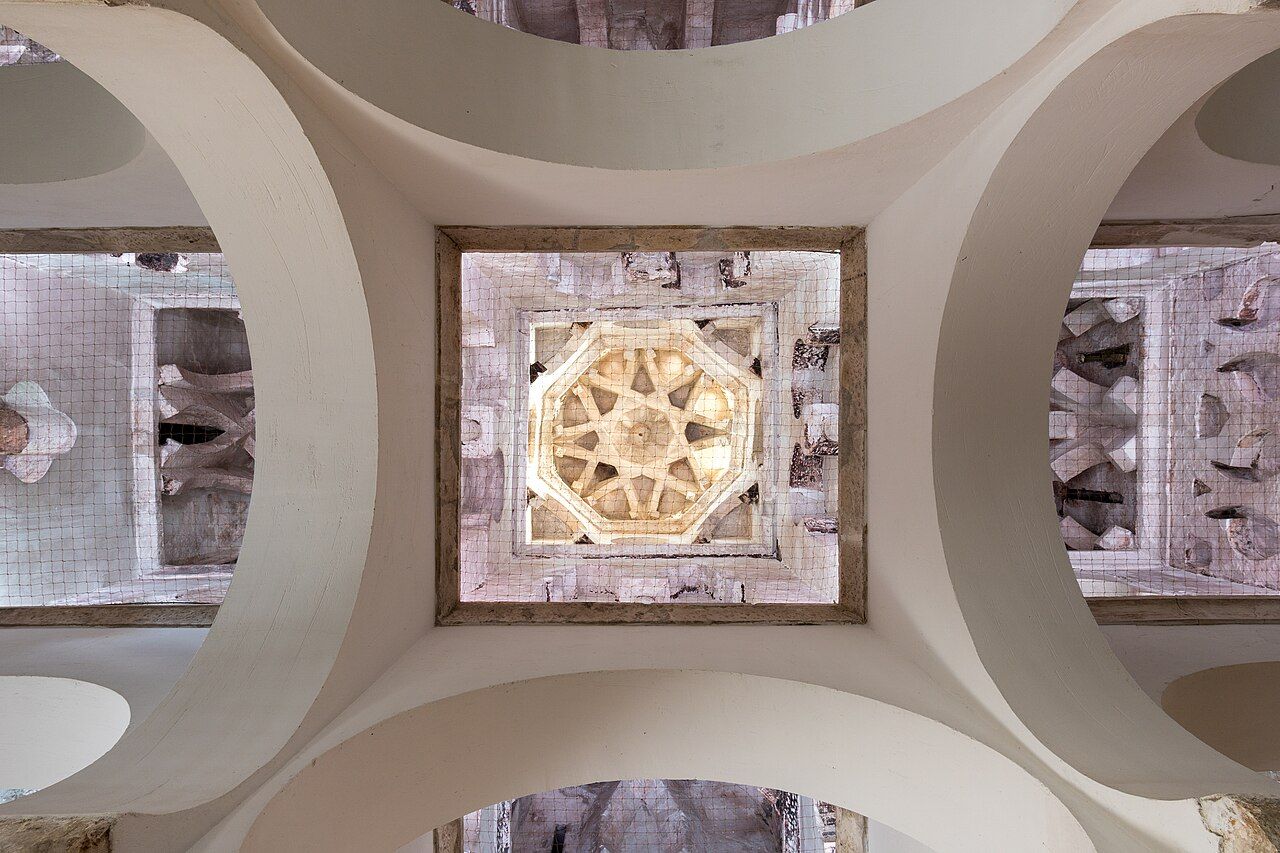
The Mosque of Cristo de la Luz is the oldest of all. It is a small square building of brick, dated by an inscription on its façade to the year 999, with nine bays, each with its own ribbed dome in a different pattern. After the Castilian conquest, it became a church, and a semicircular apse in the Mudéjar style, the brickwork of Muslim craftsmen working for Christian patrons, was added at the east end. Inside, columns from older buildings support the horseshoe arches.
A detour: La Mancha and CuencaCuenca's hanging houses and the gorgeLook up into the domes. Each is formed by crossing ribs that leave an open star or square at the centre, a technique also seen in the great mosque of Córdoba. In the apse, faded wall paintings of Christ and the saints survive.
The cathedral, the synagogues and the mosque charge for entry, and hours change; check before you go. There is a combined ticket for several of the churches and monuments.
Marzipan from the convents
Toledo is known across Spain for its marzipan, mazapán de Toledo, which has a protected designation. It is made from ground almonds and sugar, shaped and baked until golden on top. The traditional forms are small figures, often of animals, and a coiled eel shape filled with egg yolk sweets, eaten at Christmas.
The tradition is linked to the convents of the city, where nuns have made sweets for centuries. In some convents you can still buy marzipan and pastries through a torno, a revolving wooden hatch in the wall, so the nuns stay out of sight. You ring a bell, say what you want, put your money on the torno, and the sweets come round. Hours vary; ask locally.
Marzipan is everywhere in the old city, in shops and at stalls. The best is soft, almond-rich, not too sweet. Try it with a coffee in the afternoon.
Partridge and the table
Toledo's other classic dish is partridge, perdiz. The hills around the city and the plains of La Mancha to the south are hunting country, and the partridge is cooked slowly in a stew with wine, vinegar, onion, garlic, bay leaves and peppercorns, a style called perdiz estofada or a la toledana. The sauce is sharp and aromatic, and the meat comes away from the bone.
Carcamusas are a Toledo tapa of pork stewed in tomato with peas and a little chilli, served in a small earthenware dish with bread. The city also shares the dishes of La Mancha: pisto, migas, roast lamb, Manchego cheese. The red wines of the region and of Méntrida, to the north, are good matches. For more on the plains to the south, see the windmills and Manchego of La Mancha.
Lunch begins from about 2 pm. The old city fills with day visitors in the middle of the day, and is much quieter in the evening, when the visitors have gone back to Madrid.
Getting there
Toledo is about an hour south of Madrid. A high-speed train makes the journey in around half an hour, and buses run regularly. By car, park in one of the car parks below the old city; escalators climb from the area near the Puerta de Bisagra into the upper town. Driving in the old city is difficult and best avoided.
Spring and autumn are the best times; summer afternoons are very hot. Stay a night if you can and see the city after dark. From Toledo, Cuenca and its hanging houses lies east, and Almagro and its theatre to the south.