
Inland PortugalBragança
Bragança and Trás-os-Montes
In Portugal's remote northeast, a walled citadel stands above a granite town close to the Spanish border, in a land of cold winters, smoked sausages and stews cooked for the snow.
The dish: Alheira with a fried egg
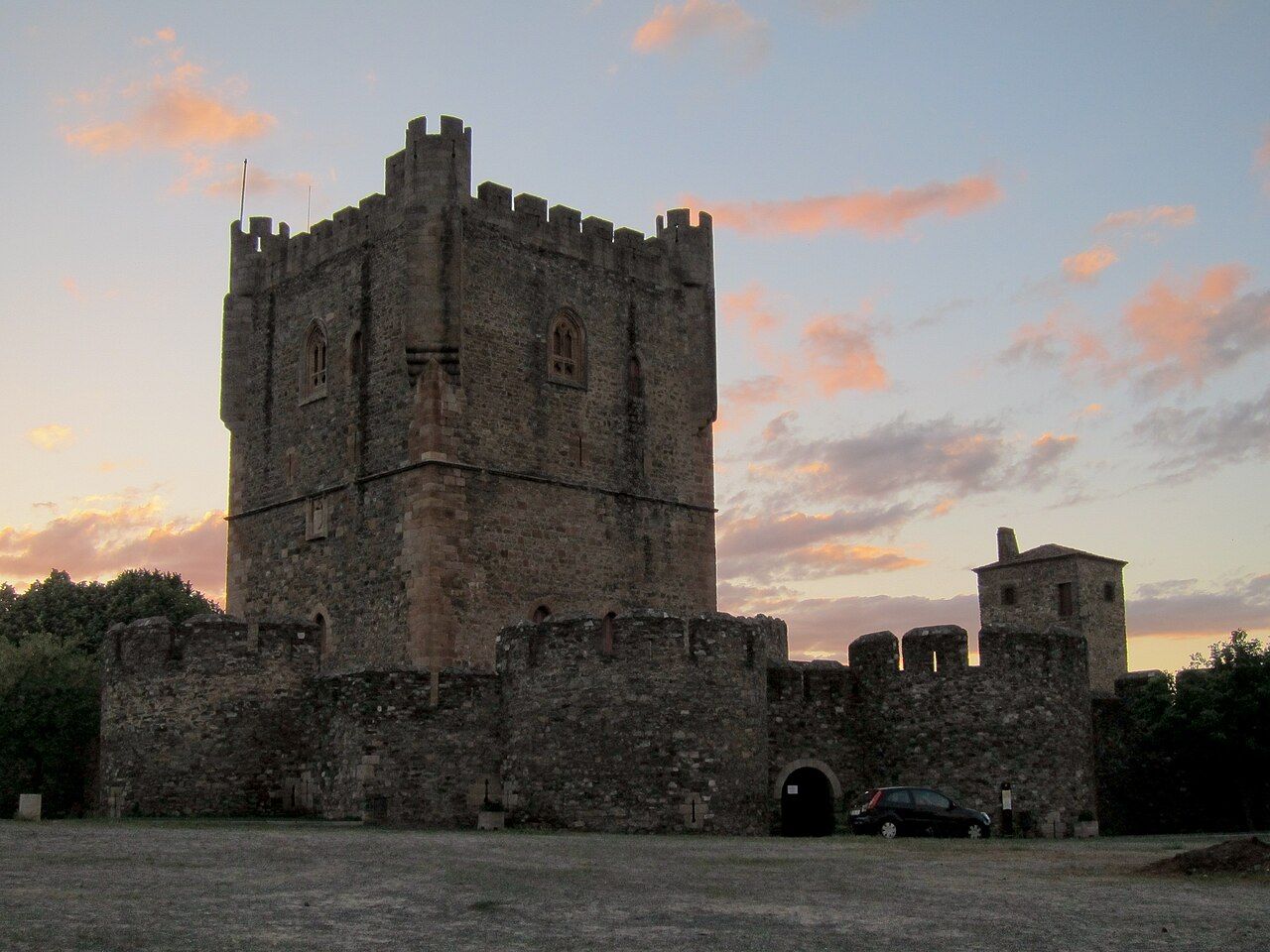
The name Trás-os-Montes means behind the mountains, and for most of Portuguese history this corner of the country really was cut off: high, cold, poor and far from the coast where the cities grew. Bragança is its main town, in the far northeast, close enough to Spain that you can drive to the border in half an hour. It is a quiet granite town of some size, with a medieval citadel on the hill at its top, still enclosed by its walls and still lived in. The landscape around is open moor, chestnut woods and small villages of stone, and the food is made for winters that are long and hard.
The citadel and the keep
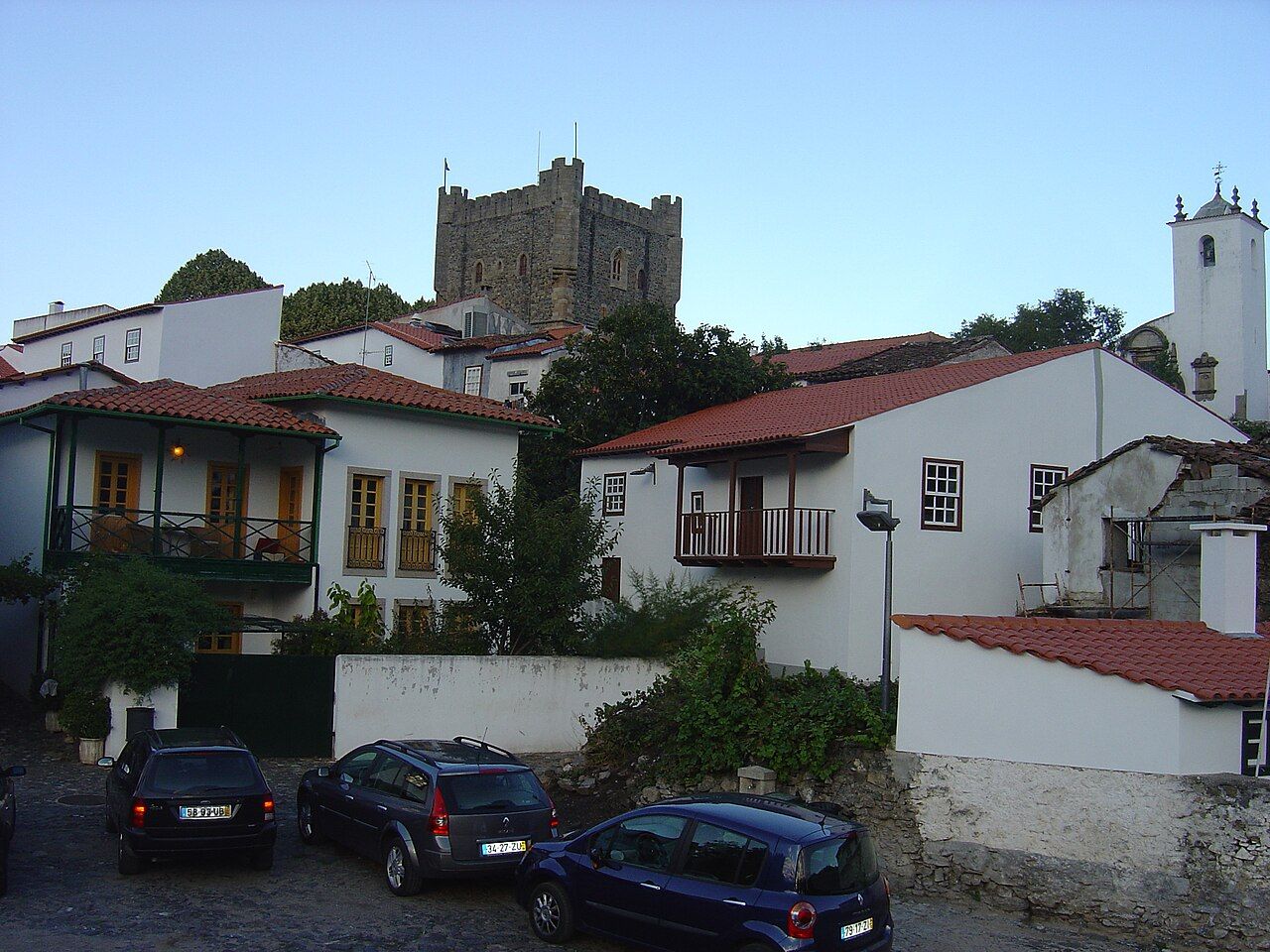
The walled citadel sits on a hill above the old town, and you reach it on foot up steep cobbled streets. Its walls, with towers along them, enclose a small village of white and stone houses, a church and a few lanes, where people still live much as their families did for generations. The citadel feels like a separate place from the town below, quiet, with the wind coming over the walls.
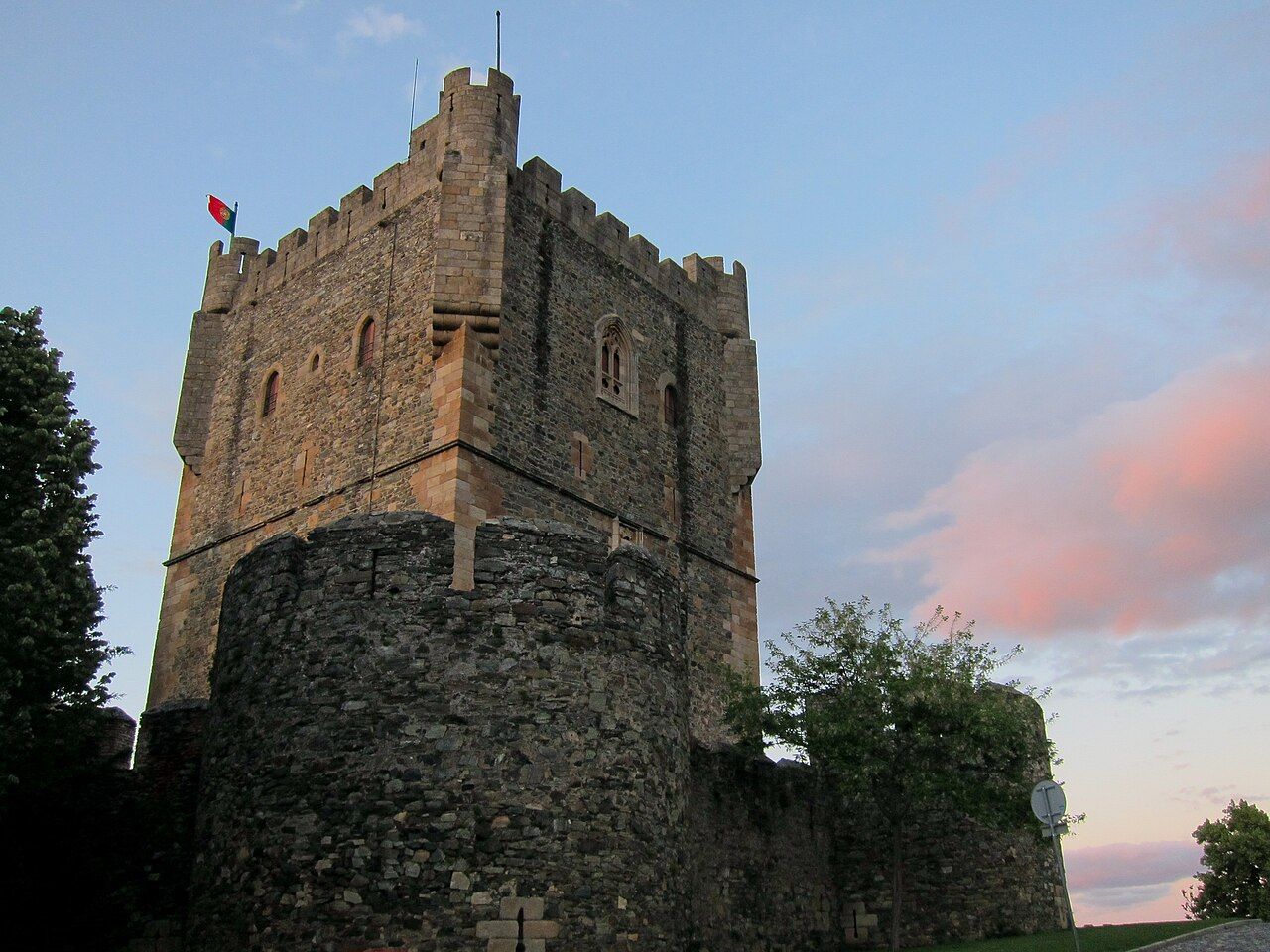
The castle keep, a square granite tower with battlements and corner turrets, was built in the fifteenth century and dominates the citadel. It holds a small military museum, and from the top the view runs across the town to the mountains around it. Next to it stands an unusual pillory, its shaft set on the back of a prehistoric granite carving of a pig or boar, one of the ancient stone animals, called berrões, found across this part of Iberia.
The Domus Municipalis, also inside the walls, is a rare survivor: a Romanesque civic building, an irregular five-sided hall over a cistern, where the town's leading men are thought to have met. Medieval town halls almost never survive in Portugal, which makes this plain stone room unusually important. When it opens depends on the season and the day; ask in town or look it up first.
A town that gave its name to kings
Bragança gave its name to Portugal's last royal dynasty. The House of Braganza, descended from a son of King João, ruled from 1640, when Portugal broke free of the Spanish crown, until the monarchy fell in 1910, and also gave Brazil its emperors. The dukes had their seat elsewhere, in the south, but the name stuck to the family, and Braganza is still a name known across the Portuguese-speaking world.
In the town below the citadel, there is a cathedral, several churches and a museum of the region's art and archaeology in an old bishop's palace. The Iberian Mask and Costume Museum shows the masks and costumes of the winter festivals of Trás-os-Montes and neighbouring Spain, when young men dressed as masked figures run through the villages around Christmas and Carnival, ringing cowbells. These festivals are old and still alive in some villages; dates vary each year.
A detour: CastileSalamanca and the ham country to the southAlheira and the smoked sausages
Trás-os-Montes is the home of Portugal's smoked sausages. Families traditionally killed a pig in winter and smoked its meat over the fire for the year, hanging the sausages in the kitchen chimney. The most famous of them is alheira, a soft, garlicky, horseshoe-shaped sausage made with bread and meat, traditionally poultry such as chicken or game, rather than pork alone.
Alheira comes with a well-known story. After Portugal forced its Jews to convert at the end of the fifteenth century, the Inquisition kept watch on the new Christians, and families who still avoided pork in secret were said to have made sausages of bread and poultry so that they could be seen to hang sausages in their chimneys like everyone else. Whether every part of that story is true is uncertain, and pork has long been added to many recipes, but the tradition is part of how the region explains itself. Today alheira is served fried, often with a fried egg, chips and boiled greens, a cheap and filling plate found almost everywhere. The alheira of Mirandela, to the southwest, has a protected name.
Look also for butelo, a thick smoked sausage of pork bones and meat, cooked in winter with casulas, dried bean pods, a Carnival dish of the Bragança area. Mountain cattle give posta mirandesa, a thick veal steak grilled over coals, named after the Mirandesa breed raised around Miranda do Douro, where a local language, Mirandese, is still spoken and is official alongside Portuguese.
Cold winters and the countryside
An old saying about this region describes its climate as nine months of winter and three of hell. Winters are cold, with frost most nights and snow on the high ground, and summers are short and hot. In winter, the stews come out: the region makes a heavy cozido and bean stews with smoked meats, and chestnuts were once a staple, roasted or cooked in soups. Many of these dishes appear in our look at the stews of the interior.
North of Bragança, the Montesinho Natural Park covers wild hills along the Spanish border, with oak and chestnut woods, small stone villages and some of the last wolves in Portugal. The villages are worth seeing, with houses of slate and granite, and many are almost empty now, since people left for the cities or abroad.
Getting there and around
Bragança is a few hours from Porto by motorway, through a landscape of hills and high plateaus. From the south, the roads climb from the Douro, passing through wine country before the land turns colder; a trip from the Douro valley terraces to Bragança makes an easy pairing. To the east, the road to Spain leads towards Zamora, León and the old roads of Castile. Bus links exist but are limited; check before you go.
In spring and autumn the light is soft, the countryside is green or golden, and the cold is bearable. In summer, the town is lively, with emigrants home on holiday. If you come in winter, bring a coat and boots, and expect to spend evenings by a fire with a plate of smoked sausage and a glass of local red. For another Portuguese town where the table matters as much as the monuments, see Coimbra and the Bairrada.