
CastileLeón
León: stained glass and free tapas
A Gothic cathedral that seems built of light, a Romanesque royal pantheon painted like a book, and an old quarter where every glass still comes with a small plate.
The dish: Cecina de León
León is a city of the high plateau on the edge of the Cantabrian mountains, cold in winter and fresh in summer, with an old quarter of narrow streets inside the line of its Roman and medieval walls. It was the capital of a medieval kingdom, it is a major stop on the Camino de Santiago, and it has two of the finest buildings in Spain. It also has a tapas habit that people travel for.
The cathedral of light
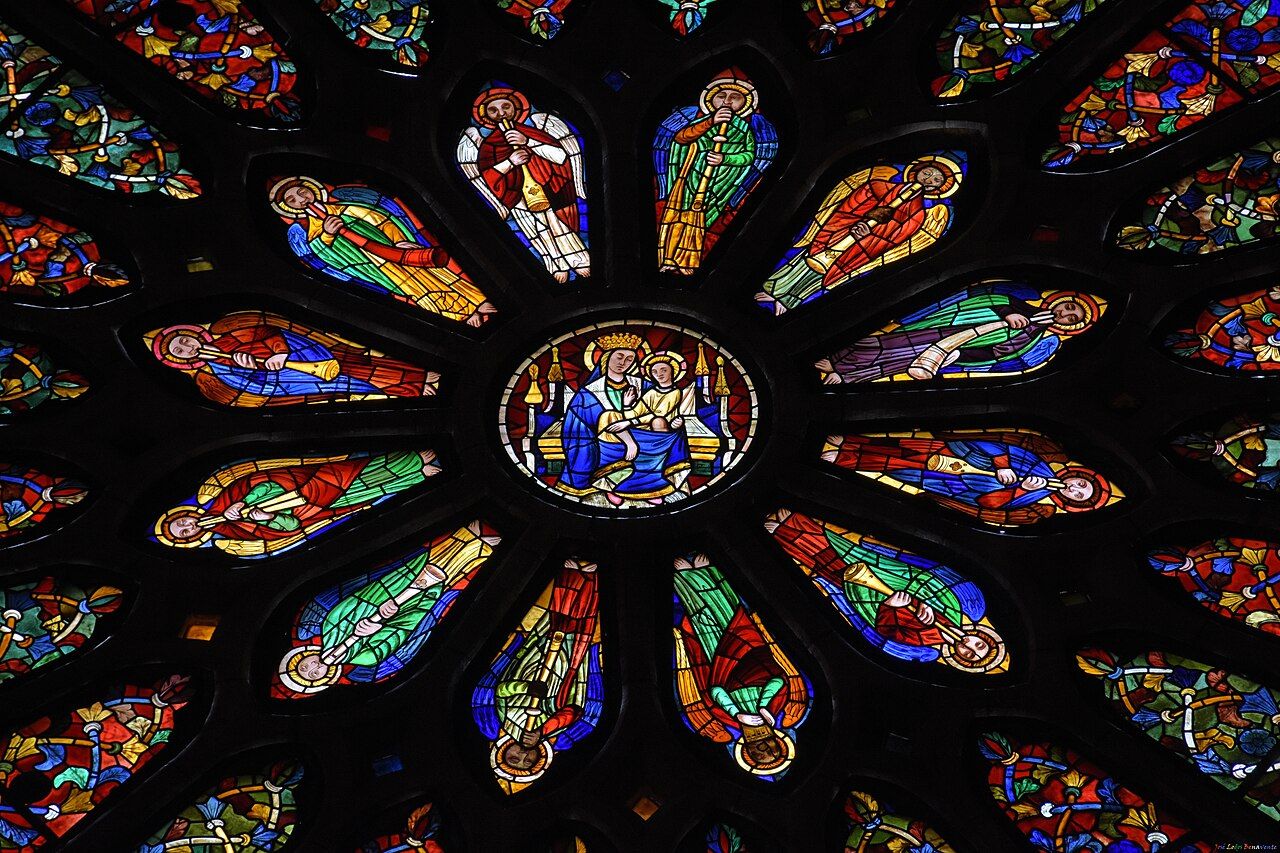
The cathedral of Santa María was built mostly in the thirteenth century, in a pure French Gothic style. It is not the largest cathedral in Spain, but it may be the most daring. Its builders reduced the stone walls to a skeleton of slender piers and filled the spaces between them with glass. The result is one of the largest collections of medieval stained glass in Europe.
Inside, on a sunny day, the light comes through in deep reds, blues and golds and moves across the floor as the hours pass. The windows show saints, kings, the virtues and vices, plants and the work of the months. Many date from the Middle Ages; others were made or restored later. Bring binoculars if you have them, because the details of the upper windows are hard to see from the floor.
The great rose windows are the highlight. At the centre of the west rose sit the Virgin and Child, surrounded by angels with musical instruments. Visit in the morning for the light through the east windows and in the late afternoon for the light through the west. The cathedral charges for visits, and its hours change, so check before you go.
The structure was so thin that it nearly failed, and in the nineteenth century it needed a long restoration. That history is part of the story of the building, which has always been close to the limit of what stone can do.
San Isidoro and the royal pantheon
A short walk from the cathedral, by the old walls, stands the Basilica of San Isidoro, a Romanesque church with a royal pantheon at its west end where the kings and queens of León were buried. The pantheon's low vaults and arches are covered in paintings from the twelfth century: Christ in majesty, the Last Supper, the shepherds receiving the news of the Nativity, and a calendar of the months showing the farm work of each season. The colours are still remarkably fresh.
The calendar is worth looking at closely. It shows men killing the pig in November, gathering grapes in September, sowing and harvesting, and sitting by the fire in winter. It is a picture of the same year that shapes the food of the region today. The pantheon is visited as part of the museum of San Isidoro; check before you go.
A detour: CastileBurgos: cathedral, morcilla and the pilgrim roadThe tapa that comes with the drink
León is one of the cities in Spain where the old habit survives of serving a small tapa free with each drink. You order a glass of wine, a small beer or a vermouth, and it comes with a plate: a slice of morcilla on bread, some potatoes in a spicy sauce, a croquette, a piece of chorizo. Order another drink and the next tapa is often different. The custom is strongest in the old quarter.
The heart of this is the Barrio Húmedo, the "wet quarter", the old streets around the Plaza de San Martín, where bar follows bar. Its name is usually explained by the amount of wine poured there. The Barrio Romántico, around the Plaza del Grano, with its cobbles and old houses, is quieter. People move from one place to the next, one glass and one tapa at each, from about eight in the evening onwards, and at weekends the streets are full until late.
The local wines are from the Tierra de León appellation, with reds from the Prieto Picudo grape, and from El Bierzo, to the west, where the Mencía grape makes fragrant, fresh reds.
Cecina and the food of the mountains
The great local product is cecina de León, cured beef. The hind legs of cattle are salted, smoked over oak wood and then left to dry and cure for months in the cold, dry air of the province. It is sliced very thin, like ham, and is dark red with a narrow edge of fat, its taste smoky, rich and slightly sweet. It is eaten on its own, with a drizzle of olive oil, or with bread. Try it in a bar first and buy it to take home.
The morcilla de León differs from the morcilla of Burgos, with its rice: it is made with onion and no rice, so it is softer and sweeter. From El Bierzo comes botillo, a smoked pork sausage stuffed with ribs and tail, boiled and served in winter with potatoes and cabbage. The cocido maragato from the town of Astorga, to the west, is a meat stew eaten in reverse order: meat first, then vegetables, then soup. It is described in the stews of the interior.
Lunch, as everywhere in Castile, starts late, often from about 2 pm. Many kitchens close one day a week.
Getting there and the pilgrim road
León is on the high-speed rail line from Madrid, and trains reach it in a little over two hours. By road it is roughly three and a half hours on the motorway. The old quarter is compact and best on foot; park outside it.
The Camino de Santiago runs straight through the city, and many pilgrims stop here for a rest day. To the east lies the long crossing of the plateau from Burgos; to the west, the road climbs towards Astorga and the mountains of El Bierzo. The city has the right food for walkers: filling, warming and served in small, frequent portions.