
CastileSegovia
Segovia: the aqueduct and the roast
A Roman water channel striding through the lower town, a late Gothic cathedral on the ridge, and a cooking tradition built around the slow heat of the wood-fired oven.
The dish: Roast suckling pig
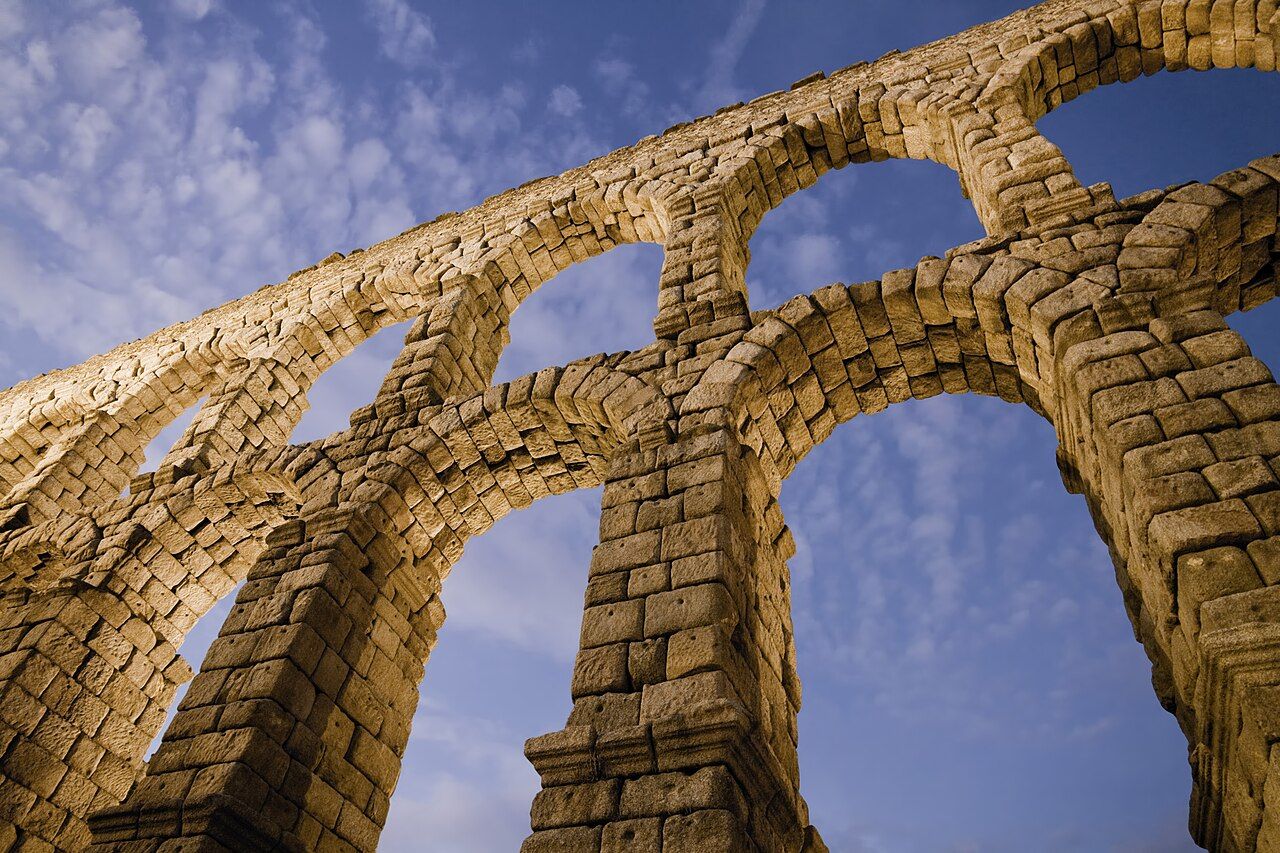
You come to Segovia for two things, and most visitors manage both in a single day: the aqueduct, and lunch. The first is free and open to the sky. The second needs some planning, because lunch in Castile starts late, runs long and is built around one dish that the town has been roasting for generations. Segovia sits on a narrow ridge at roughly a thousand metres, between the small rivers Eresma and Clamores, with the Sierra de Guadarrama behind it. The cold air up here explains a good deal about what people eat.
The aqueduct, from below and from above
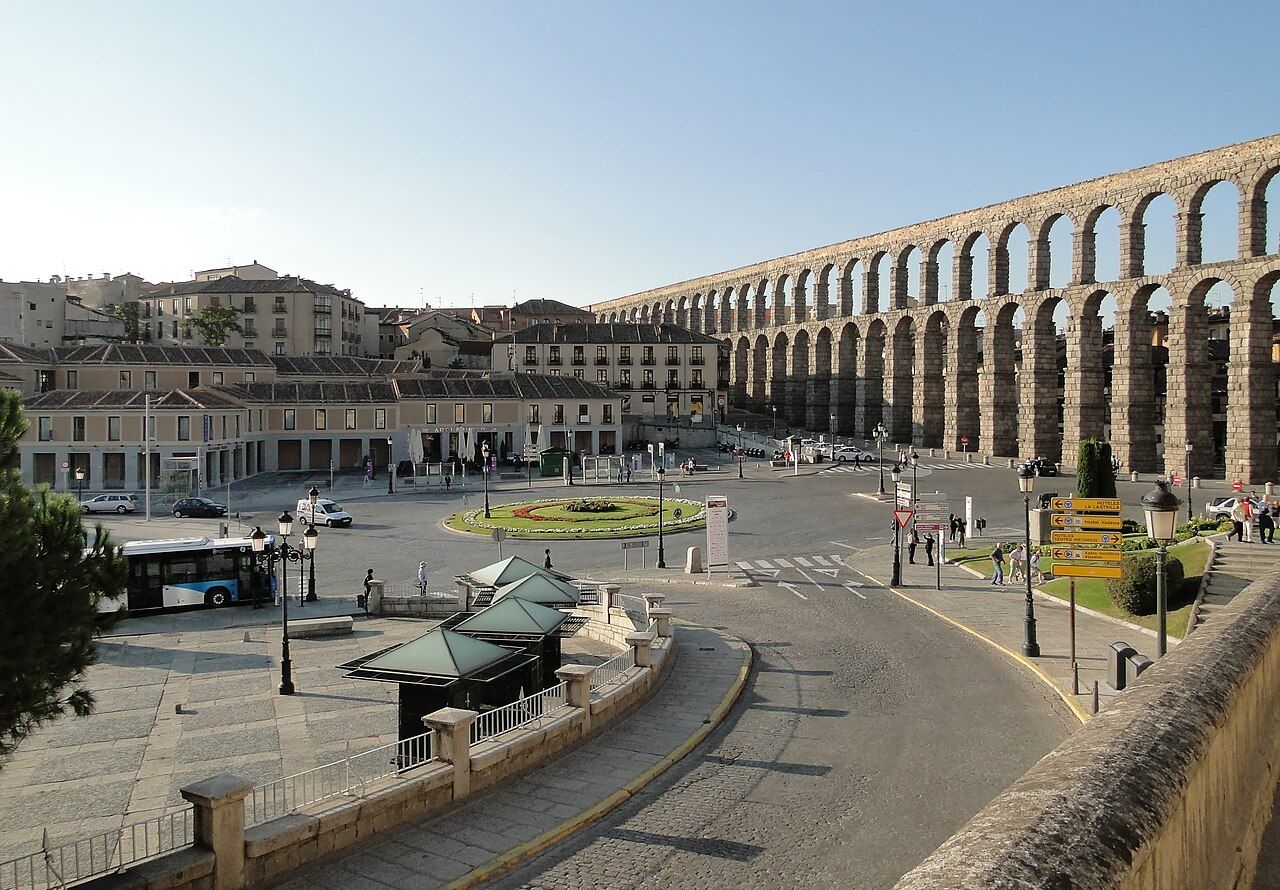
The Roman aqueduct is the first thing most people see, because the road from Madrid delivers you almost to its feet at the Plaza del Azoguejo. It was built of granite blocks laid without mortar, held in place by their own weight and careful cutting, probably around the end of the first century or early in the second century AD. It carried water from the hills into the upper town, and it did that job, with repairs, for a very long time.
At its highest point, where the ground drops away below the plaza, it stands on two tiers of arches and rises close to thirty metres. Further out, as the land climbs, the arches shrink until the channel is barely above head height. Walk its length, from the plaza out along the line of arches, and you understand how the engineers used the slope rather than fighting it.
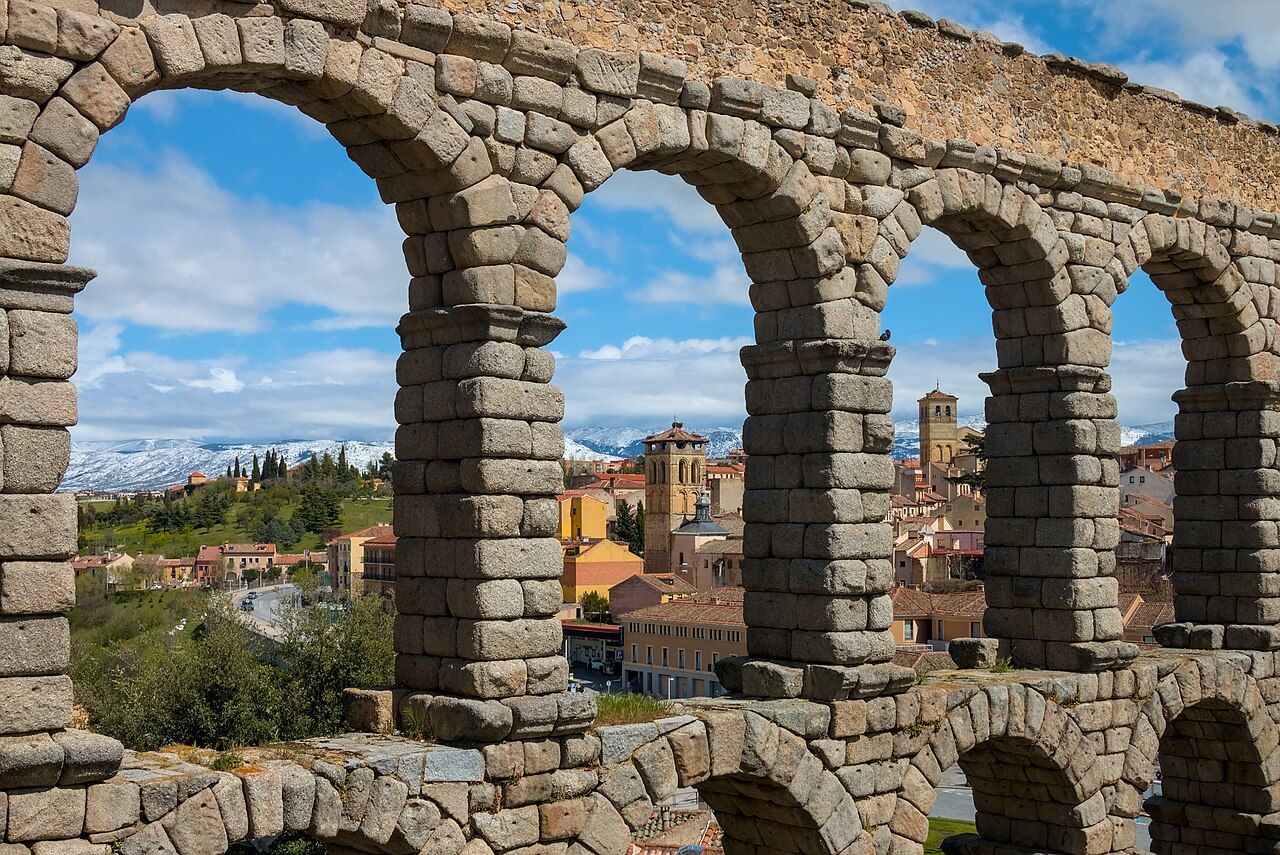
The best view is from the steps that climb beside it to the old walls. From there you look straight along the top course of stones, and the whole structure reads as one long line drawn across the lower town. Come early in the morning or towards dusk, when the stone turns warm and the coaches have gone.
Up through the old town
From the aqueduct, the main street climbs through the old town towards the Plaza Mayor. On the way you pass Romanesque churches with open porches along their sides, a feature of this part of Castile, where the porch served as a meeting place and a shelter from the weather. San Martín and San Millán are two to look out for.
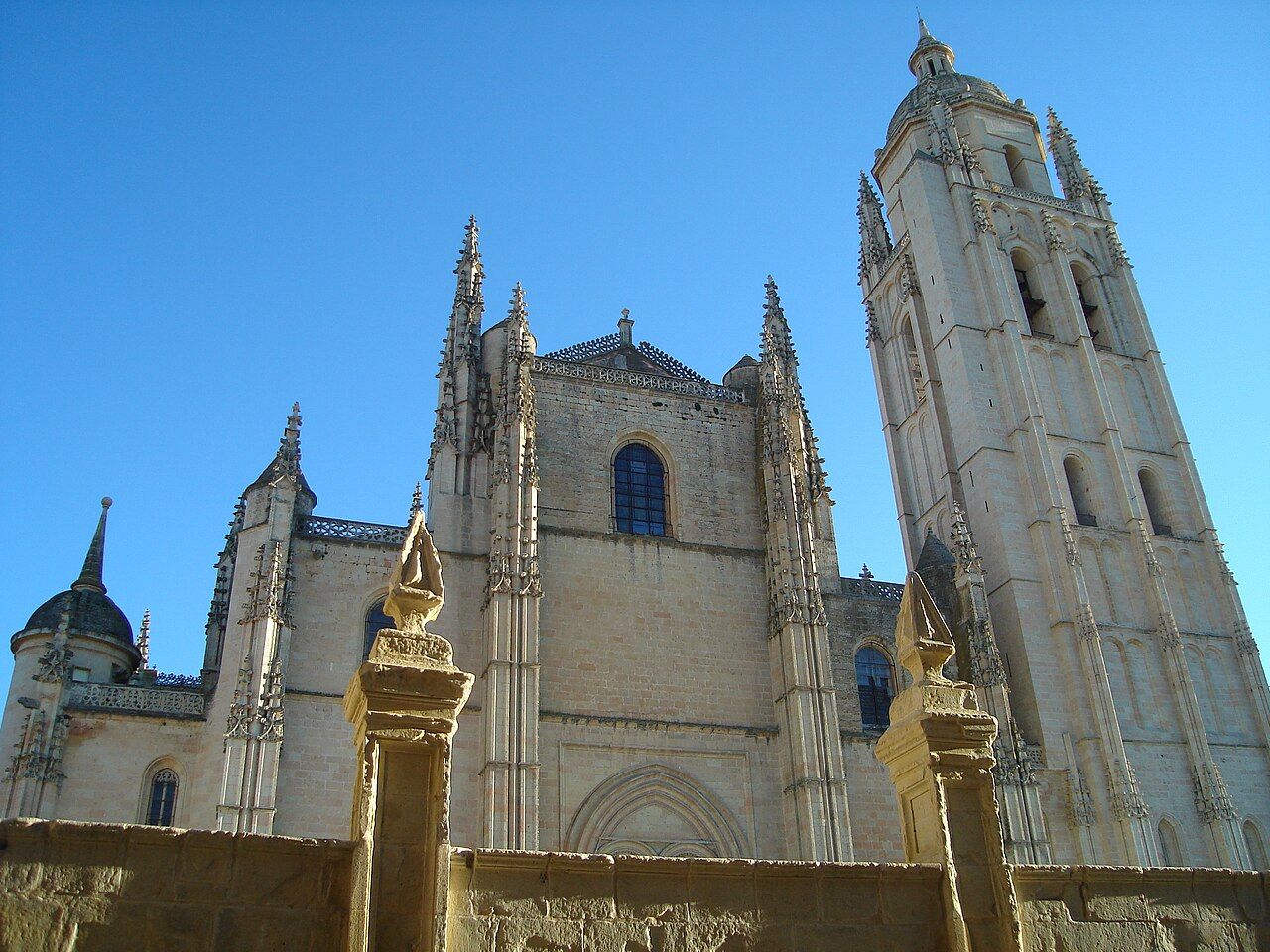
The cathedral stands at the top of the town, beside the Plaza Mayor. It was begun in the sixteenth century, after the older cathedral was damaged during the Comuneros revolt, and it is one of the last great Gothic cathedrals built in Spain. Its pinnacles and buttresses give it a crowded, spiky outline, and its tall square tower is visible from far across the plain.
Beyond the cathedral, the ridge narrows to a point and ends at the Alcázar, a castle on a rock above the meeting of the two rivers. It was a royal fortress for centuries, rebuilt after a fire in the nineteenth century, and its slate spires owe something to that rebuilding. Walk around its base on the path below the walls, through the valley of the Eresma, for the view up at the rock.
The wood oven and what comes out of it
Segovia is a roasting town. The dish people travel for is cochinillo asado, roast suckling pig: a piglet of a few weeks, fed only on its mother's milk, split, seasoned simply with salt and water, sometimes a little lard, and roasted in a clay dish in a wood-fired oven until the skin is glassy and brittle and the meat beneath is soft. A well-made one is so tender that the old habit is to portion it with the edge of a plate rather than a knife.
A well-made one is so tender that the old habit is to portion it with the edge of a plate rather than a knife.
The skin should crack when you press it. The meat should be pale, moist and close to sweet. A quarter of a piglet is a generous portion for one person, and the usual order is to share. There is little on the plate besides the meat and its juices, perhaps a green salad on the side. That is the point: the dish is about the quality of the animal and the control of the fire.
Roast lamb, cordero asado or lechazo, follows the same logic. It is a milk-fed lamb, roasted in the same kind of oven with water, salt and very little else. Across Castile, and especially further north towards Burgos and the Duero, lamb is the more common roast, and some cooks argue it is the truer test of the oven.
A detour: CastileSalamanca and the ham country to the southBeans from the royal palace
Before the roast, many people start with judiones de La Granja, very large white beans grown near the royal palace of La Granja de San Ildefonso, a short drive into the hills. They are stewed slowly with pork: chorizo, a little belly, sometimes pig's ear or trotter. The beans should hold their shape and melt when bitten. It is a heavy dish, and in winter it is often a meal in itself.
Soup is another common opener. Sopa castellana, also called garlic soup, is made from stale bread, garlic, paprika and ham broth, often with an egg poached in it. It was traditionally the food of shepherds and carters, and on a cold day at this altitude it makes complete sense.
And to finish
The local sweet is ponche segoviano, a sponge cake layered with custard and covered in marzipan, its sugar top burned in a diamond pattern. A slice goes a long way.
How lunch works here
Lunch in Segovia, as across Spain, starts late. Kitchens tend to open for lunch from about 1.30 or 2 pm and keep serving until four or later, and many people treat the roast as the main event of the day, with a light supper. Weekends are busy, especially Sundays, when families drive up from Madrid. Many places close one day a week. Wood-fired roasts take hours, so the better kitchens plan their day around them; asking ahead about a roast is sensible, particularly if you want a whole piglet for a group.
To drink, the obvious choices are the red wines of the Ribera del Duero, grown to the north, or the whites of Rueda, from the plain to the northwest. Both are regional, and both stand up to rich roast meat.
Getting there and moving around
Segovia is close enough to Madrid for a day trip, and many people do it that way. A high-speed train reaches a station a few kilometres outside the town, with buses connecting to the aqueduct. There are also regular buses from Madrid. By car, the motorway goes under the Guadarrama in a long tunnel, while the old road climbs over the passes and can be slow and icy in winter. Timetables and tolls change, so check before you go.
Inside the old town, walking is the only sensible option. The streets are narrow and steep, and parking near the aqueduct fills early. Use a car park on the edge of the old town and walk up. If you have time, stay a night: the town after the day visitors leave, with the aqueduct lit up, is quieter and more itself.
A day in Segovia pairs well with other towns of Castile. Salamanca and its golden stone lies a couple of hours to the west, and Toledo on its river loop is on the other side of Madrid. Anyone interested in the old inns that once lined these roads will find the background in the ventas and posadas of Castile.